What difference does training make?

Monitoring and evaluation plays a vital role in conservation. It tells us how much progress we are making towards our goals and ultimately if our actions are making a difference or not. Equipped with this information, we can make better decisions about what works and what we need to do differently. The importance of evaluation to training interventions is no exception, however, it is uniquely challenging!
Unlike the outcomes of many other conservation actions, the outcomes of training can be much more difficult to define and measure. Trainees can experience not only a change in their skills and knowledge but also in their emotions, attitudes and perceptions. The time it takes for this change to manifest can also vary widely from one individual to the next. It can be years before some trainees apply what they learned and it can take even longer for their actions to make a difference. On top of this, there are a huge number of factors that can influence how much progress an individual makes.
Part of my role at Durrell has been to develop and test a system that attempts to overcome these challenges and systematically evaluate the difference our training programme makes over time. To do this, we first created a theory of change, i.e. a model that describes the pathway of change we expect from an individual completing a training course to achieving conservation goals. This theory of change acts as a step-by-step guide to evaluation, from which we can identify what we need to measure in order to monitor progress and evaluate success.
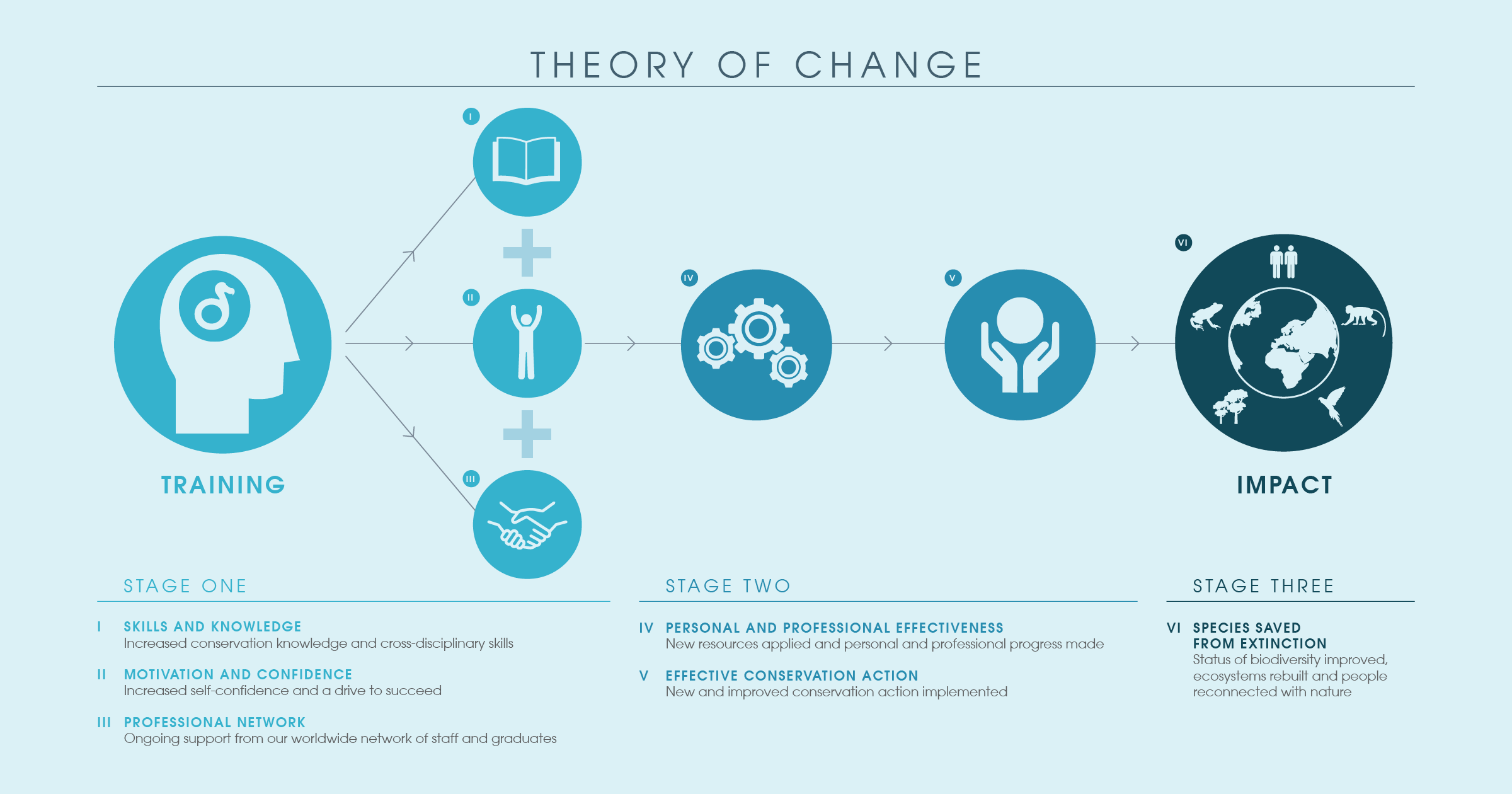
We use a series of online surveys to gather information throughout our theory of change, each incorporating both quantitative and qualitative data collection methods. The quantitative data tells us if we are achieving what we expected to, and the qualitative data gives us an insight into the unexpected and unmeasurable change an individual might experience. The more time that passes, the more challenging it becomes to attribute outcomes to training. In response, we rely more on qualitative methods over time and measure the extent to which training contributes to progress made. The more we learn, the more we are able to refine our theory of change and improve our understanding of what we can achieve.
Despite its challenges, this new evaluation system has provided us with a wealth of information, enabling us to explore new ways of maximising our training impact and better communicate the difference we make to stakeholders.

