When fewer birds may not mean what we first think
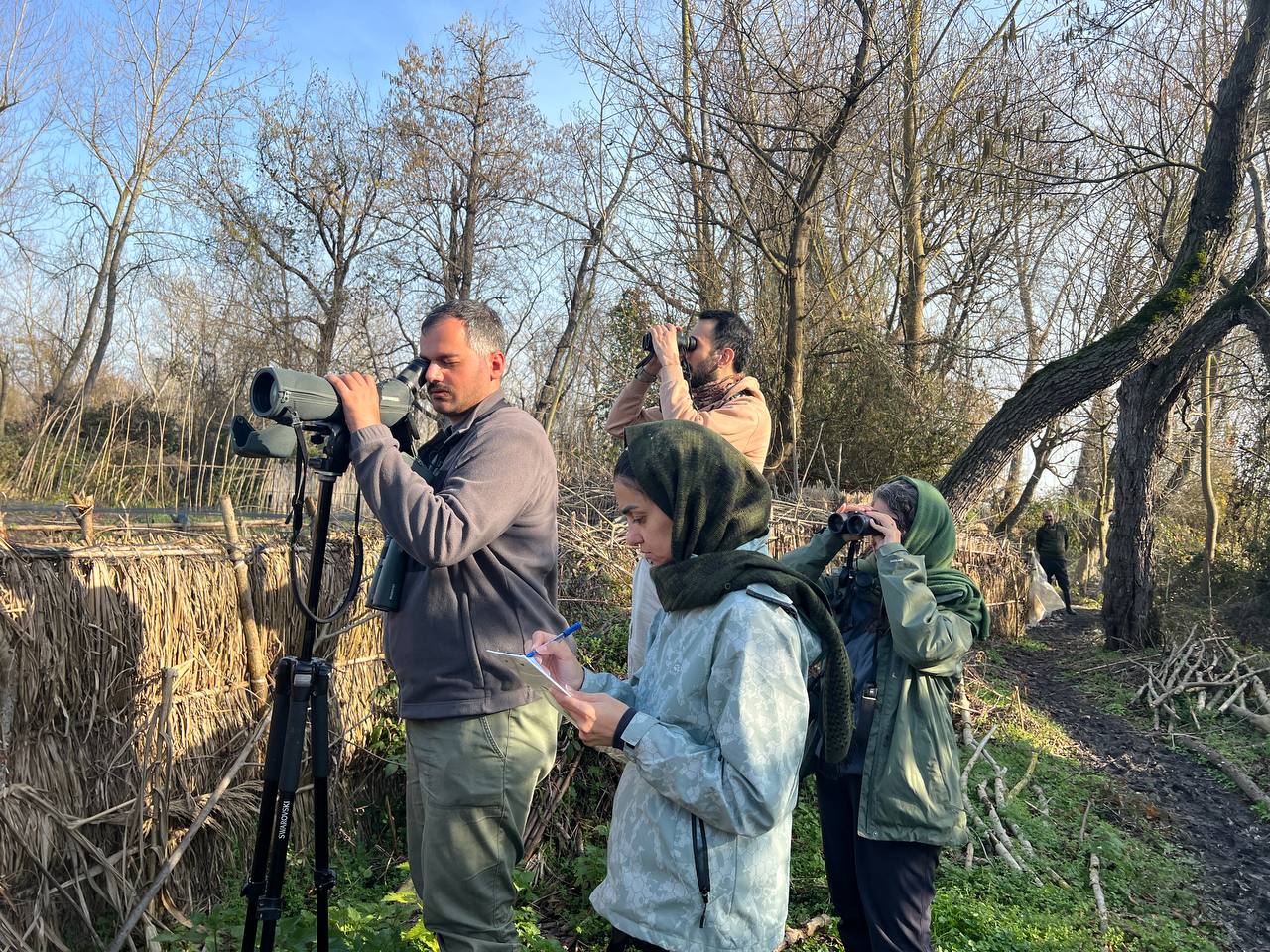

The first time I joined the winter waterbird census in Mazandaran Province, in northern Iran, I was 18 years old.
I still remember the sky. At some moments, it felt as if the sky turned dark with birds. Thousands of waterbirds moved across wetlands, rice fields, and coastal habitats. For a young person who had just entered the world of bird conservation, it was unforgettable. I did not only see birds that year. I saw abundance, movement, migration, and the living connection between wetlands and flyways.
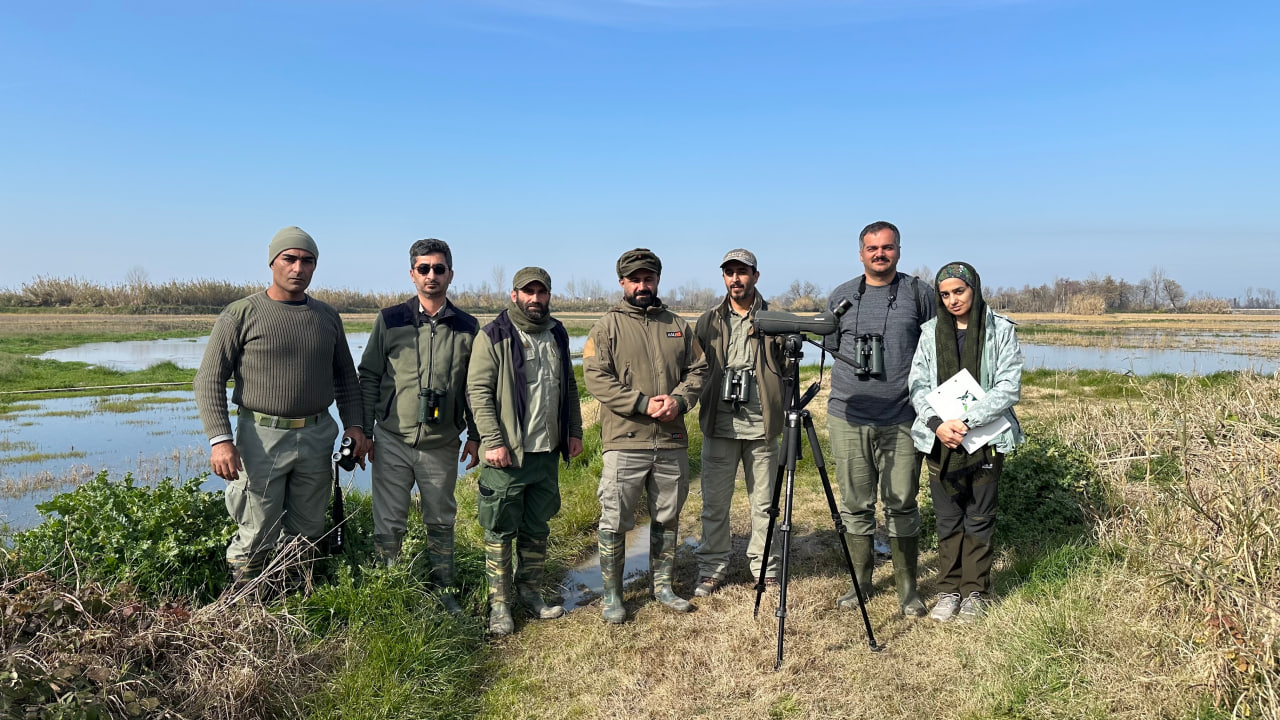
Fourteen years later, I returned to the same province with a different responsibility. This time, I was the project manager for the winter waterbird census in Mazandaran.
We still counted many birds. The wetlands were not empty. The work was serious, the team was strong, and the data were valuable. But emotionally, I could not avoid comparing what we saw with what I remembered from those earlier years. The numbers we recorded were not comparable to the abundance I had seen when I was 18.
The first reaction is almost automatic: the birds have declined. The wetlands must be degraded. Something has gone wrong locally.
And maybe, in some places, that is true. Wetlands in the southern Caspian face many pressures, including habitat change, hunting, disturbance, water management problems, pollution, and land-use change. These are real threats, and they should not be ignored.
But during and after the census, my colleagues and I began to think about another possibility as well.
What if part of what we are seeing is not only a decline, but also a misreading of redistribution?
Data do not lie, at least not in the simple sense. A count is a count. If fewer birds are recorded in one place, that is real for that place and that moment. But the interpretation of that number is another matter. Interpretation can look simple, but it can be deeply affected by climate, hydrology, geography, and the scale at which we choose to read the data.
This question led our team at AvayeBoom Bird Conservation Society to work with colleagues from five institutions across three countries on a short communication about the Caspian Basin. The paper was recently published in Wetlands Ecology and Management.
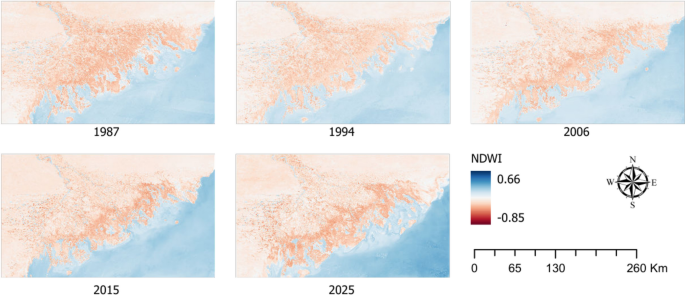
In the paper, we propose a climate-driven scenario. As the Caspian Sea level declines, shallow-water habitats are expanding in parts of the northern Caspian, especially around the Volga Delta. At the same time, winters are becoming milder in parts of the region. If these changes continue together, some migratory waterbirds may gradually shorten their migration and spend the winter farther north rather than continuing all the way to the southern Caspian wetlands.
This process is often called short-stopping.
We do not claim that this is already reducing wintering bird numbers in Iran. That is important. The paper is not a conclusion that this process is already happening. It is a scenario and a warning about interpretation.
If fewer birds are counted in southern Caspian wetlands, this should not automatically be interpreted as local habitat degradation or population decline. And if more birds are counted in northern Caspian wetlands, that should not automatically be interpreted as local conservation success. In some cases, both patterns could partly reflect a wider redistribution of birds across the basin.
This matters because monitoring data influence decisions.
They can shape how we judge wetland condition. They can affect conservation priorities. They can influence where resources are allocated, how management success is understood, and how threats are communicated to the public and decision-makers.
If we misread the data, we may also misdirect conservation action.
For me, this is the most interesting part of the paper. It is not only about the Caspian Sea, or the Volga Delta, or waterbirds. It is also about a broader question in conservation: where else might we be reading biodiversity monitoring data too locally, while the ecological process behind the numbers is happening at a much larger scale?
Climate change is not only changing habitats and species distributions. It may also be changing the meaning of our data.
That is why I think we need more conversations about misreading in biodiversity monitoring. Where has this already happened? Where could it happen next? How can we design monitoring systems that are better able to separate local decline from redistribution, population change from range shift, and conservation success from climate-driven movement?
I would be very interested to hear from others working on wetlands, migratory species, monitoring, and conservation decision-making. Have you seen similar cases where the first interpretation of monitoring data may not tell the whole story?
Article:
Potential short-stopping of migratory waterbirds in the Caspian region: a climate-driven scenario based on the expanding Volga delta
Published in Wetlands Ecology and Management:
https://link.springer.com/article/10.1007/s11273-026-10161-9

am Iman Ebrahimi, a conservationist and the founder and CEO of AvayeBoom Bird Conservation Society, the first bird conservation NGO in central Iran. Over the past decade, I have led various projects focusing on bird conservation, wetland restoration, and community engagement. My interests include wetland and waterbird conservation, migratory bird monitoring, and engaging local communities in environmental stewardship.
Through AvayeBoom, I’ve had the privilege of collaborating with over 310 volunteers and conducting educational programs for thousands of people. I’m passionate about building partnerships, sharing knowledge, and learning from the global conservation community to protect biodiversity for future generations.