#Bébé #bonobo en #détresse !!!
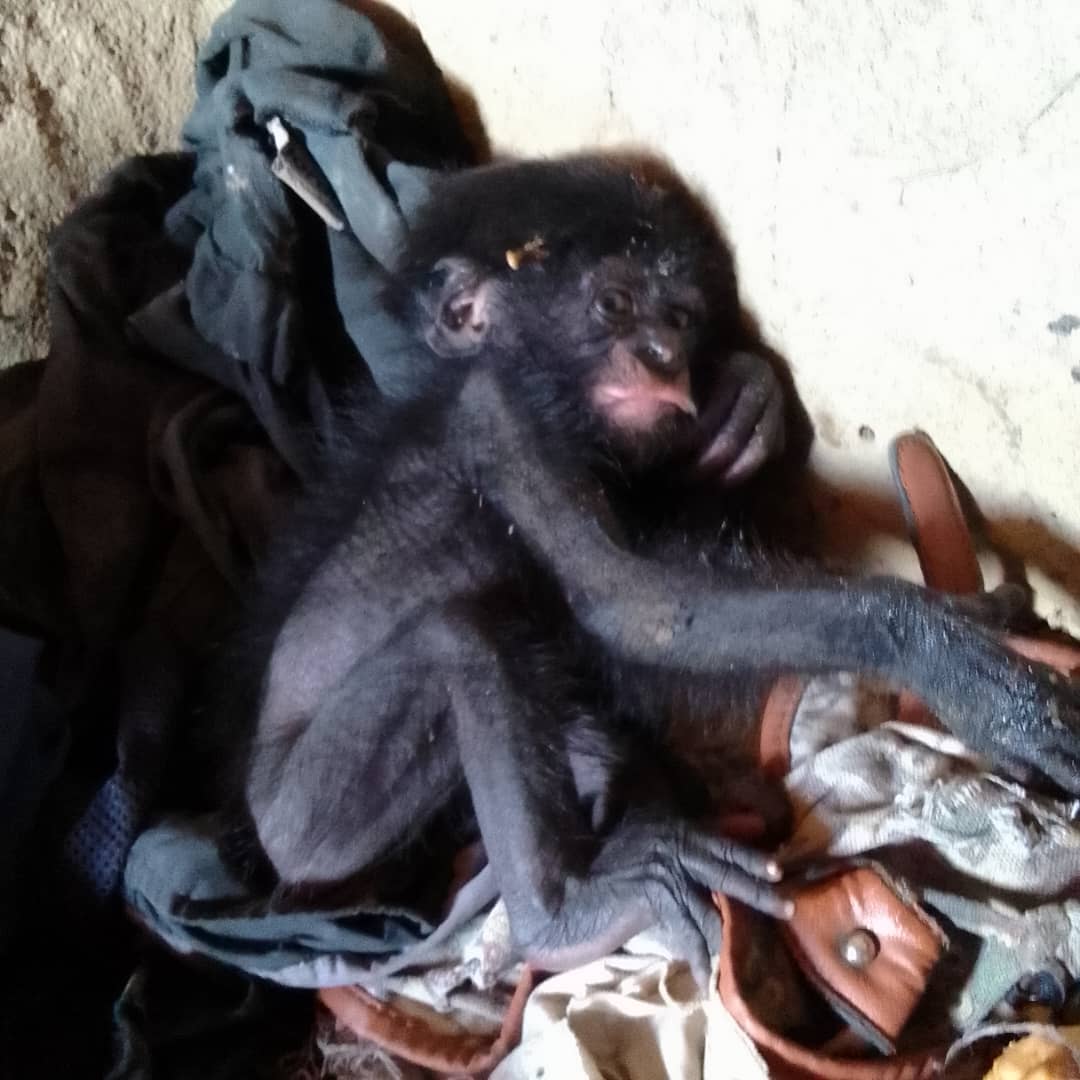
#Triste nouvelle : le bébé #bonobo qui devait être sauvé est #décédé.
Like

Share this post

Choose a social network to share with, or copy the URL to share elsewhere

This is a representation of how your post may appear on social media. The actual post will vary between social networks

Nous sommes profondément attristés par cette perte.

Ceci est le message de la nouvelle direction de la criminalité Faunique de #ICCN en coordination avec le Coordinateur Provincial du Ministère de l’Environnement (#MEDD) du centre de la RDC.

Ce petit orphelin a terriblement souffert du manque d’assistance. 😭

#Leçon à #retenir :

Tant que les acteurs clés resteront passifs face aux saisies perdues, ces drames continueront de nous interpeller.

Lorsque nous alertons sur un crime ou un cas suspect de trafic, nous devons changer d’approche.

#Arrêtons les démarches théoriques, lourdes et lentes qui ne sauvent aucune espèce. Passons à l’action.*

J’espère que ce cas parviendra aux organisations qui prétendent défendre la faune et qui disposent des fonds nécessaires pour agir en urgence.

Car sur le terrain, la réalité est tout autre.

Et c’est cette réalité amère que nous constatons et dénonçons.

Vous êtes champions pour amplifier les chiffres de vos résultats sur le terrain ?

Nous savons que ces chiffres sont souvent biaisés.

Pour nous, acteurs de terrain, cela ne nous décourage pas.

#Au #contraire, cela nous donne encore plus de force pour nous battre afin de sauver la biodiversité, la faune et la flore sauvages.

Merci à tous ceux qui nous ont soutenus en relayant l’information à tous les niveaux, en particulier : #JURISTRALE-RDC, #FREELAND, #C4ADS, #THE #ROYAL #FOUNDATION, #ICCCN, #APACOL*, et les autres.

#La #lutte #contre #l’IWT #continue.
#GM

#Baby #bonobo in #distress!!!

#Sad news: the baby #bonobo that was supposed to be rescued has #died.

We are deeply saddened by this loss.

This is the message from the new Wildlife Crime Unit of #ICCN in coordination with the Provincial Coordinator of (#MEDD) for central DRC.

This little orphan suffered terribly from the lack of assistance. 😭

#Lesson to #learn:

As long as key stakeholders remain passive in the face of lost seizures, these tragedies will continue to concern us.

When we report a crime or a suspected case of trafficking, we must change our approach.

#Let's stop the theoretical, cumbersome, and slow processes that save no species. Let's take action.*

I hope this case reaches the organizations that claim to defend wildlife and that have the necessary funds to act urgently.

Because on the ground, the reality is quite different.

And it is this bitter reality that we observe and denounce.

Are you experts at exaggerating your results on the ground?

We know that these figures are often biased.

For us, those working on the ground, this does not discourage us.

#On the #contrary, it gives us even more strength to fight to save biodiversity, wildlife, and wild flora.

Thank you to all those who have supported us by sharing information at all levels, in particular: #JURISTRALE-RDC, #FREELAND, #C4ADS, #THE #ROYAL #FOUNDATION, #ICCCN, #APACOL.

Please sign in or register for FREE

If you are a registered user on WildHub, please sign in

Go to the profile of Thirza Loffeld
6 days ago

Thank you for raising awareness about this deeply sad situation and for highlighting the challenges faced by practitioners working on the ground.

Cases like this can be very difficult emotionally, especially for those directly involved in wildlife rescue and anti-trafficking efforts. To help the wider WildHub community learn from situations like these, it may also be valuable to reflect on questions such as:

  • What were the main barriers that prevented a faster rescue response in this case?
  • What practical lessons can conservation organisations, governments, and networks learn from this situation?
  • Are there examples of emergency response systems or collaborations that have worked well elsewhere and could help inform future action?

As a reminder to all contributors, WildHub aims to support respectful, constructive, and solution-oriented knowledge exchange across different sectors and professional backgrounds. Posts that help members identify lessons learned, practical solutions, and opportunities for collaboration are especially valuable for the wider community. Contributors may also find it useful to review the WildHub contributor guidelines when preparing future posts: https://wildhub.community/pages/Contributor-guidelines

Thank you again for sharing this important perspective.

Merci pour vos commentaires et pour avoir souligné ces points essentiels.

1. Obstacles à une intervention rapide : manque de coordination inter-agences, retards administratifs et ressources limitées sur le terrain.

2. Leçons pratiques : renforcer les protocoles d’alerte partagés, former les équipes mobiles prépositionnées et garantir un financement d’urgence accessible.

3. Exemples convaincants : les réseaux de sauvetage rapide de la faune sauvage au Cambodge et le modèle de groupe de travail inter-agences en Afrique australe démontrent qu’une chaîne de commandement claire et des partenariats entre les ONG et les gouvernements accélèrent les interventions.

Je consulterai les directives de WildHub pour mes futures contributions. Merci d'avoir favorisé un échange constructif et axé sur les solutions.

Cordialement,
GM

Go to the profile of Thirza Loffeld
3 days ago

Thank you for this thoughtful follow-up and for sharing these practical reflections and examples from the field.

The points around coordination, emergency funding, and rapid response systems are very valuable for the wider conservation community to reflect on and learn from.

I also appreciate your openness to engaging with the WildHub contributor guidelines and helping support constructive knowledge exchange within the community.

Thank you again for contributing your perspective and experience.

Best wishes,
Thirza