Community-led Land-Use Management Webinar with Sensing Clues: The Mponda Case

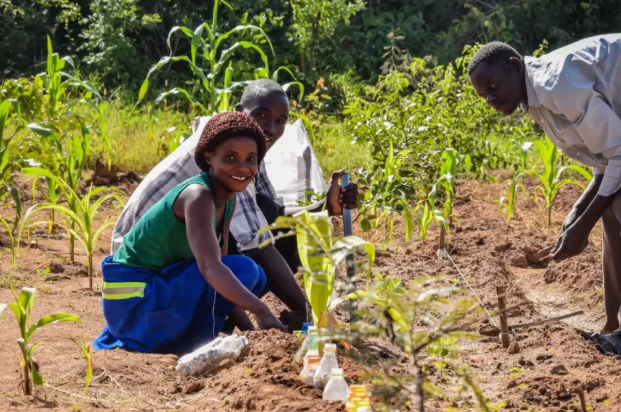
The Community-led Land-Use Management Webinar "The Mponda Case" explores how communities use land-use maps to guide shared decisions, align local interests, and balance economic needs with nature’s carrying capacity. Drawing on real-world experience from Mponda, Zambia, the session focuses on practical tools and approaches for participatory land-use planning and long-term monitoring.
📅 Date: Thursday, 26 February 2026
💻 Location: Online via Google Meet
⏰ Times: Los Angeles: 06:00 - 07:00 / New York: 09:00 - 10:00 / Central Europe: 15:00 - 16:00 / South Africa: 16:00 - 17:00 / Kenya & Tanzania: 17:00 - 18:00 / India: 19:30 - 20:30
In this interactive free webinar, we will:
- Walk through the full process of community-led land-use management, from community organisation and ground-truth data collection to AI-based mapping and zoning.
- Demonstrate the tools used for data collection, mapping, and long-term monitoring.
- Show how maps support shared decisions, locally agreed rules, and enforcement on the ground.
- Discuss lessons learned from the Mponda case: what works, what doesn’t, and why.
- Create space for questions, discussion, and deeper exploration.
The webinar is led by:
- Lars Vermeer, Founder of By Life Connected
- Boris Hinojo Sánchez, Head of Technology at 3edata
- Jan-Kees Schakel, Founder of Sensing Clues
Whether you’re experienced in participatory land-use management or just getting started, this webinar is an opportunity to learn from real-world practice, exchange ideas, and connect with others working at the intersection of communities, data, and sustainable land use.
At Sensing Clues, we believe the most effective conservation solutions are built together. Through collaboration with communities, practitioners, and partners worldwide, we co-develop approaches that support community-led conservation, biodiversity monitoring, human–wildlife coexistence, and wildlife protection. Everyone is warmly invited to join, share experiences, and contribute to shaping practical, community-driven conservation approaches.