Sir David Attenborough - are we listening?
As a mountain leader and expedition guide, I have had the most amazing experiences with wildlife and their environments. I have worked on conservation projects in a number of countries, and when it comes to encounters with wild animals, I have been blessed.
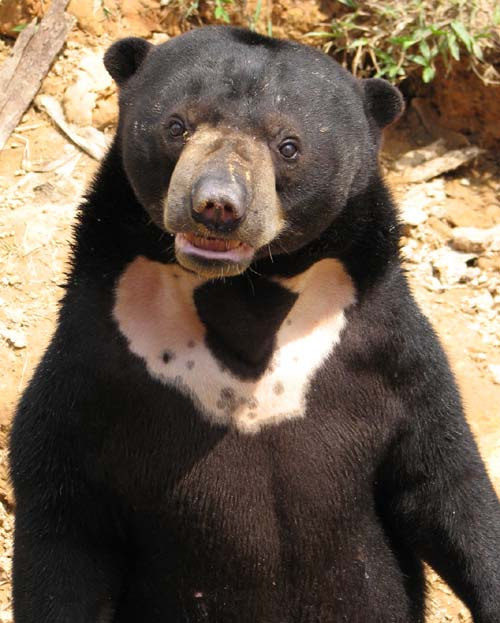
In the jungles of Borneo, I was once charged by two young male elephants. I have seen a moonrat. On the anniversary of a career change, I walked into a clearing to find two orang-utans hanging from a tree, just above head-height, as surprised to see me as I was them. Diving in the Red Sea, I was grabbed from behind by a seal and then defended by a dolphin who later munched at my wet-suited arm in play. Once, while lying on the ground on a tiresome surveillance, it’s a long story, I had positioned opal fruits on my arm intending to eat one every hour. A field mouse ran along my arm and stole the red one, my favourite.
So, it was with great alarm that I listened to Sir David Attenborough the other day when he was talking on the state of our planet:
“Seventy percent of all birds are now domesticated poultry, mostly chickens. Ninety six percent of the mass of mammals on our planet are us humans and the livestock we have domesticated. Only four percent is everything else from elephants to badgers, tigers to bats.”
Four percent!
I have written before on climate change and biodiversity loss, as have many others, but what I struggle to understand is how we have reached a point where the disappearance of wild animals feels almost ordinary. These figures fill me with anxiety and sadness. Before long, I suspect, we will only have photos and documentaries of wild animals. A few generations further on, we may even question whether they ever existed for real with stories fuelling future mythical creations.
In writing this article, I search for the meaningful words that might encourage us to reconsider our diets, to destroy less forest, and better understand the role biodiversity plays in our own survival. Yet I keep coming back to the same thought. If we are not prepared to listen to Sir David Attenborough, a man who has spent almost a century showing us the natural world and warning us what we stand to lose, what hope is there that we will listen to anyone else?
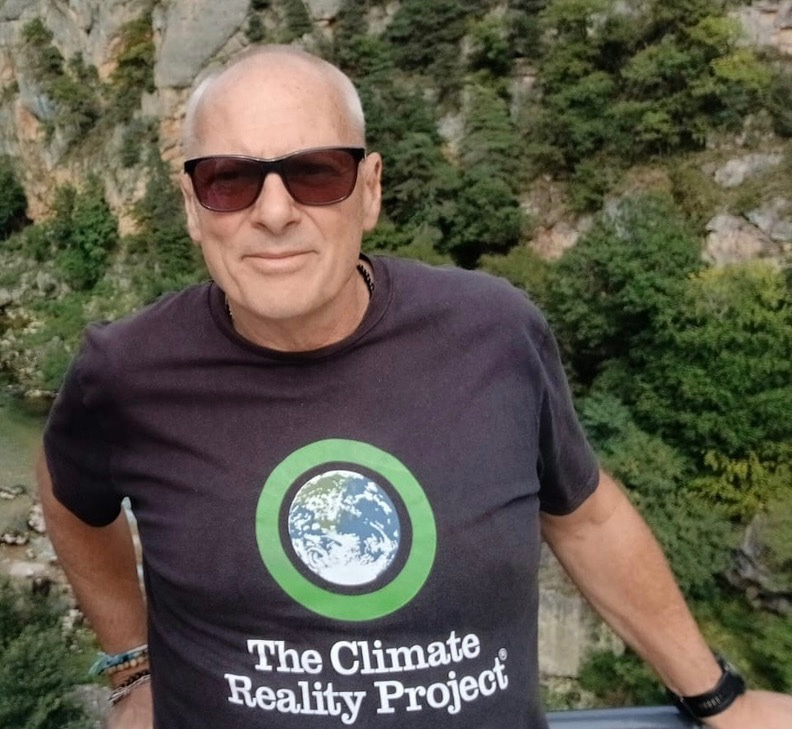
I was a police officer in the UK for 25 years. I then retrained as an International Mountain Leader and have guided all over the world. In 2011, I won the Bronze in the Wanderlust Magazine World Guide Awards.
I stumbled into conservation work, firstly in Borneo, and worked on expeditions to Danum Valley and Maliau Basin. This opened my eyes to our need to change the way we do things. As an expedition leader, I was able to educate and encourage my clients when working in the rainforest or at rehabilitation centres.
During the covid confinements when I could no longer work as a guide, I took to writing, and published a novel, Stonechild, where the famous London statues come to life with their important message on climate change. I also trained as a Climate Reality Leader.