Paul J Oryem
Environmental and Technology Professional, Innovium Marine and Associates
- Member directory
- United States of America
My background is mainly in species conservation, education and capacity exchange. I researched mother-young interactions in gorillas and chimpanzees, in captivity and the wild. After that, I worked for three years in Indonesia, where I developed and implemented youth ambassador and community engagement programmes on local and regional scales. I co-founded WildHub, a community of nature conservation professionals, in 2020 and work as their Community Lead. I am furthermore on the Advisory Board of the Durrell Institute of Conservation and Ecology (DICE) at the University of Kent where I obtained my PhD on capacity development for conservation in 2022.
I am a conservation biologist focused on finding solutions to conservation problems. My passion lies in trying to improve the link between conservation efforts and research in order to enable a project to feedback into management impacts. My hobbies include Art, Surfing, Kitesurfing, Cycling and any excuse for an adventure

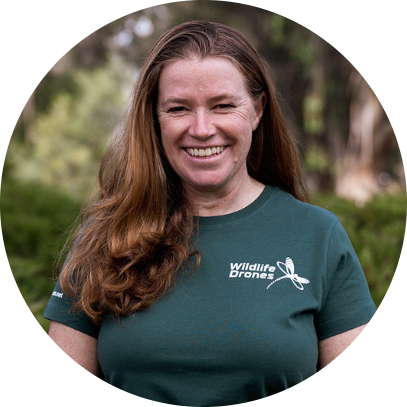
For over 20 years, Dr Debbie Saunders has worked as a wildlife biologist, specialising in threatened species conservation management and worked with diverse teams of talented people to develop the world’s most advanced drone radio-telemetry solution – resulting in the establishment of Wildlife Drones.
As a passionate founder, CEO and Chief Remote Pilot of this award-winning deep tech company, Dr Saunders gets to empower wildlife biologists and land managers to achieve greater insights and conservation impact all around the world by cost-effectively collecting more data, more often with less effort.
How can Wildlife Drones help you? - Track up to 40 animals simultaneously and in real-time - Survey difficult terrains like rugged mountains and swamp areas easily - Save time, effort and money so you can focus on what really matters - Collect more data, more often with less effort
She has received an ACT Innovation Award as well as an ACT Government Innovation Connect grant for her creative business solutions for challenging research problems.
Debbie believes that drones are a highly valuable and flexible tool that provide unprecedented opportunities for new insights into the world’s most complex and fascinating natural ecosystems.

Affordable, flexible and sociable online learning in technical skills for conservation and open education. Support for virtual and hybrid conferences and events

Louisa Richmond-Coggan
Founder & Conservation Consultant, LRC Wildlife Conservation Consulting
Is your organisation's technology decision-making as structured as it needs to be? Conservation organisations face real pressure to adopt technology, often without a clear process for assessing whether it fits their context, capacity, and conservation goals.
The free Conservation Technology Decision Quiz takes five minutes. It scores your approach across three areas: Decision Clarity, Fit and Feasibility, and Delivery and Performance. Results include practical recommendations matched to your score, so you can see where your decision process is strong and what to address first. Start here: Technology Decision Quiz
I work with conservation organisations and funders on structured technology decision-making, the process that determines whether adoption actually works. Twenty-five years in conservation across the Global South. Technology-agnostic, no vendor affiliations.
If your team is navigating a technology decision, evaluating a pilot, or funding organisations that are, I'd welcome a conversation.
BACKGROUND
Dr. Louisa Richmond-Coggan. My career spans field-based ecology, international NGO and policy work, academic leadership, and conservation technology decision-making.
Field career: large carnivore ecology and human-wildlife coexistence research across Eastern and Southern Africa, including as Head of Ecology at the Cheetah Conservation Fund in Namibia. I led Namibia's National Leopard Census, a multi-stakeholder project whose results fed into national and international policy. I built the Carnivore Tracker app, the first of its kind in Namibia.
Institutional career: BirdLife International, UNEP-WCMC, TRAFFIC International, Earthwatch. Academic Dean at the School of Wildlife Conservation at the African Leadership University. Technology and innovation work with IUCN Tech4Nature, including leading three Innovation Challenge Workshops and contributing to the strategic guidance framework on conservation technology adoption.
The Navigating Web 3.0 Guide: A Tool for Conservation came out of that work. It is a decision-support tool that starts with your conservation goals and operational realities, not the technology. 34 guided questions assess which emerging technologies are worth exploring across four areas: data collection and management, resource allocation and financial management, collaboration and communication, and monitoring and evaluation. Now integrated into the IUCN GSAP SKILLS platform. This guide is where the decision-support work started, and it remains the clearest entry point into conservation technology decision-making for teams new to this field.
Research at the International Conservation Technology Conference, Lima in 2026 confirmed what I had been building toward: the gap in conservation technology is not the tools. It is the structured process for deciding whether, which, and how technology fits an organisation's context.
PhD, Nottingham Trent University. MSc Conservation Biology, Durrell Institute. Fellow of the Royal Geographical Society. IUCN WCPA Task Force on Human-Wildlife Coexistence. Member of the Nature Tech Collective and Top Tier Impact.