FROM TREES TO TRACKS
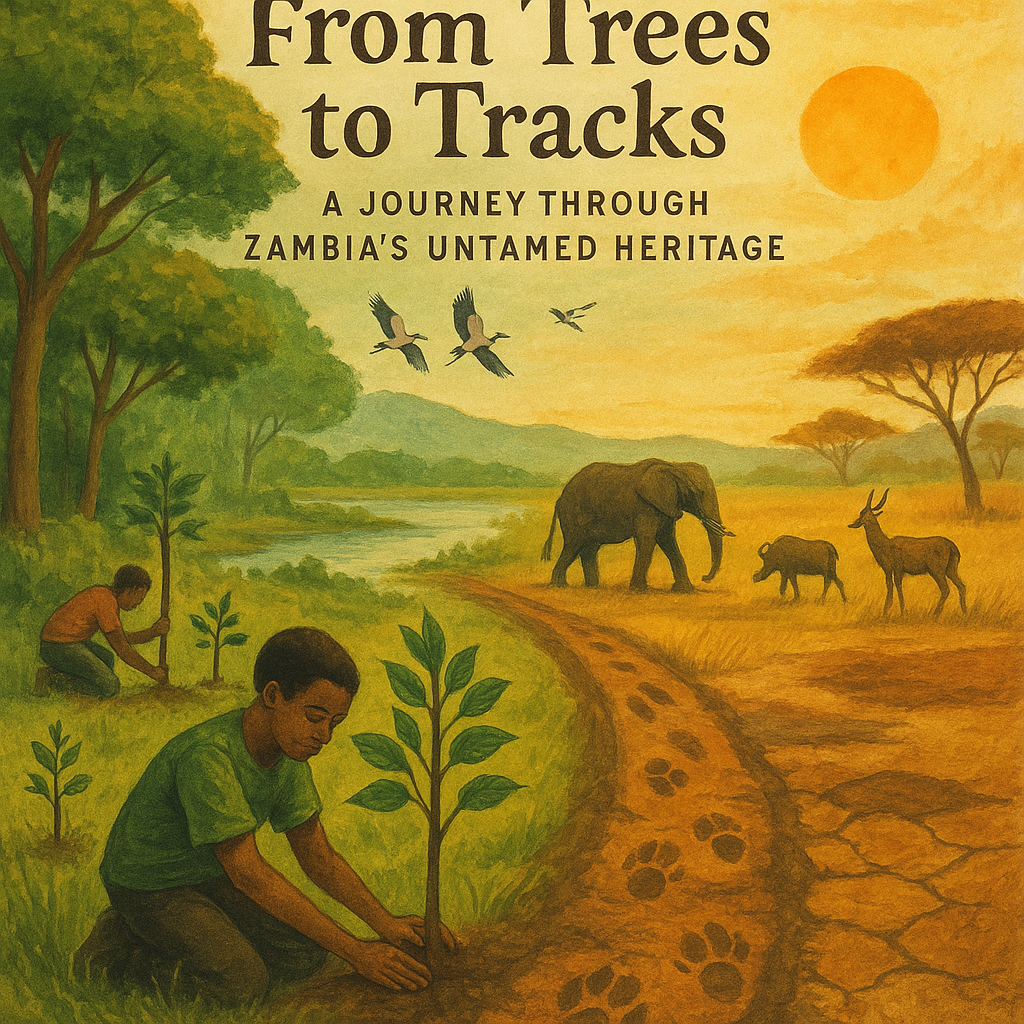
A Journey Through Zambia’s Untamed Heritage
There is a quiet wisdom in the rustle of miombo woodlands, a deep knowing in the stare of a sable antelope, and a story written in every pawprint etched into the dust trails of Zambia’s wild spaces. For those of us who have walked the forests, planted trees with trembling hands, or stood in awe before a flock of crowned cranes rising in unison, the wild is more than a landscape it is legacy. It is identity. Yet, as Zambia’s ecosystems breathe under the weight of climate change, habitat degradation, and human wildlife conflict, the urgency to protect our natural heritage grows louder. My journey from the youthful energy of tree planting campaigns to witnessing conservation at sanctuaries like Chembe has shown me that the wild is not just something to be observed. It is something to be defended, restored, and deeply understood.
The Role of Youth and Community in Wildlife Conservation
In Zambia, wildlife conservation has historically been viewed as the domain of rangers, government institutions, and international NGOs. However, this narrative is shifting, especially with the emergence of youth led and community-based conservation efforts. As a young environmentalist and a member of the Mukuba University Climate Change Action Society (MUCCAS), I have witnessed how mobilizing young minds can breathe new life into dormant landscapes.
Youth involvement, especially at the grassroots level, is proving to be a transformative force. During my time with the Healthy Environmentally Friendly Youth (HEY) Campaign, I saw how education and activism could empower young people to become defenders of biodiversity in their own villages. This is crucial because communities living near protected areas often experience both the beauty and the burden of wildlife, particularly in areas where elephants, hippos, and even leopards roam close to human settlements. The inclusion of youth voices in conservation dialogues ensures not only future leadership but also immediate innovation and energy that traditional structures sometimes lack (UNEP, 2022).
Zambia’s Ecosystems Under Threat What We Stand to Lose
Zambia is home to a diverse array of wildlife species and ecosystems, from the wetlands of Bangweulu to the dry forests of Luapula and the grasslands of Kafue. Yet, these ecosystems face unprecedented pressure. According to the Zambia Environmental Management Agency (ZEMA, 2023), over 250,000 hectares of forest are lost annually due to charcoal production, illegal logging, and unsustainable land conversion. This not only disrupts the balance of local ecosystems but also endangers the habitats of species such as the African wild dog (Lycaon pictus) and the black lechwe (Kobus leche smithemani), which are already classified as vulnerable or endangered (IUCN, 2024).
Moreover, climate change has intensified the frequency of droughts and floods in recent years, altering migratory routes and food availability for wildlife. In Chembe Bird Sanctuary, for instance, anecdotal observations have shown a decline in certain migratory birds whose wetland habitats are shrinking or becoming polluted due to nearby agricultural runoff. The risks are no longer distant or theoretical; they are visibly unfolding before our eyes.
Hope Through Action
What We’re Doing and Why It Matters
Despite these challenges, hope persists in the form of local and youth led initiatives. I have participated in campaigns that combined education, advocacy, and reforestation, often under resource constrained but determined conditions. Tree planting, while sometimes dismissed as symbolic, can have measurable ecological benefits when integrated with long-term monitoring and local stewardship. In collaboration with institutions such as the Zambian Climate Change Network and the Pan African Climate Justice Alliance (PACJA), our community campaigns have planted thousands of indigenous trees and educated schoolchildren on the importance of biodiversity.
What matters most is not the scale of the action, but the continuity of intention. Real change happens when local farmers begin to see wildlife as a shared responsibility rather than a threat. When children in Luapula grow up knowing the names and songs of local birds, a sense of belonging to the land is nurtured and with it, a desire to protect.
Wildlife conservation in Zambia is no longer just about protecting lions or rhinos. It is about restoring balance to ecological systems that support all life. It is about reimagining the future of conservation through inclusion, education, and collaboration. And it is about ensuring that from trees to tracks, every part of our untamed heritage is given a chance to thrive.
As a young environmentalist, I carry the weight of both hope and responsibility. Hope, because I have seen what committed communities can achieve; responsibility, because I know how fragile our wild spaces truly are. Conservation is no longer a luxury. It is a necessity grounded in justice, survival, and legacy. From the shaded canopies of replanted forests to the hidden tracks in Zambia’s game reserves, the call is clear: we must act, and we must act together.
References
IUCN (2024). Red List of Threatened Species. International Union for Conservation of Nature. Retrieved from https://www.iucnredlist.org
UNEP (2022). Youth and Environment: Empowering the Next Generation of Environmental Leaders. United Nations Environment Programme.
ZEMA (2023). State of the Environment Report – Zambia. Zambia Environmental Management Agency.
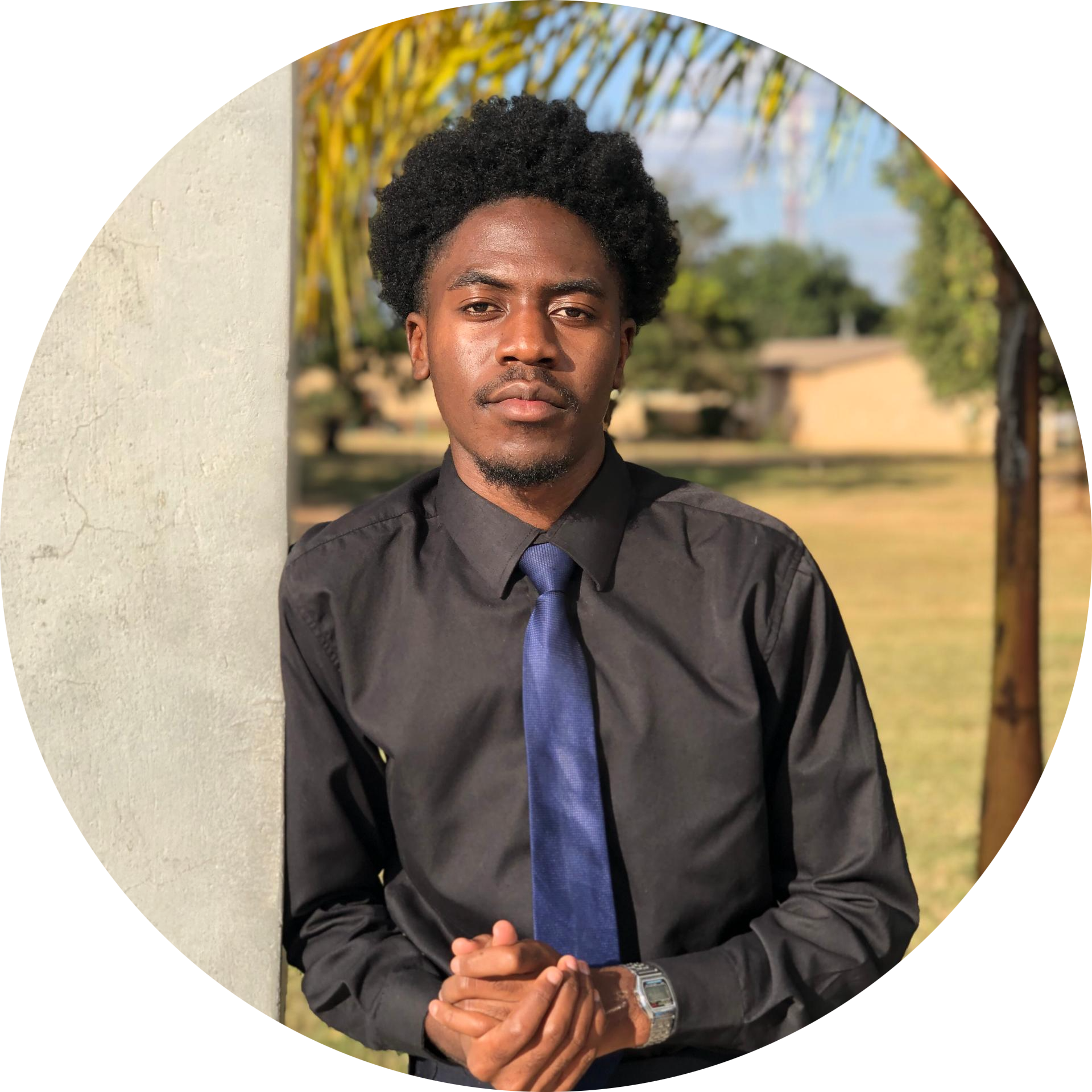
I am an emerging environmental and climate change professional focused on Environment management, climate action, and sustainable natural resource governance. I am currently in my final year pursuing a Bachelor’s degree in Environment and Climate Change at Mukuba University, with a growing orientation toward applied, policy relevant, and community grounded solutions.
My professional experience includes industrial attachment with the Mansa Forestry Department in Luapula Province, where I gained practical exposure to forest management, conservation planning, and the operational realities of environmental governance. This experience reinforced my interest in forests as critical climate systems and strengthened my commitment to linking ecosystem protection with local livelihoods and resilience.
I bring a strong blend of technical, leadership, and advocacy credentials. My training includes ISO 14001 Environmental Management Systems Awareness, GIS applications in conservation mapping, leadership in climate change, natural conservation education, climate change and human health, and WASH related environmental programming. These competencies position me at the intersection of environmental management, spatial analysis, public health linkages, and climate leadership, with an emphasis on evidence based action.
Beyond formal training, I have demonstrated leadership through regional and grassroots engagement. I served as the 2024 Africa Ambassador for the Healthy Environmentally Friendly Youth Campaign and remain actively involved with the Mukuba University Climate Change Action Society and the Copperbelt Institute of Natural Resources and Climate Change. I have contributed to tree planting initiatives and community mobilization under platforms such as the Keep Your Promise Campaign, advocating for climate justice and accountability.
My long term direction is centered on advancing practical solutions in forest conservation, environmental management systems, and climate policy implementation. I am particularly interested in roles that allow me to integrate science, leadership, and community engagement to drive sustainable and measurable environmental impact in Zambia and across Africa.