Data, databases and apps ( Claris FileMaker ) for nature conservation and sustainability research. Funding expertise as a bonus
Wildlife biologist with cross-cutting interests in wildlife conservation technologies, wildlife and ecological research, climate change.
Founder and Chair of Clean Coast Outer Hebrides, we do so much more than beach cleans! We campaign and educate, inform and inspire about marine environment issues including Climate Change.
I live near one of the best places in Europe to see the widest range of whales and dolphins from land, I am a Shorewatcher for Whale and Dolphin Conservation WDC, have trained for British Divers Marine Life Rescue BDMLR, a volunteer with the Scottish Marine Animal Stranding Scheme, am a licensed drone pilot, and go wild swimming.
I occasionally earn a crust by wildlife illustration and have illustrated for the RSPB and SNH (or whatever they call themselves these days) and am so successful as a public speaker that people have paid to hear me talk - I'd have thought that they would pay to shut me up!
I am Consolata Gitau, a researcher with a passion for conservation. I am finalizing on MSC Range management (Ecology option). My thesis title is Activity time budget of Rothschild's giraffes in Lake Nakuru National park. My career journey has been very informative and has molded me into a competitive researcher in the conservation field. I have worked with African Fund for Endangered Wildlife (AFFEW) as an MSc Fellow, International Livestock Research Institute working on a project involving the collection of data for a Green House Gases emission project, and BirdLife International. Most recently, while working with Birdlife International, I led a detailed literature review on the illegal killing of birds in Sub-Saharan Africa. I have published web articles, led webinars, and contributed to daily newspaper articles (Attached below).
https://www.standardmedia.co.ke/health/article/2001425826/parrots-owls-sold-online-for-herbal-medicine
https://www.birdlife.org/africa/news/tackling-illegal-killing-taking-trade-birds-sub-saharan-africa
At BirdLife international, I also worked on policy and legislation analysis on laws and policies that affect vulture conservation efforts in Africa. I am currently open to working and contributing to the goals of conservation and specific organization's objectives. I am pleased to join the WildHub space and widen my network.
I had work variety a conservation area. I started as young researcher, and then I work in Restoration Ecosystem also have experience with community development. Right now, I work as management support for orangutan conservation and running project landscape based in Leuser and Batang Toru. Also, I aim to as Project Management Specialist.
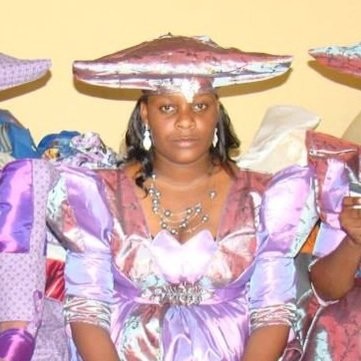
Albertinah Matsika
Research Scholar - Wildlife & ecosystem management Programme; Wildlife & Aquatic resources, Botswana University of Agriculture & Natural Resources: Center for Sustainable Resources
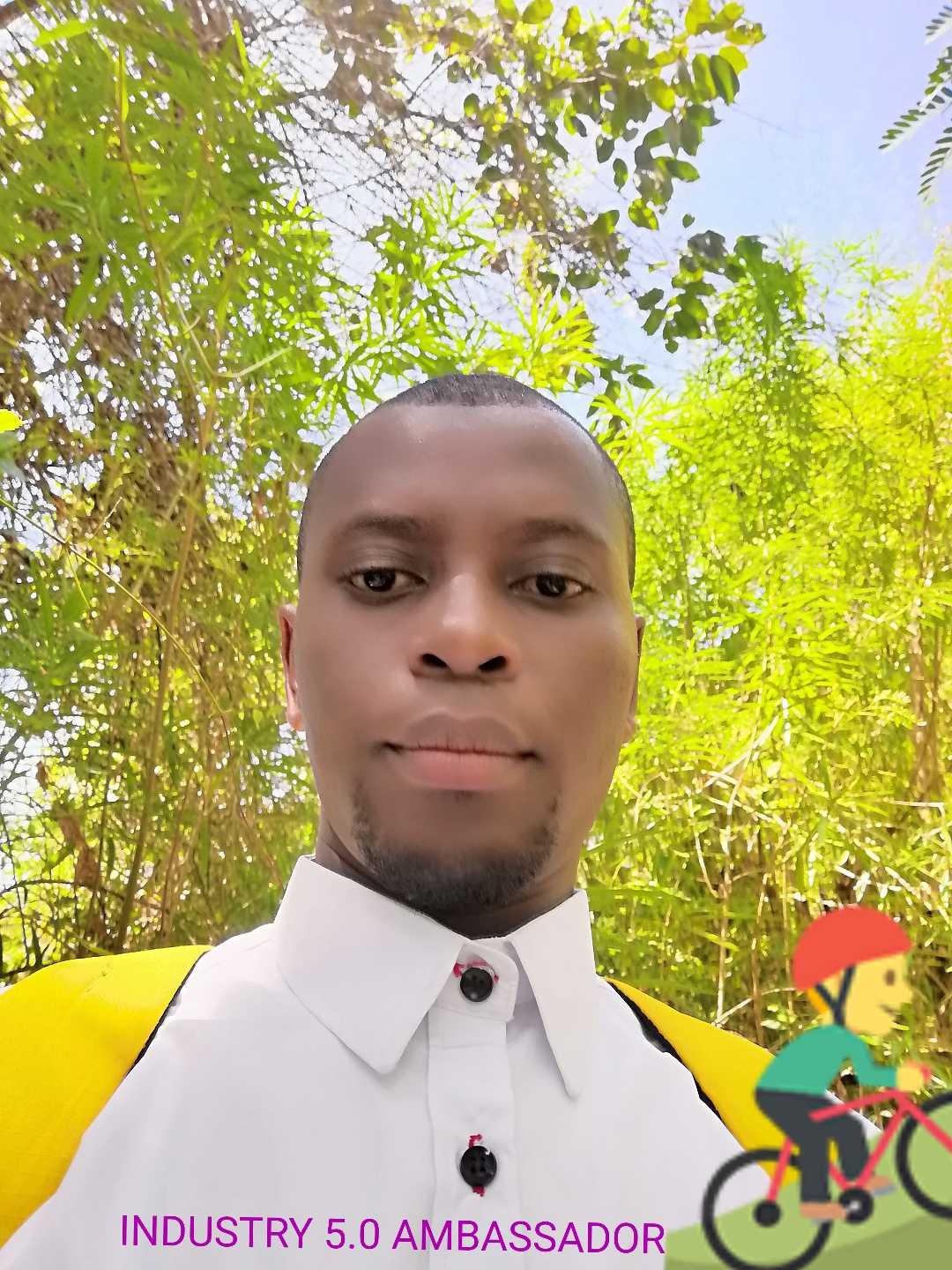
Greetings, I'm Ussi Abuu, a prominent Conservation Catalyst within the WildHub community, stationed in the beautiful landscapes of Zanzibar, Tanzania. I proudly serve as the INDUSTRY 5.0 Ambassador in Tanzania, advocating for sustainable industrial practices, and I also hold the role of Tanzania Coordinator at the Global Sustainable Future Progress through Partnership network.
My journey towards environmental and social progress has been rich and diverse. I previously contributed to the Tanzania Development Trust as a mapper, utilizing geographical data to support development initiatives. Additionally, my commitment to global betterment led me to join the United Nations Volunteers program in 2016, where I've continued to make a meaningful impact.
Together, we can explore the vast realm of Sustainable Development Goals (SDGs) and how they intertwine with my experiences and endeavors. Join me on this journey towards a more sustainable and equitable world.
José Luiz Esteves works professionally through EXPONENTIALIS
Learning and Education Projects and INTELIBUSINESS, a Social
Responsibility and Corporate Sustainability Consulting venture, created in Belo Horizonte in 2006. He has relevant experience in different Triple Helix organizations in Brazil, in management positions. Professional with knowledge of the business environment, social
responsibility / third sector, and education in Brazil and Latin America,
especially in the aspects of institutional management, market intelligence, network development, has a degree in social communication and public administration. He obtained his specialization, masters, and a doctorate in these areas, and the international diploma GUDS / Urban Management and
Sustainable Development (by the World Bank / UN-ECLAC / MINURVI /
Italian Coop) In 2001. Has a solid background in Social Program
Management, Strategic Planning, BSC, Participatory Appraisal, Project
Logical Framework, Resource Mobilization, and Fundraising (by The Resource Alliance) held in Brazil and abroad.
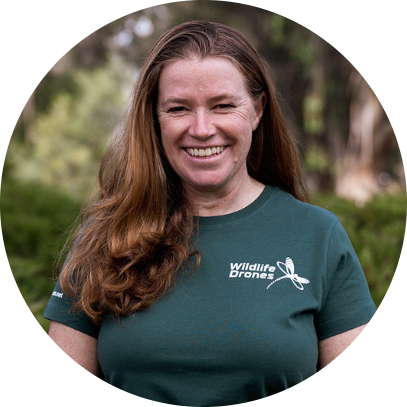
For over 20 years, Dr Debbie Saunders has worked as a wildlife biologist, specialising in threatened species conservation management and worked with diverse teams of talented people to develop the world’s most advanced drone radio-telemetry solution – resulting in the establishment of Wildlife Drones.
As a passionate founder, CEO and Chief Remote Pilot of this award-winning deep tech company, Dr Saunders gets to empower wildlife biologists and land managers to achieve greater insights and conservation impact all around the world by cost-effectively collecting more data, more often with less effort.
How can Wildlife Drones help you? - Track up to 40 animals simultaneously and in real-time - Survey difficult terrains like rugged mountains and swamp areas easily - Save time, effort and money so you can focus on what really matters - Collect more data, more often with less effort
She has received an ACT Innovation Award as well as an ACT Government Innovation Connect grant for her creative business solutions for challenging research problems.
Debbie believes that drones are a highly valuable and flexible tool that provide unprecedented opportunities for new insights into the world’s most complex and fascinating natural ecosystems.
Adam Roberts
Counter-Wildlife Trafficking / Conservation Biologist / Wildlife Photographer, Self Navigating!
Dice alumni, Conservation Biology MSc.
Adam has been a global wildlife conservation practitioner in wildlife trade, a forager, ranger, field guide, and wildlife photographer for over 18 years. He has worked within Cambodia for 8 years with NGOs including the Wildlife Conservation Society, Jahoo, Elephant Valley Project, and Marine Conservation Cambodia. His writing, captures, and photo journalism has been shared by NatGeo, Disney, Traffic, and the IUCN. He focuses his photographic work on the unseen, wildlife trade, and environmental education, giving nature a voice not commonly heard. He hopes that his work inspires a different perspective on our human place within nature as its protectors, not living alongside it, but rather living as one and creating a better world to leave for future generations.

Louisa Richmond-Coggan
Founder & Conservation Consultant, LRC Wildlife Conservation Consulting
Is your organisation's technology decision-making as structured as it needs to be? Conservation organisations face real pressure to adopt technology, often without a clear process for assessing whether it fits their context, capacity, and conservation goals.
The free Conservation Technology Decision Quiz takes five minutes. It scores your approach across three areas: Decision Clarity, Fit and Feasibility, and Delivery and Performance. Results include practical recommendations matched to your score, so you can see where your decision process is strong and what to address first. Start here: Technology Decision Quiz
I work with conservation organisations and funders on structured technology decision-making, the process that determines whether adoption actually works. Twenty-five years in conservation across the Global South. Technology-agnostic, no vendor affiliations.
If your team is navigating a technology decision, evaluating a pilot, or funding organisations that are, I'd welcome a conversation.
BACKGROUND
Dr. Louisa Richmond-Coggan. My career spans field-based ecology, international NGO and policy work, academic leadership, and conservation technology decision-making.
Field career: large carnivore ecology and human-wildlife coexistence research across Eastern and Southern Africa, including as Head of Ecology at the Cheetah Conservation Fund in Namibia. I led Namibia's National Leopard Census, a multi-stakeholder project whose results fed into national and international policy. I built the Carnivore Tracker app, the first of its kind in Namibia.
Institutional career: BirdLife International, UNEP-WCMC, TRAFFIC International, Earthwatch. Academic Dean at the School of Wildlife Conservation at the African Leadership University. Technology and innovation work with IUCN Tech4Nature, including leading three Innovation Challenge Workshops and contributing to the strategic guidance framework on conservation technology adoption.
The Navigating Web 3.0 Guide: A Tool for Conservation came out of that work. It is a decision-support tool that starts with your conservation goals and operational realities, not the technology. 34 guided questions assess which emerging technologies are worth exploring across four areas: data collection and management, resource allocation and financial management, collaboration and communication, and monitoring and evaluation. Now integrated into the IUCN GSAP SKILLS platform. This guide is where the decision-support work started, and it remains the clearest entry point into conservation technology decision-making for teams new to this field.
Research at the International Conservation Technology Conference, Lima in 2026 confirmed what I had been building toward: the gap in conservation technology is not the tools. It is the structured process for deciding whether, which, and how technology fits an organisation's context.
PhD, Nottingham Trent University. MSc Conservation Biology, Durrell Institute. Fellow of the Royal Geographical Society. IUCN WCPA Task Force on Human-Wildlife Coexistence. Member of the Nature Tech Collective and Top Tier Impact.
I am a WildLearning Specialist at WildTeam with a PhD in Conservation Biology.
My background is mainly in species conservation, education and capacity exchange. I researched mother-young interactions in gorillas and chimpanzees, in captivity and the wild. After that, I worked for three years in Indonesia, where I developed and implemented youth ambassador and community engagement programmes on local and regional scales. I co-founded WildHub, a community of nature conservation professionals, in 2020 and work as their Community Lead. I am furthermore on the Advisory Board of the Durrell Institute of Conservation and Ecology (DICE) at the University of Kent where I obtained my PhD on capacity development for conservation in 2022.
Alan J. Hesse
Senior Behaviour Change Specialist (TRAFFIC); also independent author-illustrator and climate educator.., TRAFFIC International
My conservation career started in 1992 when I helped set up and joined a University expedition to the Bolivian Amazon. What started out as a 3-month experience ended up being a life-changing inflection point that set my professional and personal course to the present day. My conservation experience was built bottom-up and hands-on, and includes field data collection and logistics, grassroots organization leadership and project management, community engagement and capacity building, M&E, training and behavior change, and lately climate education through authorship of graphic novels and other resources. My conservation career includes positions as a senior staff member and a principal investigator at the Bolivian BirdLife Partner Armonía, field investigator in the Gran Chaco with WCS Bolivia, field logistics officer for Conservation International's RAP expeditions, and Programme Manager and Senior Manager of M&E at Rare. I currently work as Senior Behaviour Change Specialist with TRAFFIC International, applying behavioural science approaches to support TRAFFIC's work across wildlife supply chains globally.
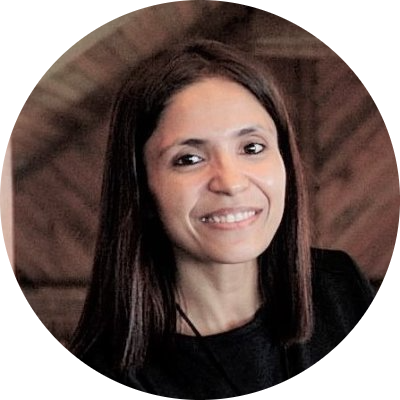
I am a conservationist based in Nepal. I did my MSc in Conservation and International Wildlife Trade from DICE-Kent. I am currently working to understand the trade dynamics of some of the most traded medicinal plants like orchids and yews.
I am interested in understanding how socioeconomic and behavioral factors interact and impact the wildlife trade (incl. the online trade spectrum and various stakeholders in it) and using this knowledge in designing effective conservation actions.

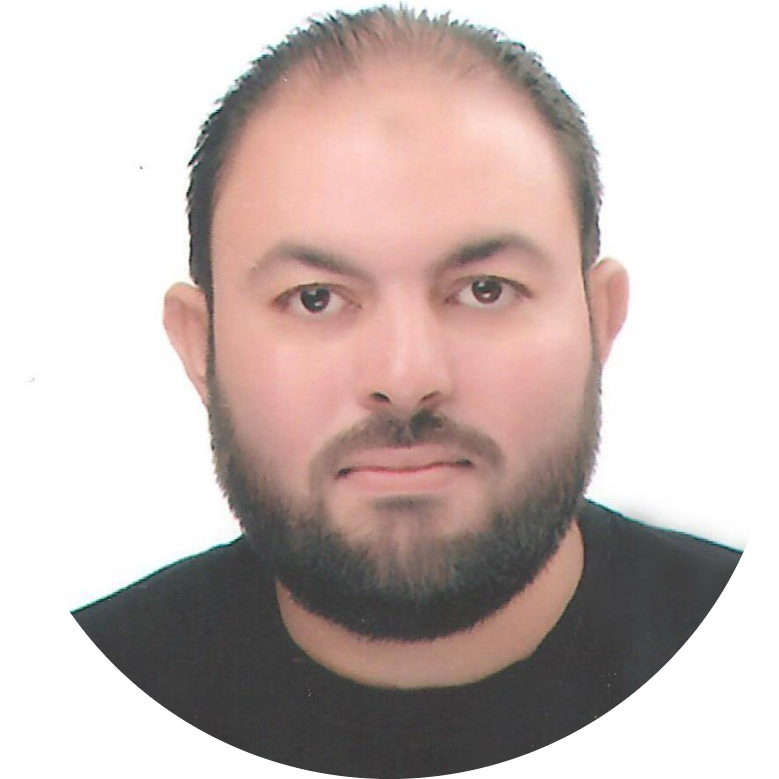
Mohamed Shrief Mokhtar Sobah Taalab
Senior environmental researcher, Ashtum El- Gamil Protectorate, Nature Conservation Sector, Ministry of Environment.
I am an educator and researcher at Bahir Dar University, Ethiopia. As a professional, I have been teaching students in wildlife conservation and management as well as doing research and community outreach in wildlife conservation. In our country, the protected areas have been expanding in coverage, but the wildlife species have been declining in population abundance and diversity. Thus, I am interested to work on conservation capacity build, research, and consulting protected areas to resolve the contradicting facts of expansion of protected areas and loss of wildlife resources. In this regard, I am happy to develop a link with any conservation experts who are interested to work together and share experiences.