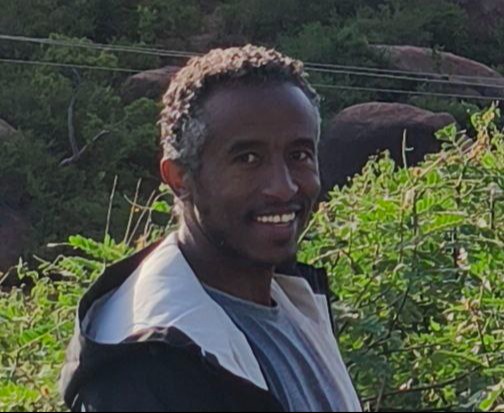
Tesfaye Golja Ayalew /EWCA Ethiopia
Over 12 years with the Ethiopian Wildlife Conservation Authority (EWCA). Currently researching IoT-enabled anti-poaching networks to enhance law enforcement in Babile Elephant Sanctuary.
My name is Tesfaye Golja Ayalew, and I have been working with the Ethiopian Wildlife Conservation Authority (EWCA) for the past 12 years. During this time, I have served the Authority in various positions within the Information Communication Directorate. Currently, I am conducting research in the field of Law enforcement on the topic “Enhancing Wildlife Law Enforcement in Babile Elephant Sanctuary Using IoT-Enabled Anti-Poaching Networks.” My work focuses on integrating IoT, sensor networks, and digital tools to strengthen anti-poaching operations and protected area management.
I am excited to connect with other professionals here to share insights on how technology and ICT can better protect our wildlife and strengthen enforcement efforts.
Please sign in or register for FREE
If you are a registered user on WildHub, please sign in
A warm welcome to WildHub, Tesfaye! Thank you for sharing about your work.
Your research is highly relevant for many protected area managers here.
If you’re open to sharing:
What is one key lesson you’ve learned so far about using digital tools in wildlife law enforcement that others should know before they start?
Looking forward to learning from your experience.
As a Master’s student in computer networking and security, I am dedicating my thesis to a practical, technology-driven solution for the Babile Elephant Sanctuary. Historically, the sanctuary has relied on traditional law enforcement methods; the elephant population declined from 8700 in the 1970s to a critical minimum range of 1,631. To mitigate this decline, I reviewed some research articles and got a lesson we should use a technology to monitor wildlife and human activity in the protected areas using GPS collar, motion/sound sensors, drones, camera traps applied on perception layer to collect a data from the environment and send to the integrated getaways, like LoRaWAN, 4G/5G, and Satellite links on Network layers, using those getaways the field data will be sent in to actionable intelligence for real time monitoring and protection on the processing and application layers.
The data presented above was incorrect. The elephant population declined from 8,700 in the 1970 to a minimum of 1631, which refers to the national elephant population, not specifically to the Babile Elephant Sanctuary. The accurate data for the Babile Elephant Sanctuary indicates that when the sanctuary was established in the 1970s, it was estimated at approximately 600 individuals. Currently, this number has declined to an estimated minimum of about 210 elephants.
I sincerely regret this mistake and appreciate your understanding.