The role of self-care in perceptions of satisfaction with life, organisational job satisfaction, and self-efficacy in zoo and aquarium professionals
Preview
Abstract
This research sheds light on how professionals with different roles in zoos and aquariums perceive individual and organisational job satisfaction, self-efficacy, and satisfaction with life, and which types of self-care contribute to these variables. This was achieved through a mixed methods approach of a survey (completed by 442 participants) and follow-up interviews (in 39 participants) with recruitment across 23 organisations. For the single question, I am satisfied with my job (reflecting individual job satisfaction), 44% of participants responded somewhat agree and 27% responded strongly agree, indicating that most participants (71%, n = 442) were satisfied with their job, and this was particularly true for those who considered their job a calling. Differences across job roles were found, with the largest variability for those in Junior animal caregiver positions, and with CEOs reporting the highest median of individual job satisfaction scores. A very weak positive significant relationship exists between self-efficacy and levels of organisational job satisfaction, which may be explained by the fact that this relationship is complex and multifaceted. A weak positive significant relationship between self-efficacy and satisfaction with life and a moderate positive relationship between organisational job satisfaction and satisfaction with life were also identified. The Generalised Linear Model analyses revealed that only one factor, Experience, and contributed to all independent variables (i.e., total satisfaction with life, mean organisational job satisfaction, and total self-efficacy), suggesting that participants with more time in the field reported higher total satisfaction with life, organisational job satisfaction, and levels of total self-efficacy. Various types of self-care (physical, emotional, spiritual, and workplace) were also significant positive contributors to satisfaction with life, but only workplace self-care contributed positively to organisational job satisfaction, whereas only intellectual self-care contributed positively to self-efficacy. Thematic analyses of the interview data contextualised the findings, with specific examples. This study contributes important empirical data that provides guidance for developing holistic employee wellbeing programs, continued professional development, and more appropriately aligned education to improve overall wellbeing of zoo and aquarium personnel.
Conclusion
This research sheds light on how professionals with different roles in ZOAQs - who perceive their work as meaningful and a calling - perceive their life satisfaction, individual and organisational job satisfaction, and self-efficacy, and which types of self-care contribute to these variables. Many participants in this study reported high levels of individual and organisational job satisfaction, but large variations were found between job positions. Many professionals closely responsible for animal care and wellbeing would benefit from further improvements in individual job satisfaction. Individual job satisfaction and calling were correlated, but no relationship was found between calling and organisational job satisfaction, which may suggest a misalignment of values, expectations, and needs. Additionally, based on the results of Experience being retained as a predictor for life satisfaction, organisational job satisfaction, and self-efficacy, while Education being non-significant, we recommend that the ZOAQ field needs to further develop and influence the type of appropriate, meaningful, and aligned educational pathways, including continued professional and personal development, needed for those in different job positions. This would include the most up to date access to topics such as animal care and wellbeing, caring for self, communication, cross departmental teamwork, and enhancing self-efficacy. Alignment with educational organisations can further professionalise and standardise the field while concurrently working with governmental organisations to regulate the field and professions. These would all contribute to preventing and proactively addressing the needs and requirements do be a professional in ZOAQs, preparing, and continuing supporting individuals for the field and job(s) ahead, which is dynamic in nature.
Foundational education combined with continued professional and personal development can all assist in contributing to a more well-rounded approach to wellbeing, and increasing meaningful, relevant, and empowering experience. Furthermore, overall organisational support, promoting holistic employee wellbeing approaches where people are respected and heard, and seen as bringing value to a mission-driven organisation, compassionate leadership, and a true culture of care will all be essential to support professionals to be well while doing good. Yangming expressed in his work on Unity of Knowing and Acting a sentiment along the lines of ‘To know and not to act, is not to know’. We hope that the knowledge gained will provide stepping stones to act and change. Both individual and organisational commitment and responsibility to self-care and We-care is needed to support life satisfaction, individual and organisational job satisfaction, and self-efficacy and achieving our interconnected collective goals of caring for peoples, other animals, the community of life, and planet we share.
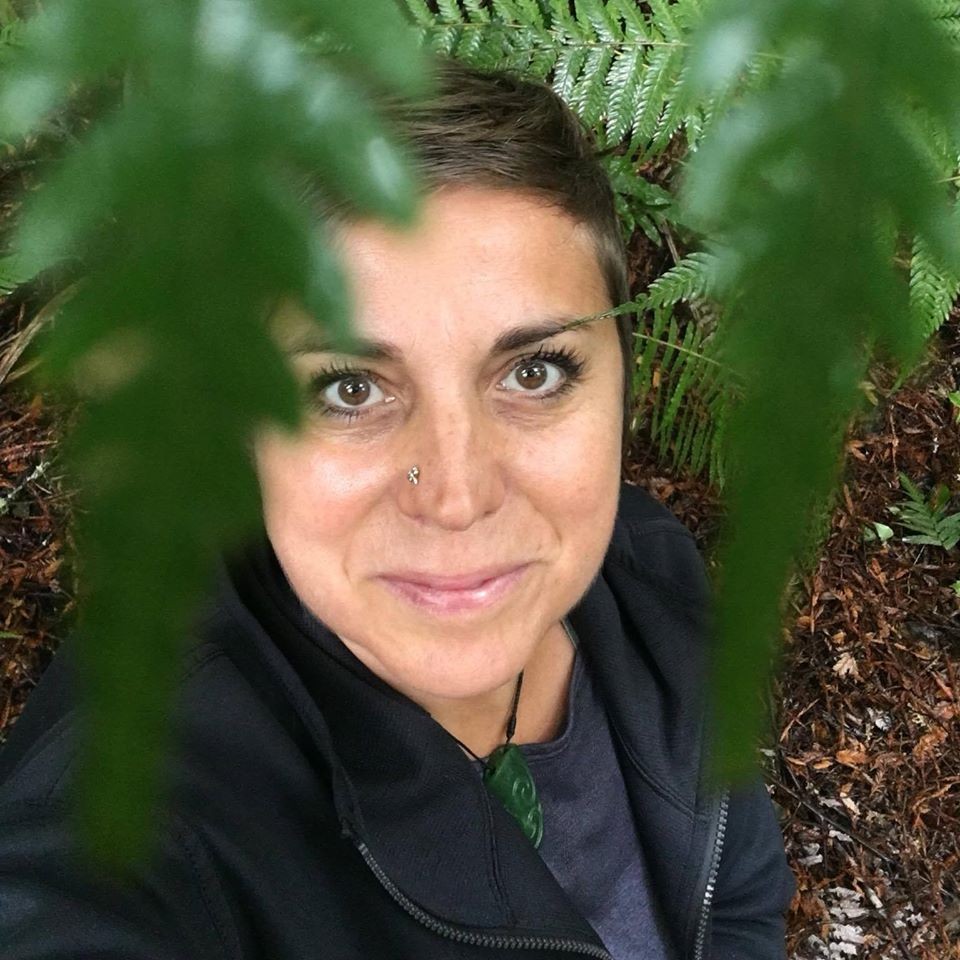
Hi, I‘m Sabrina, I love the outdoors, laughter, journeys, and connecting with others, including other animals! How are you (but then really) & can you please tell me a story, are two of my favourite questions. Stories of call kinds can inspire, bring us joy, connection, and help us heal. Stories and ACTs can affect change. One of my favourite quotes is along the lines of ‘What you do speaks so loudly that I cannot hear what you say’ by Ralph Waldo Emerson. It connects deeply to my ideas around flourishing for all. For peoples, other animals, the greater community of life, and this beautiful planet we share. To listen, learn, share, and act from a culture of respect and care. I look forward to connecting with you.
Sabrina Brando PhD is the director of AnimalConcepts, including InterBeing, an online platform uniting people and organisations on 6 continents, combining animal, people, and planetary wellbeing. Sabrina is a Certified Compassion Fatigue Professional and an Optimize Eudaimonia Coach, and has an MSc in Animal Studies. Her PhD at the University of Stirling in Scotland focussed on human wellbeing at an individual, team, leadership, and organisational level in animal wellbeing and conservation professionals. Sabrina is a graduate of the Inner MBA class for which she completed a project on creating a culture of care in the workplace.
Sabrina teaches at universities and works with zoos, aquariums, sanctuaries, and other facilities worldwide. She is a frequent keynote speaker and has organised over 500 events through AnimalConcepts since 2004. Sabrina has published popular and academic articles, and works with governments, writing policies and guidelines. She is the author of a book on ‘Optimal Welfare of Ageing Wild Animals in Human Care’ by Springer Nature. She is working on a forthcoming book by Taylor & Francis on wellbeing in animal care professionals and wildlife conservationists, informed by her 37+ years in the field and PhD research, together with the external AnimalConcepts team a book by Routledge on Animal Behaviour Training and Ethics for Animal Wellbeing Education Research and Conservation, and a book close to her heart with all the things she wishes she knew when starting in the field of animals and conservation, with the provisional title of Wild about self-care.
In 2018, Sabrina became a Chief Storyteller. She loves storytelling and writing - particularly about animals, the human-animal connection, and the natural world. She often wears a button with “I love stories” on it. This button sparks many great conversations and storytelling about animals, among many other topics, from people she meets at conferences to strangers on a plane. If you have a story you want to share about the animal(s) you care(d) for, a special friendship you have with your favourite animal, a great action for animals, peoples, or the planet you were involved in, or anything else that makes your heart sing, Sabrina would love to hear from you!