Massacre on the motherboard: The Impact of Commensal Geckos on Electrical Infrastructure: The Case of Hemidactylus frenatus on Saipan
Like
Be the first to like this
 Commensal gecko species of the genera Hemidactylus, Gehyra, and Lepidodactylus are well known for their ability to colonize human-dominated environments. While their role in controlling insect populations near artificial light sources is documented, their interaction with electronic components leads to underreported economic and technological consequences.
 A study conducted on the island of Saipan (Commonwealth of the Northern Mariana Islands) highlights how mini-split air conditioning units act as death traps for the introduced Common House Gecko (Hemidactylus frenatus).
 Summary of Observations and Ecological Mechanisms:
 Repeated Equipment Failures: Two separate incidents in 2020 resulted in air conditioner compressor failures caused by short-circuited motherboards. Technical inspections revealed mummified individuals fused directly to the circuit boards.
 Thermoregulatory Attraction: Circuit boards on standby or in operation emit residual heat. This microhabitat provides geckos with an optimal temperature buffer for thermoregulation, digestion, and egg maturation, sheltered from predators.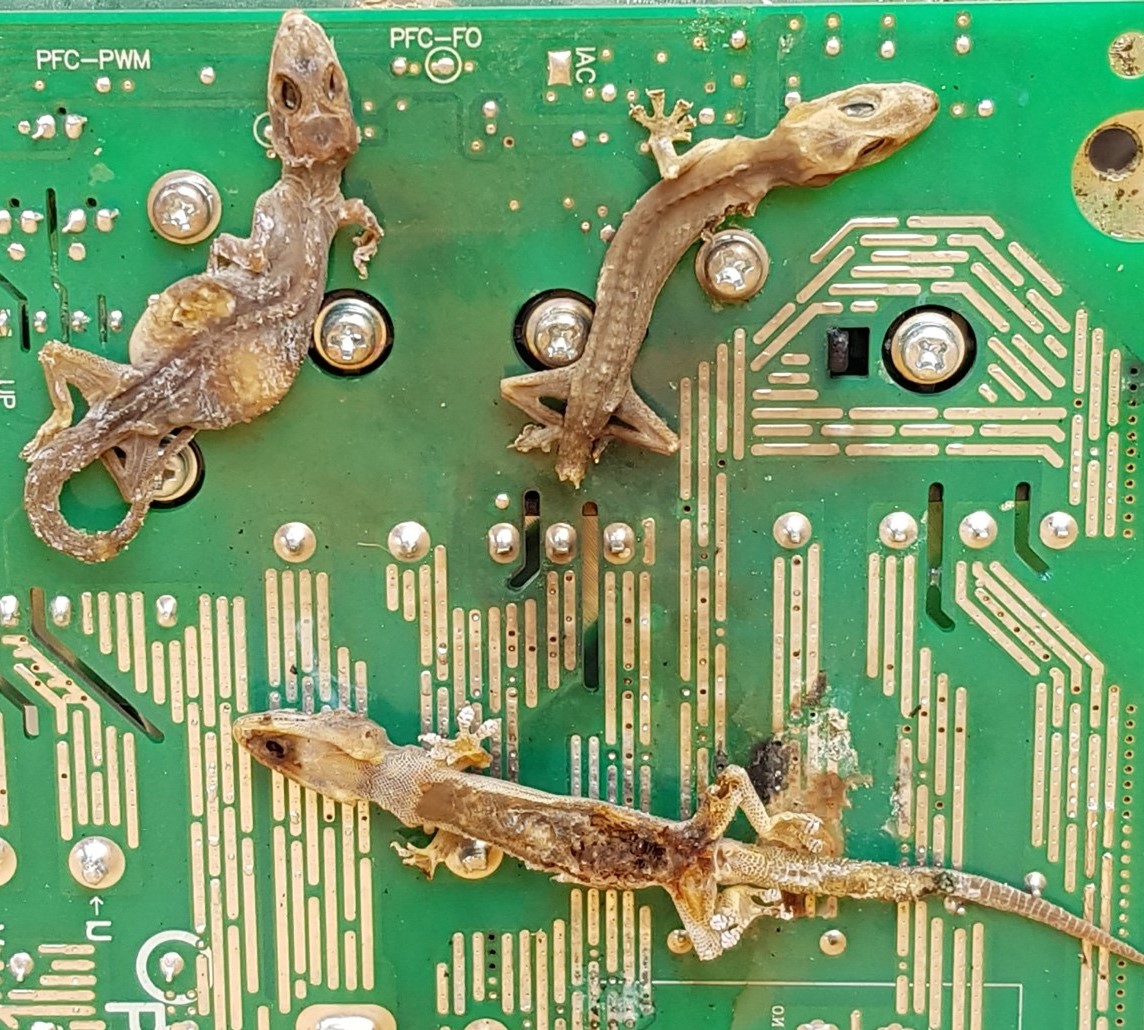
 Infrastructural and Economic Impacts: Cross-connecting electrical poles through a lizard's body causes immediate component failure. This issue extends beyond Oceania: similar damage affecting air conditioners, televisions, and high-voltage switchboards has been documented in Australia, Cuba, and Taiwan.
 Mitigation Strategies: Physical exclusion measures—such as sealing access points with fine stainless steel mesh, filling cable passages with silicone or expanding foam, and unplugging idle units—represent the most effective solutions.
Field herpetologist, Member of the IUCN SSC Monitor Lizard Specialist Group
Naturalist, traveler, French-Polish herpetologist, interested in biodiversity and the conservation of herpetofauna. I have always been passionate about observing and studying amphibians and reptiles, especially different species of lizards in many countries. This has allowed me to gain experience in scientific research by collaborating with other specialists, attending numerous conferences and writing papers on herpetofauna. I participate in numerous monitoring and conservation programmes. Member of the IUCN SSC Monitor Lizard Specialist Group. Addicted to Natural History.
Education and the sharing of knowledge is the key to progress and understanding.
"Learning from the past to understand the present and prepare the future."

Please sign in or register for FREE
If you are a registered user on WildHub, please sign in