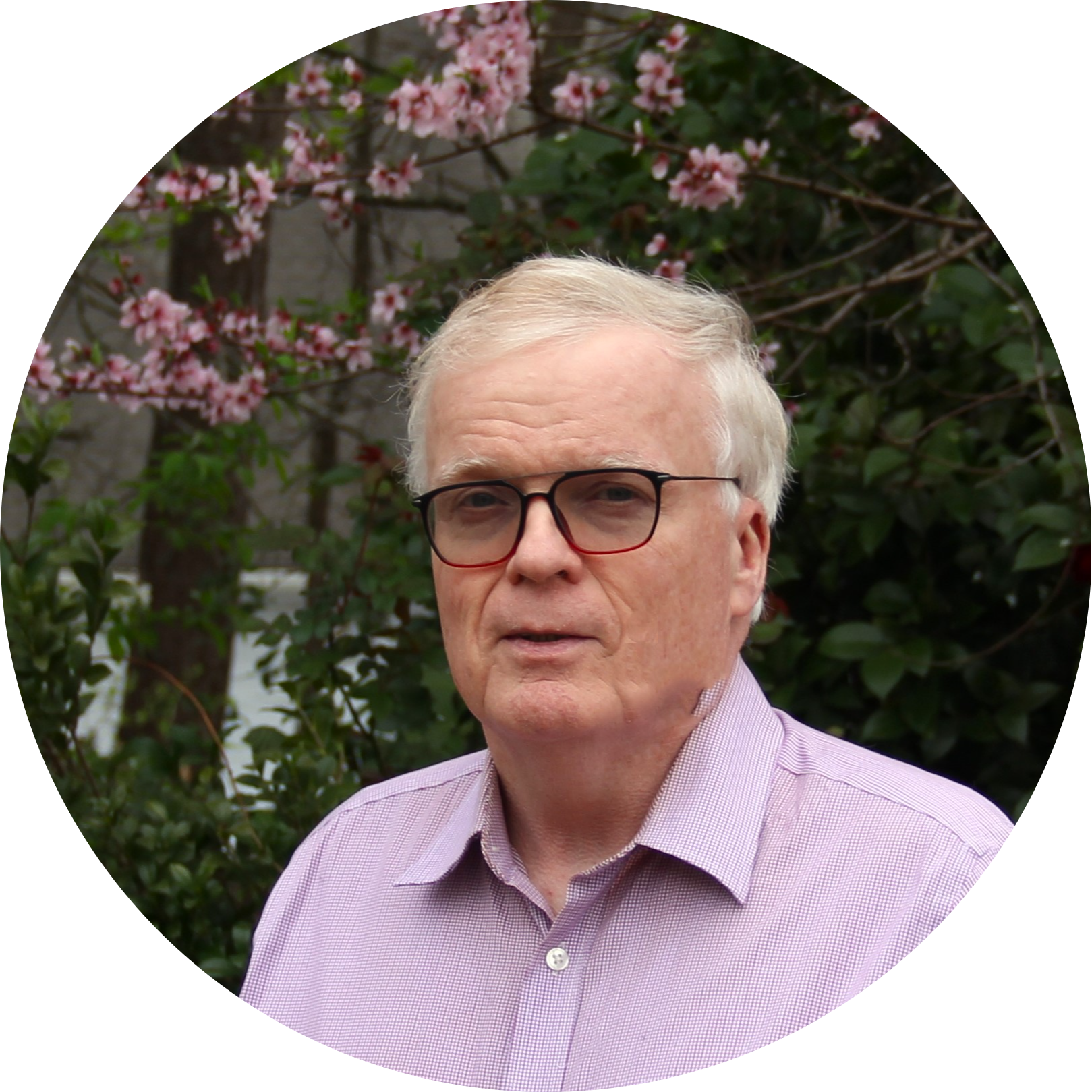
About Ricky Naude
I worked on airport cargo systems before I worked in conservation, and the two have turned out to be the same subject.
From 1982 to 1989, I was with the Dade County Aviation Department at Miami International Airport, where I worked on the Miami International Cargo System, one of the first automated cargo clearance systems in the United States built and operated by an airport authority; on the Consolidated Cargo Clearance Center, which brought the federal inspection agencies at MIA under one roof; and on forecasting inspection staffing for passenger processing.
I then practiced law for nearly thirty years, largely on commercial instruments and technology licensing, and taught law and business at Embry-Riddle Aeronautical University for seven years. At Baker McKenzie, I was a partner responsible for professional development for the lawyers in the firm's Miami office. I hold a Juris Doctor and a Master's in International Business.
In conservation, I have worked on grant development and research, including for the J.A.C.K. Primate Sanctuary in the Democratic Republic of the Congo until 2025, and on illegal wildlife trade and the questions that travel with it: the bushmeat trade, zoonotic disease, and what becomes of confiscated animals. More recently, I have spent two years training and evaluating large language models, which bears directly on what this field is now proposing to build.
I look for the seam between two systems built correctly for their own purposes but not jointly owned, and how to specify the fix as something draftable. My current work focuses on the records that international wildlife trade generates, legal and illegal: who creates them, what they carry, and who can act on them.
I am interested in biodiversity hotspots in Africa, Southeast Asia, and Latin America, and in work that connects conservation outcomes to community-led economic programs and Indigenous interests.
First article: We Count What We Catch: Air Cargo, Wildlife Trade, and the Number Nobody Has Measured, WildHub, November 2026.
Verification: Please indicate how we can verify your professional conservation role
Which category below best describes the type of organisation you currently work for/or run?
Areas of expertise
Would you be open to sharing your lessons learned with the WildHub community?
Intro Content
We Count What We Catch: Air Cargo, Wildlife Trade, and the Number Nobody Has Measured
Followers

Recent Comments
Thank you for sharing this insightful analysis, Ricky. I particularly appreciate how you've drawn on your experience in aviation, law and conservation to highlight the gaps between commercial cargo systems and wildlife enforcement. It's a valuable example of how expertise from different sectors can help us better understand conservation challenges.
It's also encouraging to see you building on insights previously shared by other WildHub members. @Arvind Kumar Chaurasia, Ricky references several of your contributions on customs cooperation and wildlife trafficking. I'd be interested to hear your perspective on the challenges he's identified, particularly around connecting existing customs data with effective wildlife enforcement.
Ricky, I'm looking forward to following this series and learning more about the practical opportunities you identify for bridging these systems.
Thank you, Thirza. The gap was not obvious to me at the time, which is part of why I wanted to set it down. We were building a commercial system and had no view of what happened on the enforcement side of the wall, and no reason to design for an outcome we would never see. On the practical side, the encouraging part is that most of what would be needed already exists: the filing arrives before the aircraft does, and species detail is specified in the partner agency message set. So the next piece asks a narrower question than what should be built: who files what, when, and who is in place to act on it before release. My working sense is that the opportunity lies in timing and handoffs rather than new data collection, but I want to trace it properly before saying so with any confidence. The research keeps producing more threads than one article can follow, so what comes after that may shift depending on where the material leads.
Arvind, your posts were a real help, and I cited three because they kept arriving at the same place from the opposite direction. You wrote that customs already holds what a wildlife investigation needs: manifests, bills of lading, declarations, consignor and consignee details, risk-profiling history. My question is narrower, and I cannot answer it from published sources. In your administration, does species-level information from a CITES permit ever reach the customs risk-profiling system itself, or does it stay in a parallel channel with the wildlife authority? I am fairly confident the data exists. What I do not know is whether it crosses, and I suspect the answer differs by country in ways nobody has written down. @Arvind Kumar Chaurasia
You are most welcomed and we are happy to have you join our community with your wealth of experience and legal background
Hello Rebecca,
I am genuinely excited about the opportunity to learn and contribute in the coming months, especially alongside my classmates in the GWWC course. Despite being relatively new to the field of conservation, I have gained valuable experience over the past year and a half through my grant work with two NGOs, one of which focuses on primate conservation in the DRC.
I am particularly keen to learn more about Nigerian projects, as I believe your expertise and experience could be invaluable in shaping my understanding of the key issues surrounding Nigerian wildlife conservation and the empowerment projects you mentioned in your profile.
I would love to hear about the most interesting empowerment project you could currently be working on, if you had the choice. Your insights would be greatly appreciated.
A warm welcome to WildHub, Ricky! Great to have you join our community and I look forward to learning from you! Would you perhaps be willing to contribute to a recent discussion here on WildHub around enablers of collaboration? I look forward to reading your perspective!
Hi Thirza! While preparing later today for my GWWC class on Tuesday, I will scan some recent posts on this platform and add my thoughts. Thank you for your kind invitation and encouragement.
Hi Damas,
It's great to meet you on WildHub! I hope to learn a great deal from my GWWC course and all the talented and knowledgeable people like you on this platform. What is the most interesting water resource or environmental project you have worked on in Tanzania? Alternatively, could you briefly share some information about a project you would like to pursue that aligns with your areas of expertise?
All the very best,
Rick