Introduction:
The illicit trade in wildlife derivatives is often dominated in public discourse by high-profile megafauna such as tigers, elephants and rhinoceroses. However, one of the most volume-driven, covert, and ecologically damaging illegal wildlife trades in India targets small carnivores: the mongoose. Thousands of mongooses are poached annually mainly for their hair to supply a specialized shadow industry—the manufacture and distribution of high-grade fine art paintbrushes.
An important feature of this crime is the enormous number of mongoose that may be killed to obtain a relatively small quantity of usable hair. Wildlife organisations have reported that approximately 30–40 grams of hair may be extracted from a mongoose, of which only around 20–22 grams may be suitable for manufacturing brushes. Consequently, obtaining one kilogram of usable hair may involve killing approximately 50 mongooses.
Indian Mongooses: Species and Habitat:
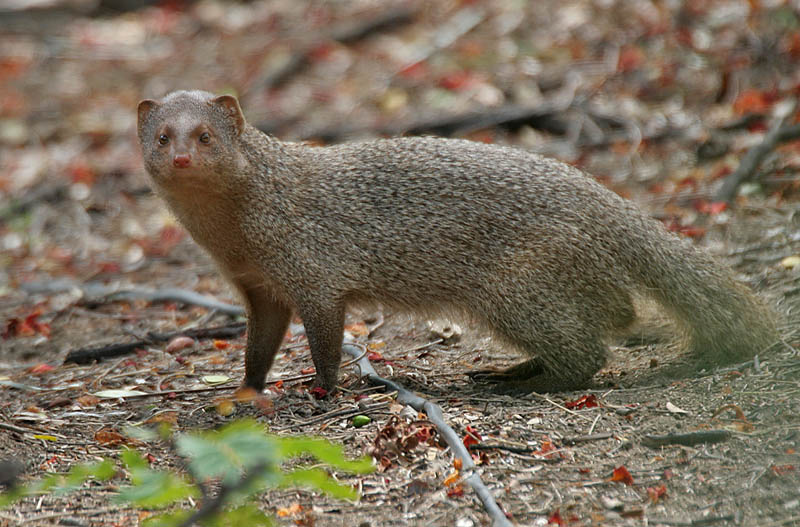
India is home to six widely recognised mongoose species: the Indian grey mongoose (Urva edwardsii, formerly Herpestes edwardsii), ruddy mongoose (Urva smithii), small Indian mongoose (Urva auropunctata), stripe-necked mongoose (Urva vitticolla), crab-eating mongoose (Urva urva) and Indian brown mongoose (Urva fusca).
|
Mongoose Species |
Habitat |
|
Indian grey mongoose |
The commonest species and the one most often identified in seized brushes. It occurs across India, Pakistan and Nepal in open forest, scrub, grassland, semi-desert, cultivated fields and near human settlements. |
|
Ruddy mongoose |
Forests and shrubland of India and Sri Lanka. |
|
Small Indian mongoose |
Native from Iraq to northern India and widespread in agricultural and settled landscapes. |
|
Stripe-necked mongoose |
The largest Indian species, found in forested areas of the Western Ghats and Sri Lanka. |
|
Crab-eating mongoose |
Northeastern India and onward into Southeast Asia. |
|
Indian brown mongoose |
Restricted to the Western Ghats (Karnataka and Kerala) and Sri Lanka, mainly in wet evergreen forest at higher elevations. |
Legal and Protection Status:
|
Framework |
Protection Status |
|
IUCN |
The IUCN lists these species as “Least Concern”. However, this classification should not be interpreted as an indication that their exploitation is legally permissible or that local populations cannot be adversely affected. |
|
CITES |
All Indian mongoose species are listed under Appendix III of the Convention on International Trade in Endangered Species of Wild Fauna and Flora (CITES). International commercial export of raw mongoose hair or finished brushes without valid CITES permit/Certificate of Origin is illegal. |
|
Wild Life (Protection) Act of India |
All indigenous species of mongooses are protected under Schedule I. This affords them the highest level of legal protection. |
Why Mongooses Are Poached:
The principal driver is demand for mongoose hair in paintbrushes. Mongoose guard hair is valued for its strength, elasticity, ability to hold a point and durability in fine art, watercolour, varnishing and similar applications. Brushes made from it have historically been sold as “sable,” “Indian sable,” “water-colour” or “badger” brushes, often without disclosing the true material.
Meat is secondary driver. Reports on the traditional hunting communities involved reveal that the hunters eat the meat and sell the hair. In local folk medicine, oil extracted from mongoose fat is also misinformedly believed to cure rheumatism and snakebite toxins. For enforcement, it means that possession of mongoose meat or carcasses in a settlement can be an early indicator of a hair supply line.
Poaching Hotspots and Modus Operandi:
Some pockets in Kerala, Karnataka, Tamil Nadu, Maharashtra, Madhya Pradesh, Chhattisgarh, Uttarakhand and Uttar Pradesh have been reported as hotspots of mongoose poaching. Traditional hunting communities have been identified as the main suppliers of raw hair, including the Narikuravar in Tamil Nadu, Hakki Pakki in Karnataka, Gonds in Andhra Pradesh and Karnataka, and Gulia, Sepera and Nath groups in Central and Northern India.
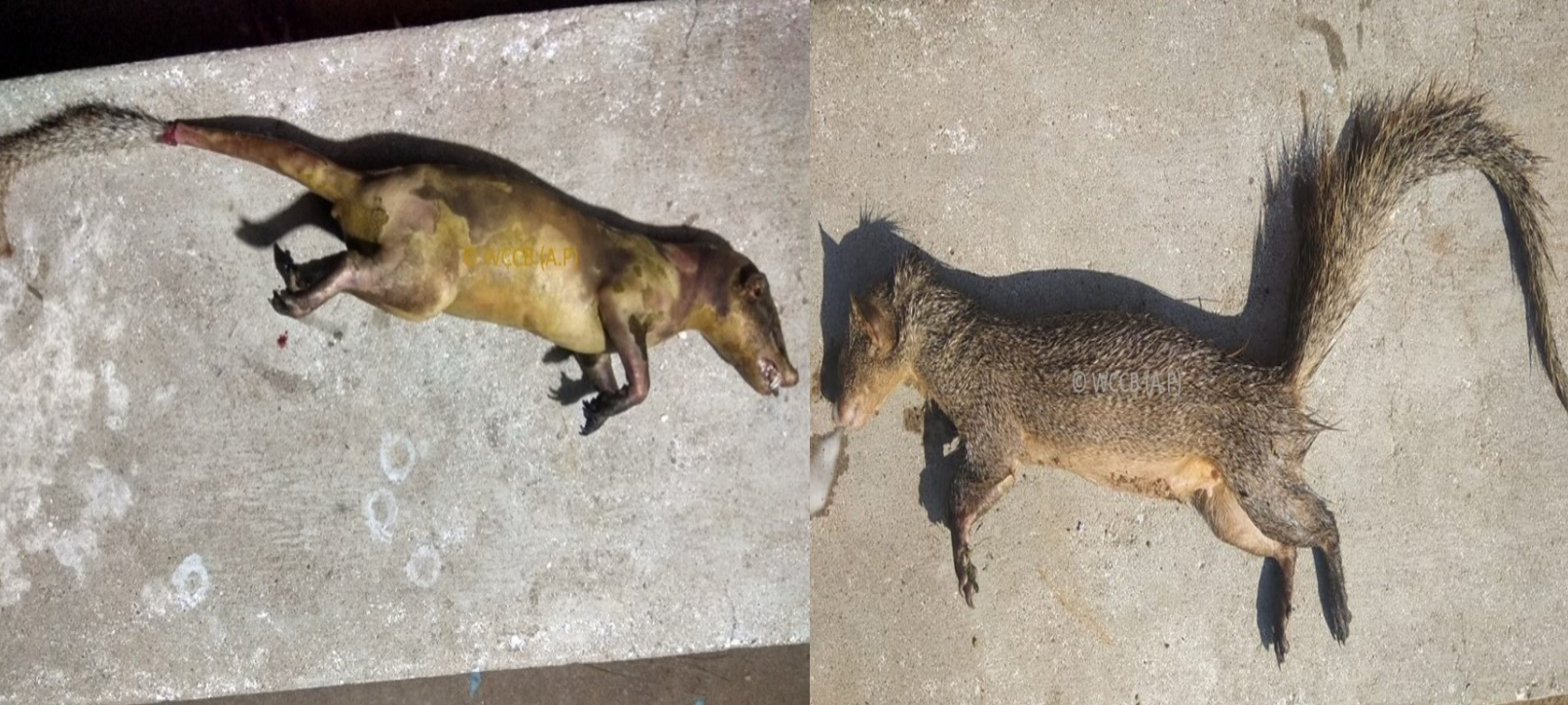
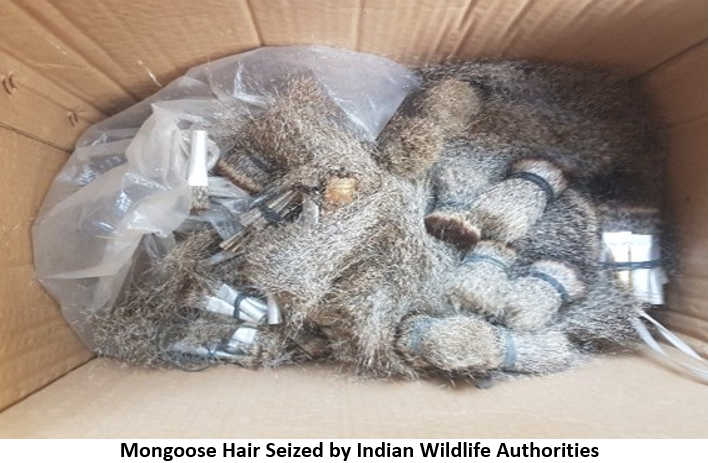
Hunters identify mongooses in agricultural fields, scrublands, forest/field edges, near burrows and other habitats. Mongooses are then snared, noosed, smoke flushed, trapped and beaten to death. Their hair is stripped, bundled and sold in gunny sacks to collectors who aggregate it for onward dispatch.
Manufacturing and Trade Hotspots:
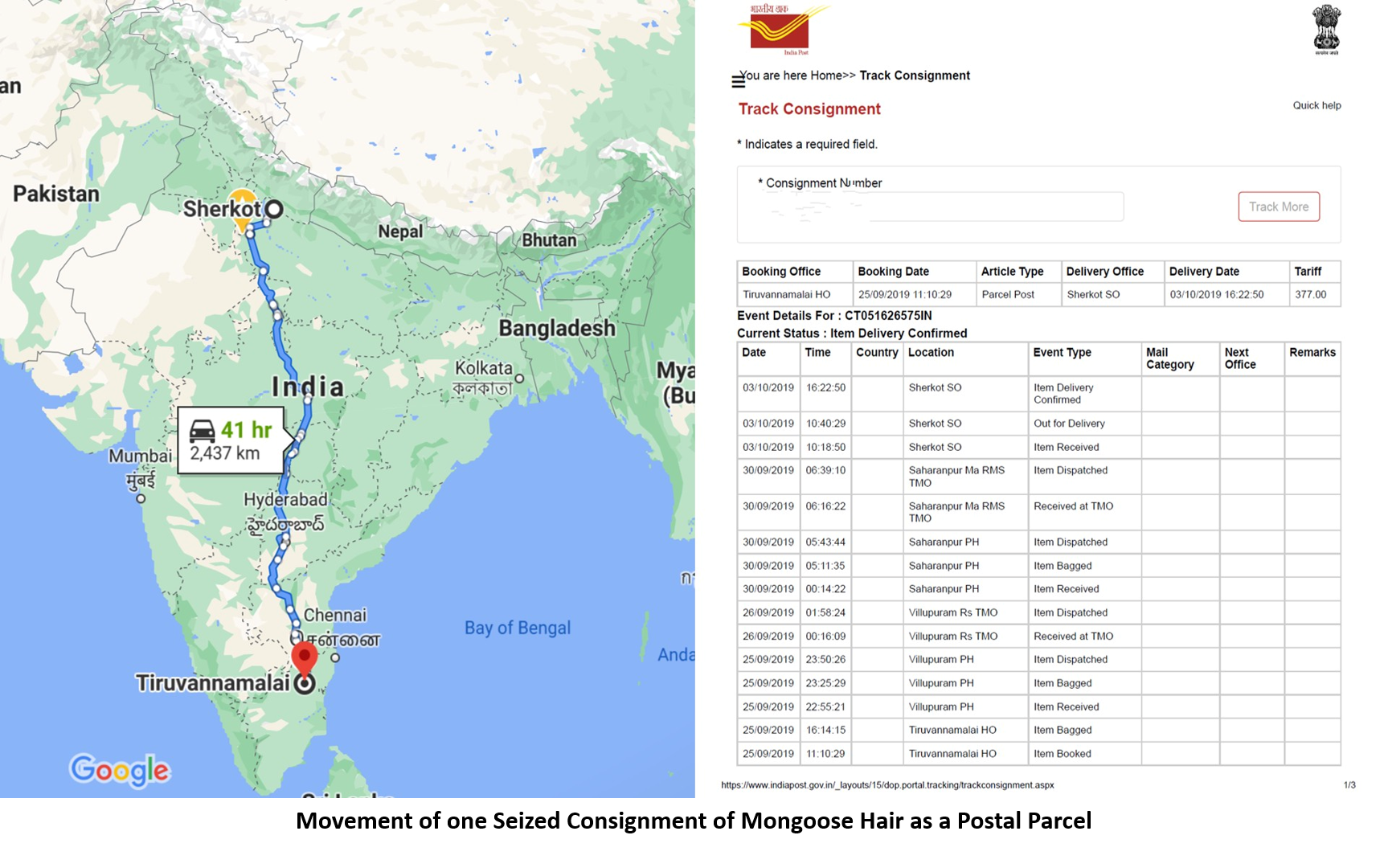
Sherkot (Bijnor District, Uttar Pradesh) has been identified as the principal manufacturing hub of Mongoose Hair Brushes. It has been described as the brush-making capital. Other manufacturing or storage locations identified in enforcement reports include Moradabad, Meerut, Ghaziabad and Kanpur in Uttar Pradesh, Dehradun in Uttarakhand, Jahangirpuri and Shahdara in Delhi, Nashik and Karad in Maharashtra, and units in Chennai and Mumbai.
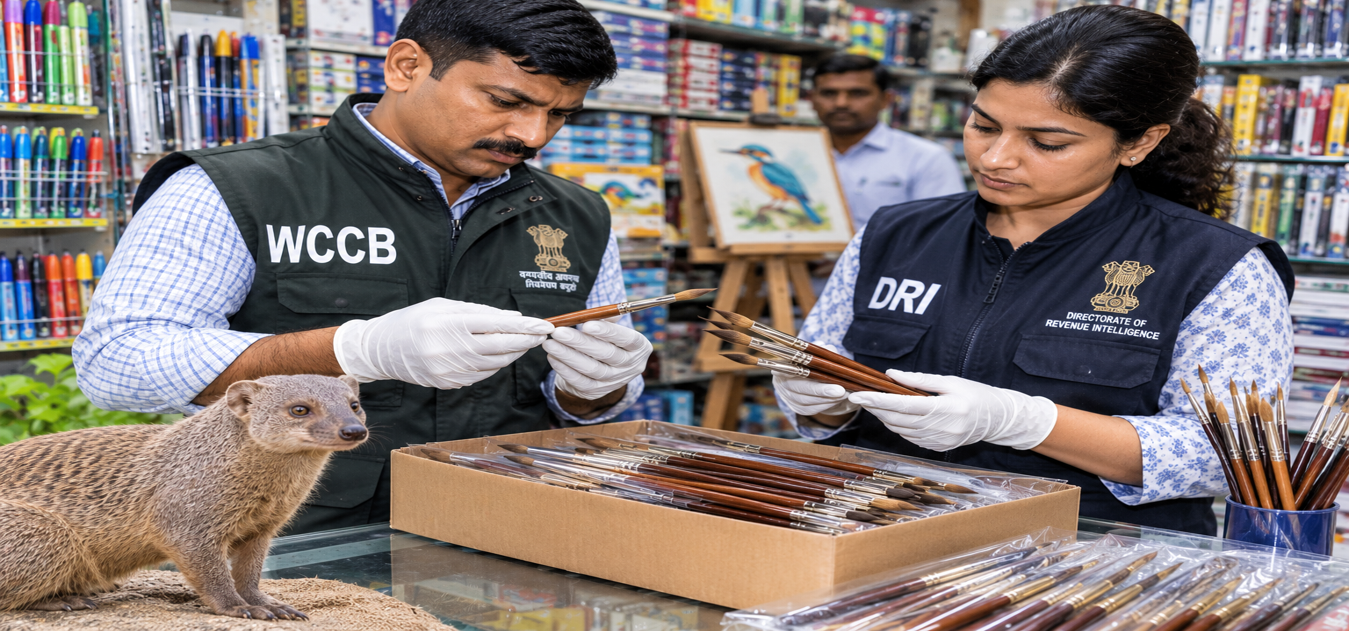
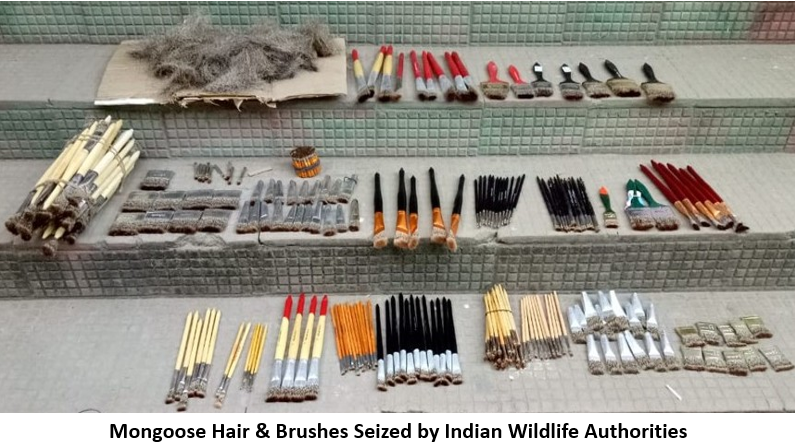
Mongoose Hair Brushes have been seized by the wildlife enforcement agencies from stationery and hardware shops, wholesale dealers and art-supply suppliers in Tamil Nadu (Chennai, Coimbatore, Madurai), Kerala (Kochi), Telangana (Hyderabad), Delhi, Kolkata, Mumbai, Amritsar and Pune, among others.
Transportation, Concealment & Smuggling of Mongoose Hair and Brushes:
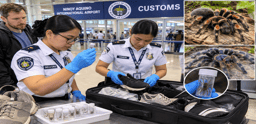
The transportation network is an important component of this illegal trade because mongoose raw hair is often sourced far away from manufacturing locations. The documented transportation methods include: postal services; railway parcel services; private courier companies; road transportation through passenger and commercial vehicles. Finished mongoose-hair brushes have been reported to be transported mainly through private courier services, concealed among synthetic brushes. This method is particularly significant because the outer packaging and declared contents may appear entirely legitimate. Mongoose hair brushes have also been reported to be smuggled to the United States, the Middle East and Europe mis-declared as sable or badger brushes. Nepal and Bangladesh have been reported as possible transit routes for smuggling of these brushes.
"Operation Clean Art" by Wildlife Crime Control Bureau:
Operation Clean Art, conceived by the WCCB, is described as the first pan-India operation with stated objective to close down the mongoose hair brush trade across the country. It was carried out in late 2019. The outcome of this Operation is tabulated below:
|
State |
Traffickers Arrested |
Mongoose Hair Brushes Seized (in numbers) |
Mongoose Raw Hair Seized (in Kg.) |
|
Uttar Pradesh |
26 |
24060 |
113 |
|
Rajasthan |
02 |
110 |
- |
|
Maharashtra |
09 |
29166 |
- |
|
Tamil Nadu |
06 |
1014 |
- |
|
Kerala |
- |
931 |
- |
|
Total |
43 |
55281 |
113 |
Some Other Reported Seizures:
- A joint operation by the DRI, WCCB, and Forest Department led to the seizure of 126 mongoose hair brushes, 63 deer antlers, and 32.7 kg of wild boar teeth and four arrests in Amritsar in February, 2025.
- In August 2023, the Tamil Nadu Wildlife Crime Control Bureau (TNWCCB) seized about 14,000 mongoose hair paint brushes—7,800 in Chennai, 3,200 in Coimbatore, and 3,000 in Madurai.
- In September 2024, the Wildlife Crime Control Bureau (WCCB), operating in joint coordination with the Tamil Nadu Forest Department, executed targeted enforcement operations resulting in seizure of 409 and 86 mongoose hair brushes at Thoothukudi, Tamil Nadu.
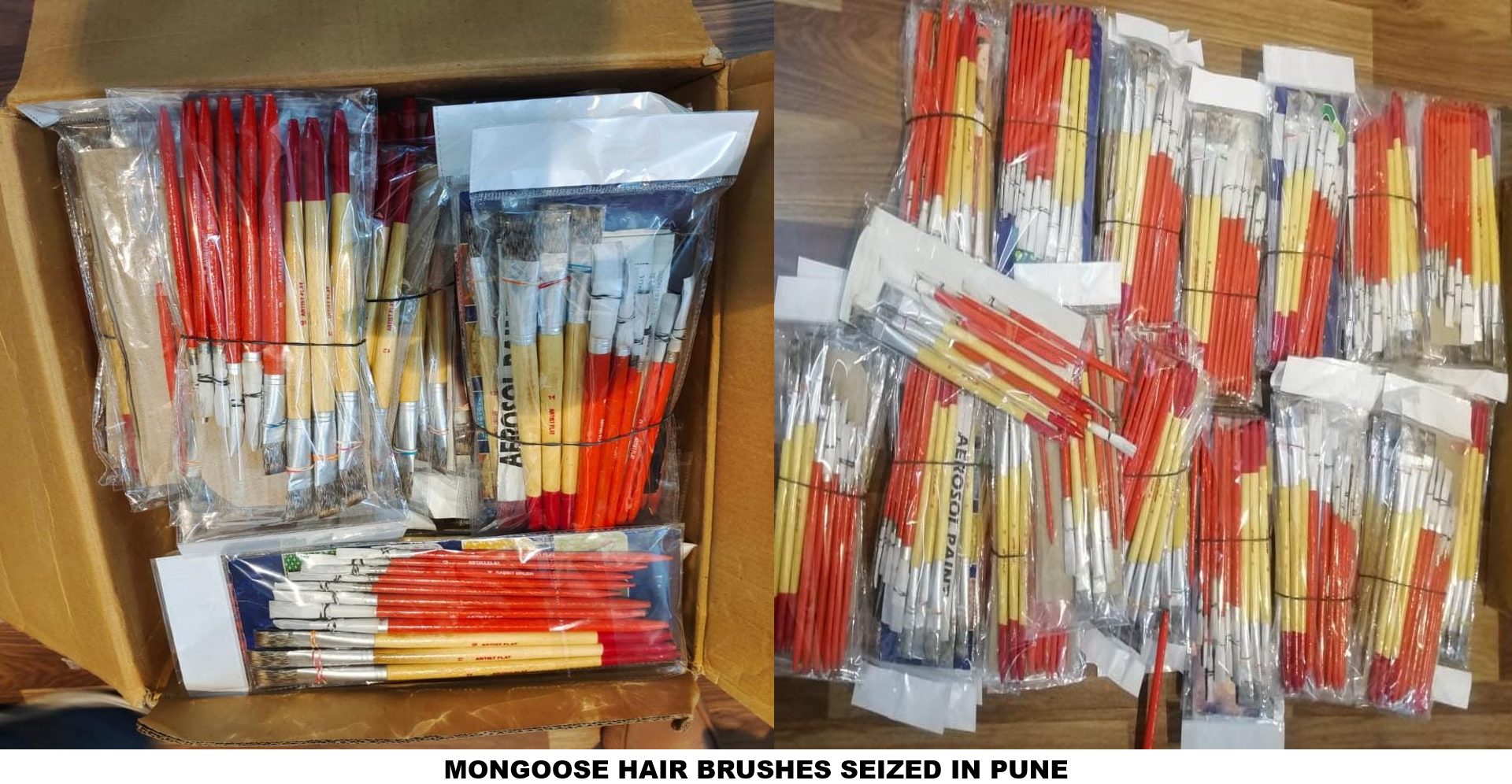
- In July, 2021, the WCCB and the Pune Forest Division conducted a joint raid at a hardware and color shop in Shukrawar Peth, Pune, seizing 720 paint brushes made from mongoose hair.
- 919 mongoose hair brushes were seized in a joint operation conducted by WCCB and the West Bengal Forest Department at Belgharia Kamarhati, West Bengal on 08-01-2024.
Enforcement Strategy:
The repeated seizures demonstrate that raids & seizures alone cannot permanently dismantle the illegal mongoose-hair trade. A comprehensive enforcement strategy is imperative to address this menace:
- Wildlife enforcement agencies should identify areas where mongoose poaching is suspected through field intelligence, local informants, seizure analysis and ecological assessments. Information relating to hunters, collectors, intermediaries, transporters, persons financing procurement, manufacturing premises, wholesale buyers, retail distribution networks, exporters etc. should be systematically documented. Analysis of such systematically collected data will help in understanding the poaching hotspots, trends & patterns, modus-operandi, concealment & transportation methods and various players in the supply-chain. The emphasis should be on identifying the persons controlling the commercial network rather than limiting investigations to individuals found possessing a few brushes.
- Manufacturing centres such as Sherkot and others warrant continued intelligence monitoring.
- Similarly continuous monitoring of the individuals arrested by the wildlife authorities in earlier enforcement operations will also prevent further poaching of mongooses and illicit trade of mongoose hair brushes.
- Monitoring of social media, dark-web, e-commerce sites will detect and prevent online trading of mongoose hair brushes.
- Operation Clean Art demonstrated that postal and courier services were being exploited for transportation of raw hair and finished brushes. WCCB, Customs, India Post, DRI and courier companies should develop suitable risk indicators for identifying suspicious consignments.
- The financial dimension of the trade deserves greater attention. Investigators should examine bank accounts, digital payment records, business transactions and financial links between suppliers, manufacturers and distributors. Repeated payments between apparently unrelated persons may help establish the existence of a procurement network.
- Since the source of raw hair, manufacturing location and retail destination may be situated in different states, isolated investigations are unlikely to establish the entire network. Inter-State cooperation & coordination in investigation is required to dismantle the supply-chain.
- Scientific investigation & successful prosecution of major manufacturers and commercial beneficiaries can create a stronger deterrent than repeated action against small retailers alone.
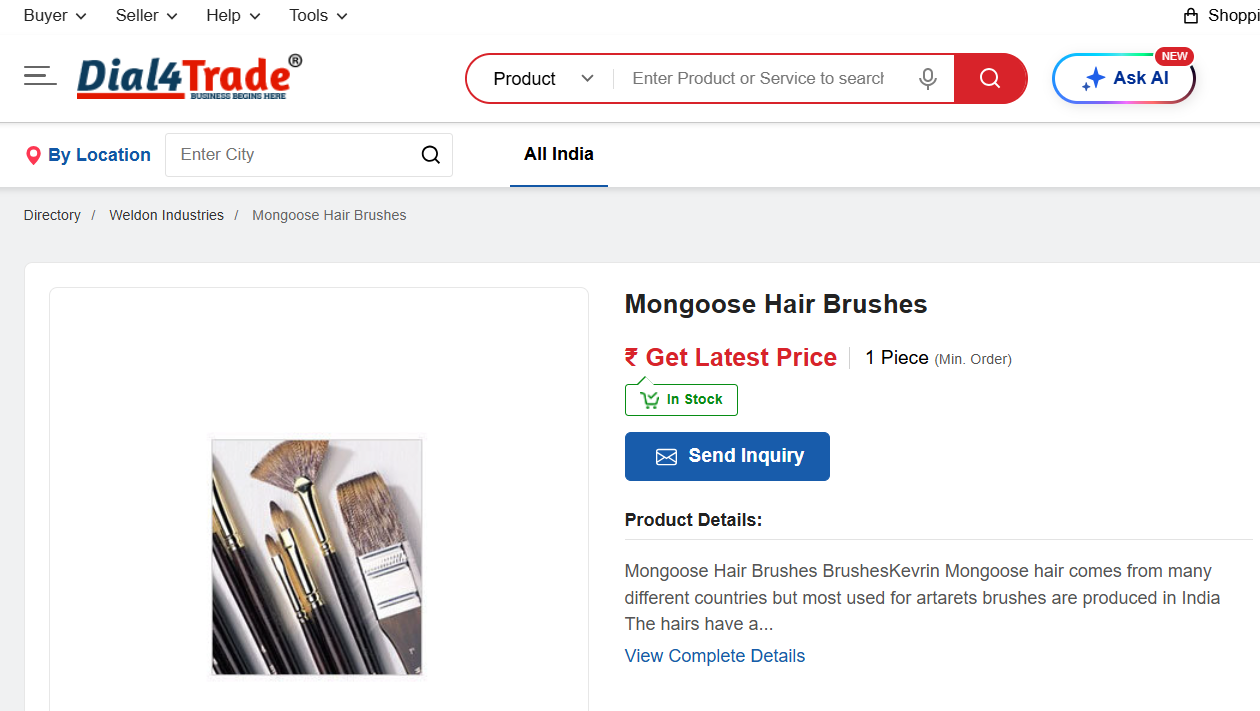
Public Awareness and Demand Reduction:
While law enforcement disrupts the supply chain, sustained demand ensures the illicit mongoose hair brush trade remains highly lucrative. A primary driver of this market is low awareness: a vast number of artists, students, and consumers are completely unaware to the fact that their paintbrushes are made from hair of poached mongooses. To bridge this gap, trade associations and enforcement agencies must launch targeted outreach programs for stationers, manufacturers, and art supply distributors to warn them of the severe legal and financial penalties under Schedule I of the Wild Life (Protection) Act. Parallel awareness campaigns should be introduced in schools, universities, and art institutes. By educating young creators on the environmental impact, promoting high-quality synthetic alternatives, and encouraging institutional pledges to boycott these products, demand can be effectively choked at its root.
Alternative Livelihoods for Hunting Communities:
Breaking of the vicious cycle of poaching of mongoose and illicit trade of paint brushes made of mongoose hair starts at the source. By empowering traditional hunting communities with skill training, alternative livelihoods, and government rehabilitation programs, their economic dependence on hunting can be eliminated and long-term mongoose-protection can be secured.
Role of the Bureau of Indian Standards (BIS):
The Bureau of Indian Standards (BIS) has an important preventive role. BIS, in consultation with MoEFCC, WCCB and wildlife forensic institutions, should:
- Review artist-brush, paintbrush and related standards to remove any reference to mongoose hair.
- Require clear declaration of bristle material, especially where animal hair is used.
- Promote synthetic-fibre alternatives and standardised labelling such as “synthetic bristle.”
- Coordinate with e-commerce platforms and trade associations to remove misleading “sable” or “natural hair” claims where the source is undisclosed.
- Support a certification or marking system that allows buyers to identify lawful, non-wildlife brushes.
Standards reform is especially important because mislabelling allows illegal brushes to move through ordinary commercial channels.
Conclusion:
Operation Clean Art proved that coordinated, intelligence-led enforcement is vital to disrupting the illegal mongoose hair trade. However, achieving permanence requires shifting focus from low-level poachers to the high-value nodes of the supply chain. Sustained deterrence relies on dismantling the entire network through multi-agency synergy and advanced investigative techniques. Wildlife Crime Control Bureau (WCCB), forest departments, police, Customs, and the Directorate of Revenue Intelligence (DRI) must seamlessly integrate operations to secure borders and block domestic disguise-and-ship routes across postal, courier, and e-commerce platforms. Crucially, enforcement agencies must deploy financial investigations to track money laundering by hair traders and manufacturers, while utilizing forensic hair identification to build ironclad, prosecutorial cases that guarantee high conviction rates.
Ultimately, the enforcement strategy is only as successful as its ability to permanently collapse the market, meaning absolute eradication of demand is the mandatory conclusion to this crackdown. While field operations and strict border controls make the trade harder to conduct, regulatory reforms—such as tightening Bureau of Indian Standards (BIS) rules and mandatory labeling—must be enforced to eliminate legal loopholes.