Mental Health in Conservation 💚
Conservation is meaningful work. For many of us, it is work rooted in a deep love of nature and a desire to leave the world a little better than we found it. But caring deeply can come at a cost.
Conservation professionals are often working at the sharp end of some of the biggest challenges facing our planet: biodiversity loss, climate change, habitat destruction and environmental injustice. We can spend our days trying to protect places and species that are already under enormous pressure - while navigating limited resources, uncertain funding, demanding workloads and, in some roles, significant physical risk.
Increasingly, research is showing that these pressures can affect our mental health. This doesn't mean that conservationists aren't resilient; rather, it reminds us that resilience isn't just an individual responsibility. The environments we work in, the cultures we create, and the conditions we provide for people all play an important role in supporting mental health and well-being.
So what can we do?
Mental Health Day isn't going to solve the structural problems in conservation, but we can start changing the culture around mental health. We can make it more normal to talk about how we're doing, stop treating exhaustion as a badge of commitment, and create workplaces where people feel able to take breaks, use their annual leave, and ask for support without feeling that they're letting the mission down. We can check in with colleagues who seem unusually quiet, ask people how they're doing, and genuinely make space for their answers. Ultimately, we need to remember that conservation is a long game, and we need people who can stay in it.
And sometimes, looking after yourself can be very simple
Not everything has to be a wellness routine. You don't need an app. You don't need a meditation cushion. You don't need to optimise your morning routine.
Sometimes taking care of yourself looks like:
🐕 Playing with your dog until you both forget what time it is.
🌅 Going to watch the sunset instead of answering one more email.
🥾 Taking that hike you've been dying to take off your list.
☕ Drinking your coffee on the porch - no laptop, no emails, just coffee.
👯 Going to see your friends and talking about literally anything other than conservation.
📵 Putting your phone away for an hour.
📖 Reading a book that has nothing whatsoever to do with conservation or your PhD.
🌊 Going swimming. Or kayaking. Or sitting beside the water and doing nothing at all.
🌱 Getting outside without identifying a single species.
🦉 Watching birds just because you enjoy them, rather than because you're collecting data.
🍳 Making a proper meal instead of eating whatever happens to be closest to the laptop.
😴 Or simply taking the afternoon off. Because sometimes you need to step away, breathe and recharge.
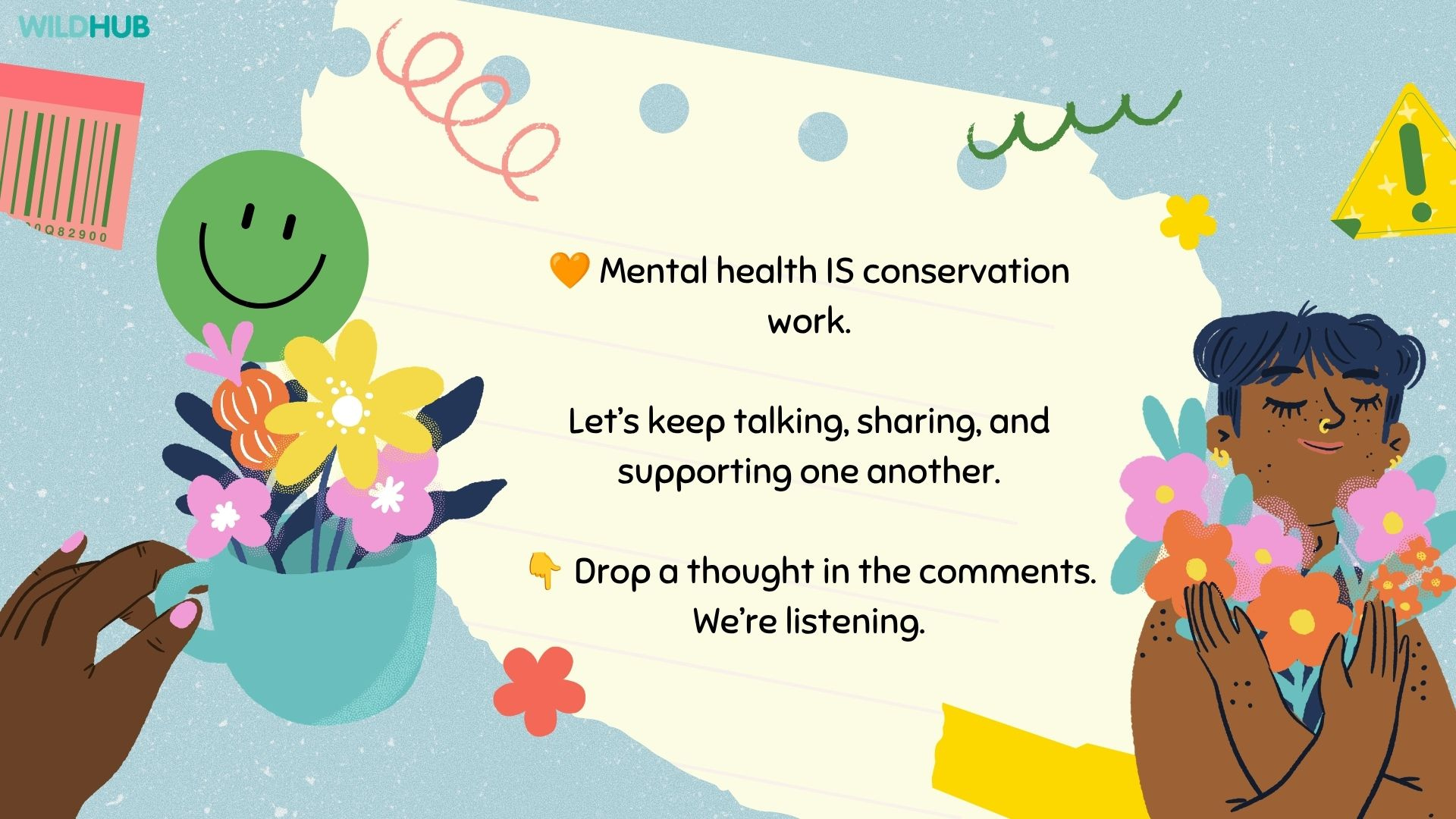
So give yourself permission to be more than your work. REMEMBER, YOU CAN'T POUR FROM AN EMPTY CUP.
A pause for conservationists 🌿
To mark Mental Health Day, we've put together a small collection of reflections and ideas for conservationists.
This isn't professional mental health advice, and it isn't intended to replace support from a qualified professional. It's simply an invitation to pause, check in with ourselves, and think about how we can look after ourselves and each other in a sector that asks so much of us.
You might find something useful in it, share it with a colleague, or perhaps simply take it as a reminder to slow down. Because you are part of nature too, and conservation needs healthy, supported people to care for it.
_____________________________________________________________________
📖🌿 A Pause for Conservationists ✨
A few reflections and simple ideas for looking after ourselves and each other
Conservation is important work. But you don't have to spend every minute being productive, useful or saving the world.
Sometimes the best thing you can do is pause.
This isn't a mental-health treatment or professional advice. It's simply a collection of ideas - little reminders to check in with yourself, take a break, reconnect with the things you enjoy and look out for the people around you.
🌱 First, how are you doing?
Take a moment.
Not how are you supposed to be doing.
Not how you'd answer in a meeting.
How are you actually doing?
🟢 I'm doing okay
I have some energy, I'm feeling like myself, and I'm managing what's in front of me.
🟡 I'm running low
I'm tired, overwhelmed, irritable, distracted or finding it harder than usual to switch off.
🔴 I'm struggling
I'm feeling persistently low, anxious or exhausted, or I'm finding it difficult to cope with everyday life.
There are no prizes for staying in the green zone; the point isn't to judge yourself, but simply to notice where you are and how you're feeling.
🍃 Then, take a proper pause
Remember that you are allowed to enjoy nature without doing conservation. Your work is not your whole identity: you can care passionately about conservation and still need time away from it, love your work and have a bad day, remain committed to the mission and still say, “I need a break.” You can be resilient and still need help, because you are more than your job, your projects, your publications, your fieldwork or your next funding deadline.
🤝 Look out for each other
A healthier conservation community isn't one where nobody struggles, but one where people don't have to struggle alone. We can all play a part by asking our colleagues how they're really doing, making space for honest answers, checking in after difficult fieldwork, incidents or losses, and avoiding the celebration of exhaustion as though it's proof of commitment. We can encourage people to take their leave, notice when someone seems to be struggling, and, if we're worried about someone, not be afraid to ask. Sometimes, a simple “Are you okay?” can be the beginning of an important conversation.
❤️ If you're really struggling...
You don't have to wait until things get worse before asking for support. Whether it's talking to someone you trust, reaching out to a mental-health professional, or contacting an appropriate support service, asking for help isn't a failure of resilience; it's an important part of looking after yourself.
🌿 And remember...
You don't have to fix everything; just do one small thing for yourself today, and whatever it is, let yourself have it. ❤️
You are part of nature too. And you deserve care, rest, joy and connection just as much as the places and species you work to protect.
______________________________________________________________________
🧠🌿 An important read for conservationists
--> Taking Care of Your Mental Health as a Conservationist — with Brittany Sawrey-Coulson <--
If this topic resonates with you, we also recommend this thoughtful conversation with Brittany Sawrey-Coulson, a conservationist and mental-health therapist who brings both perspectives to the conversation.
She explores burnout, boundaries, self-compassion, imposter syndrome, the importance of having passions outside conservation, and why creating healthier conservation careers isn't just an individual's responsibility - it's also about changing the culture and conditions of the sector.
A really worthwhile read for anyone trying to build a sustainable career in conservation without losing themselves along the way. 🌿
Read it here!
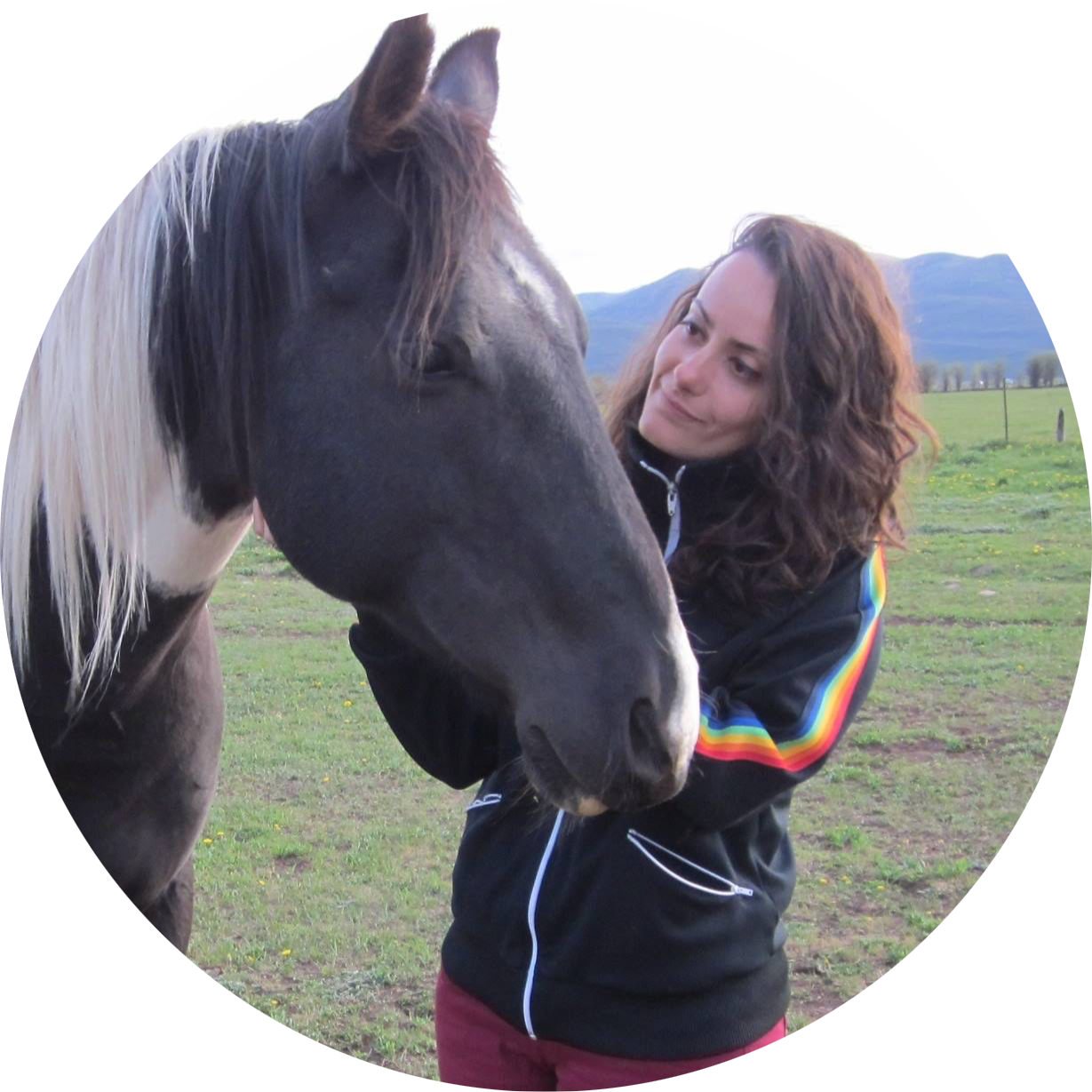
I am a passionate communicator and researcher with an extensive background in the environmental humanities and social sciences, dedicated to exploring and fostering connections between people and nature. Based between Sweden and the UK, I work in academia as a researcher and lecturer, teaching courses in environmental law, historical ecology, and disaster risk management.
I actively contribute to non-profit organisations promoting conservation and animal welfare. I work with Faunalytics, translating complex research into accessible insights for evidence-based advocacy; write feature articles for Ubuntu Magazine spotlighting conservation initiatives; and serve as Community Advocates Coordinator at WildHub, driving strategic communications and leading initiatives that connect and empower conservation practitioners worldwide.
When I’m not working, you’ll find me hiking forest trails with my dog or enjoying a good cup of coffee.