Finding Purpose in Conservation: Meet Manon Verijdt
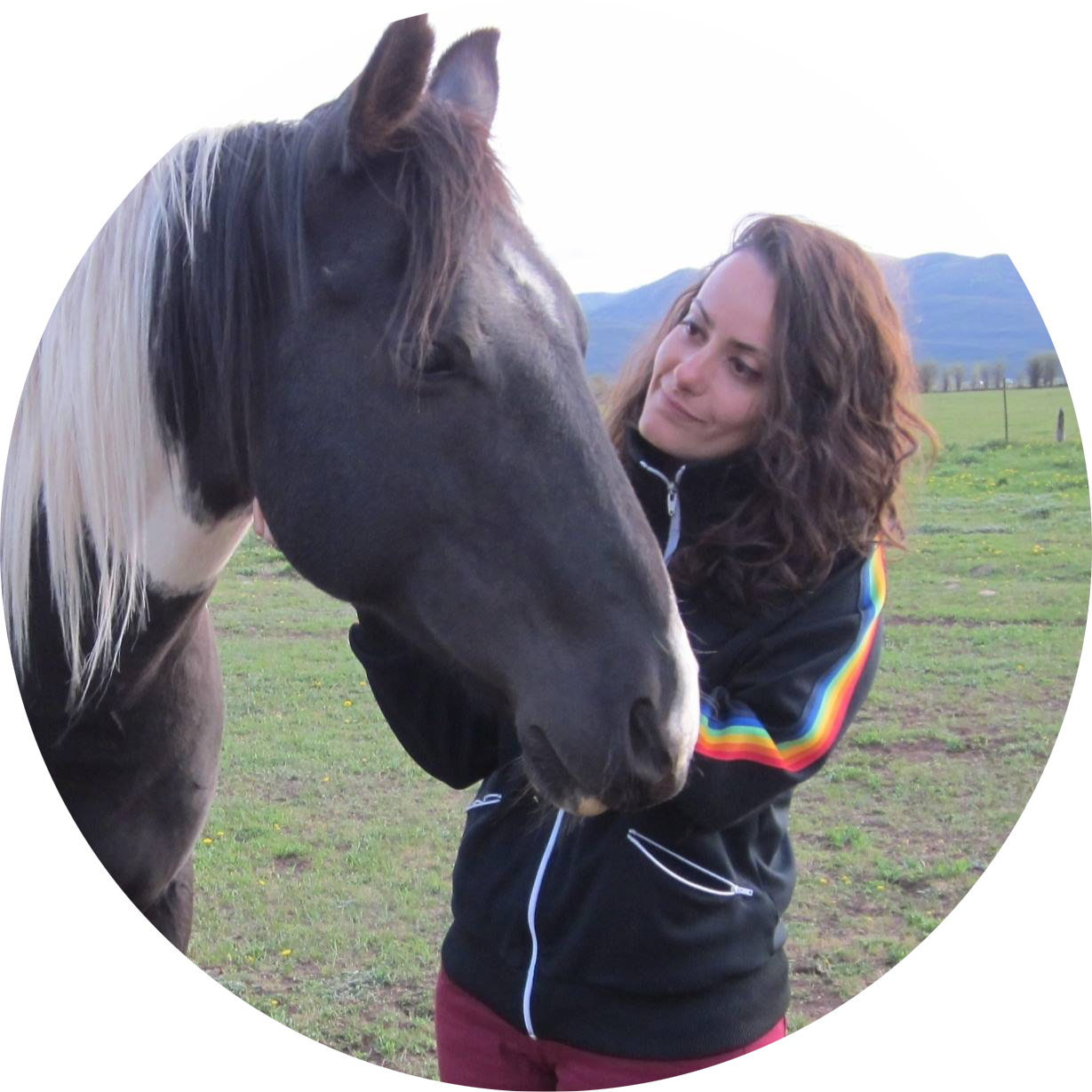
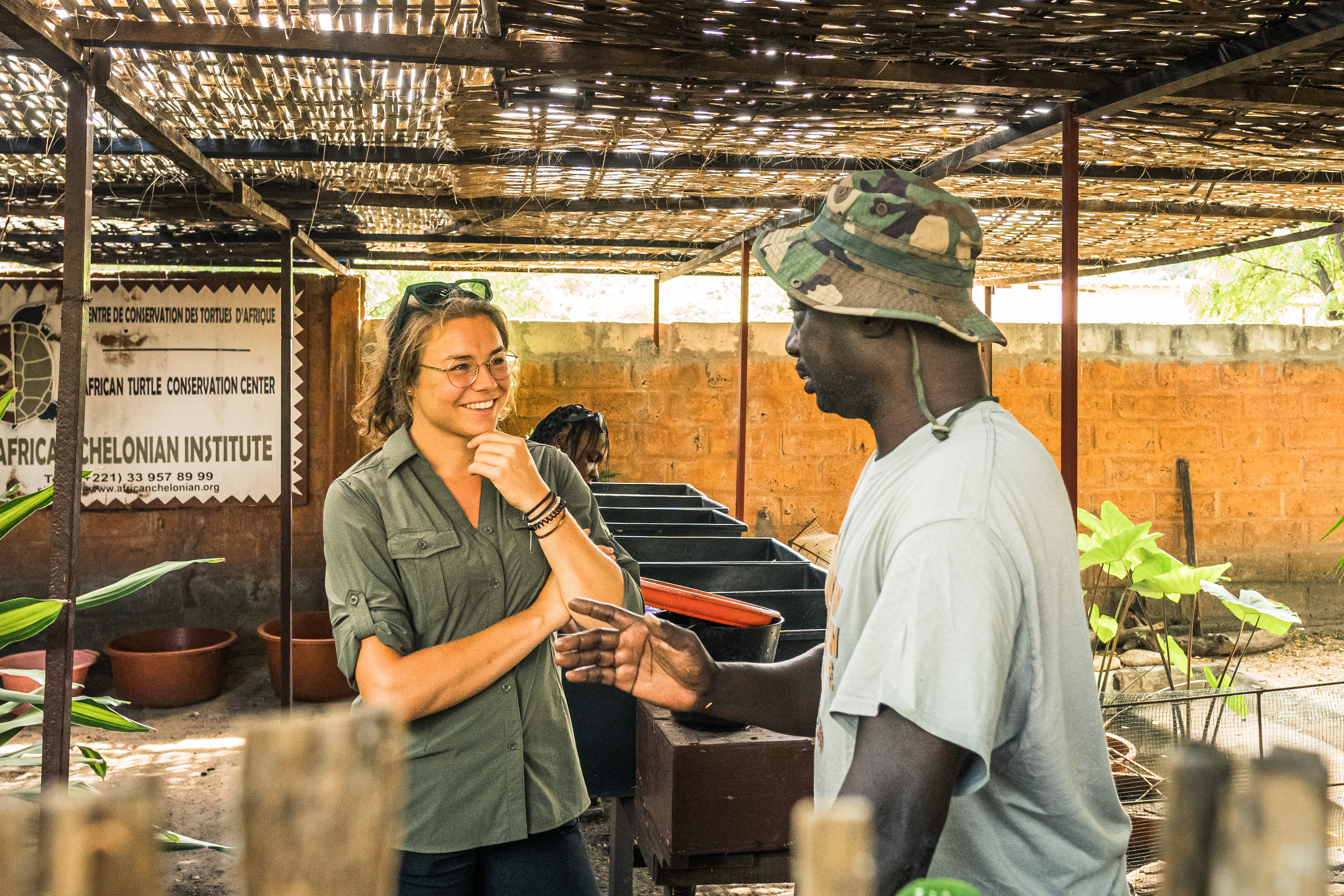
As part of WildHub’s Conservation Catalyst programme, I’m very happy to bring to WildHub someone I have the pleasure of working with through Ubuntu Magazine: Manon Verijdt.
As the CEO and Founder of Ubuntu Magazine, Manon has built a magazine that takes readers to the frontlines of nature conservation, bringing them closer to the people and stories shaping its future. With a background in Applied Biology, she is also a keen photographer and writer, whose work is shaped by her travels and fascination with all things nature.
But her own path into conservation was far from straightforward. In fact, when she started university, she hadn’t yet considered a career in conservation. It was a search for something more meaningful during her studies that eventually led her to the Future for Nature Academy and, from there, into the conservation community. Along the way, she discovered just how powerful a personal story can be in connecting people with nature and inspire action.
Today, Manon puts that belief into practice as one of the driving forces behind Ubuntu Magazine. Ubuntu puts people at the heart of the story reminding us that conservation needs people from all walks of life, bringing different skills, experiences and perspectives to the table.
In this interview, Manon shares her own route into conservation, what she has learned from listening to conservationists around the world, why locally led conservation matters, the realities of running a digital magazine powered by an international team of volunteers, and why she believes collaboration may be the key to the future of conservation.
So, let’s meet Manon.
Flavia: To get us started, could you introduce yourself and tell us a little about your journey into conservation and what led you to found Ubuntu Magazine?
Manon: Ever since I was little, I’ve been fond of the outdoors and nature in general. Nevertheless, my conservation journey hasn’t been a straightforward one. After struggling to decide which career to pursue (I was considering creative options, as well as healthcare and, of course, nature-related fields), it was my father who finally pushed me to study Applied Biology, with the prospect of a secure job and a successful future in mind. Nature conservation wasn’t even on my radar as a topic back then.
It was through a lack of a sense of purpose during my studies that I started looking for extracurricular activities, and I found the Future for Nature Academy, which is all about nature conservation. Joining the academy was the starting point of my journey.
Flavia: Ubuntu Magazine doesn't just report on conservation, it also tells stories. What do you think makes a conservation story genuinely memorable rather than just informative?
Manon: I think you need both types of stories, but for different target groups. People who are already fully invested in nature conservation will easily read an informative article and get excited about it. But often, they are interested in a specific topic already, such as a particular type of ecosystem or species.
The other target group, for me, is people who are interested in nature and care about it, but aren’t fully aware of everything happening in the world of conservation. I was very much part of this group when I started my journey into conservation. Looking back at my own experience, it wasn’t the research results or methods that drew me in. It was the personal stories.
I know I’m privileged because of where I come from (the Netherlands). Hearing people from more difficult backgrounds during the Future for Nature Awards ceremony, and learning how they persevere despite everything, gave me the chills. It also sparked a fire in me. If they are willing to put in the time and effort to care for nature, then I could too.
With the magazine, we aim to give our readers that same feeling. We want people to recognize themselves in the stories we tell, so that they see that they, too, can be(come) conservationists. And I mean that in the broadest sense of the word. We need people in the field, but we also need people working in outreach, social media, law, research, photography, and so on. We aim to feature people already involved in conservation across this broad range of roles, because every skill and every profession is needed to make conservation work.
Flavia: What gap did you see in conservation storytelling that made you think, “This magazine needs to exist”?
Manon: It wasn’t necessarily a gap I had observed, rather the idea grew out of a personal experience that deeply touched me. As I mentioned previously, the Future for Nature Academy opened the door to nature conservation for me. The Future for Nature Awards ceremony, in particular, was life-changing, as it awards three conservationists each year. It was the first time I got to listen to a personal story from a conservationist working on the front lines.
However, it took several years for that awe-inspiring event to turn into the idea of building a magazine about nature conservationists. I simply wanted, and still want, to share the wonderful stories of people working in the field, so that it’s not just the lucky few (like me) who get to hear these stories during award ceremonies. Instead, I want these stories to be available to everyone.
There are plenty of ways I, or we as a team, could have shared those stories. It was my personal love for the written word, photography and magazines that led me down this path. But I’m also seeing great examples of YouTube channels emerging that do something similar. And here, too, I believe we need both, not just one or the other. Some people like to read, while others like to watch and listen.
Flavia: How do you decide which voices deserve a platform, especially when there are so many untold stories?
Manon: This is a tough one! I would say we generally try to focus on smaller organisations or individuals who don’t have large media campaigns to rely on. That’s not to say these people have the best stories, but I do think they’re often “closest to the fire” – working in the field, with local communities, and so on.
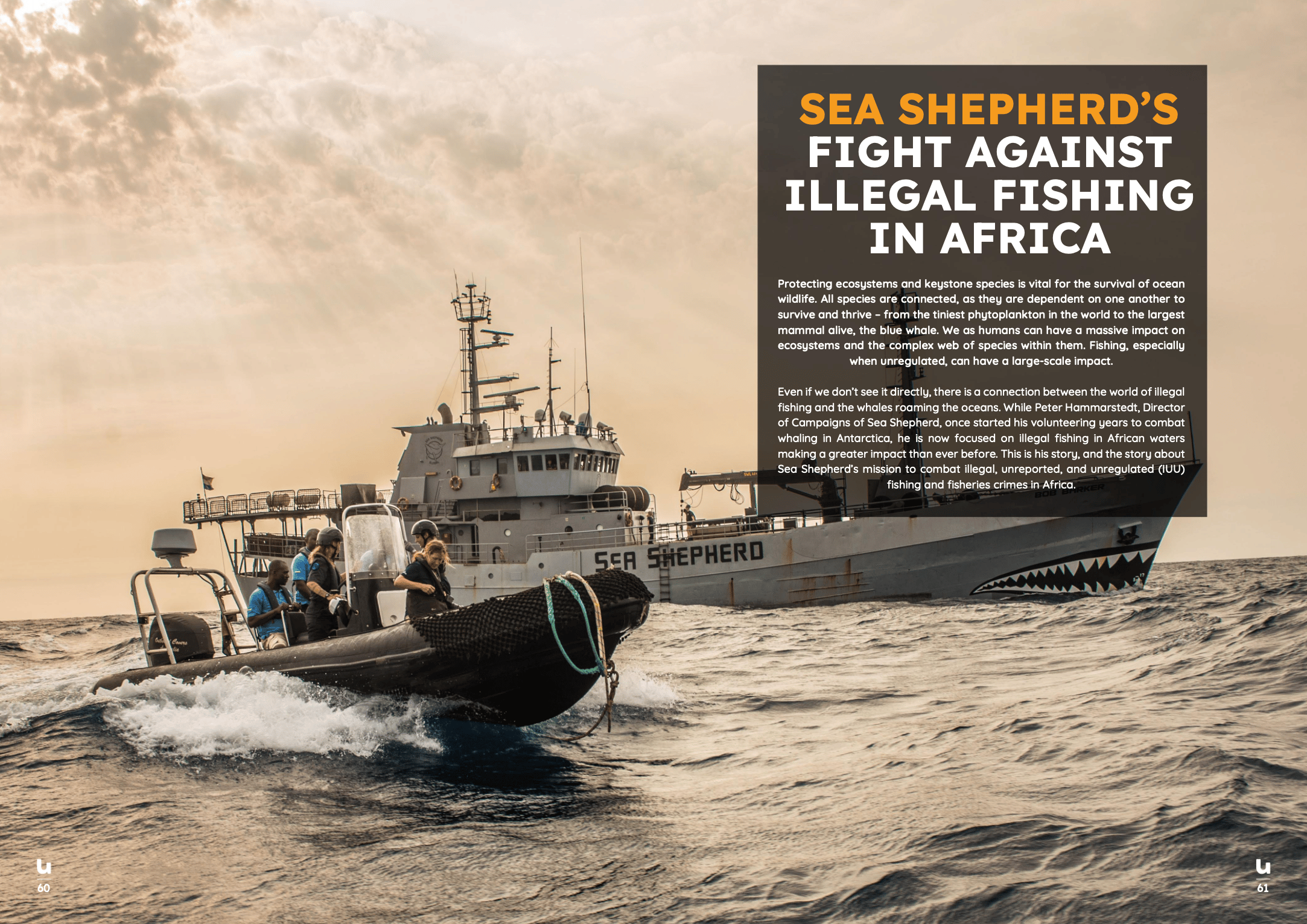
That doesn’t mean we shy away from bigger organisations. We interviewed Peter Hammerstedt from Sea Shepherd a couple of years ago, and his personal story was incredibly inspiring, too. So regardless of someone’s position or organisation, there are stories to be found everywhere. And I truly believe that, even though it can be hard to find them, there is an endless supply of stories waiting to be told. We’ll just share them one by one.
Flavia: Have you ever published a story that completely changed your own perspective on conservation?
Manon: Every story so far has given me interesting insights, and collectively, they’ve changed my perspective on conservation. At the very beginning, I (like I think many people do) believed conservation was about humans stepping in to save species or entire ecosystems. I was looking at conservation as though it happened in a bubble. But the more stories you hear and the more projects you visit, the clearer it becomes that conservation is fundamentally about people and their relationships with one another. You cannot randomly go somewhere and decide you are going to make things better. In most cases, local people are involved and depend on their natural surroundings for their livelihoods. I can honestly say that I wasn’t aware of this when I first started sharing stories.
I was looking at conservation as though it happened in a bubble. But the more stories you hear and the more projects you visit, the clearer it becomes that conservation is fundamentally about people and their relationships with one another.
Flavia: What story almost didn’t make it into Ubuntu Magazine but ended up becoming one of your favourites?
Manon: There aren’t that many in this category, as we invest a lot of time in the process before starting an article. It’s rare for us to schedule an interview and ask one of our team members to dedicate time to something when we aren’t yet sure about the person or organisation.
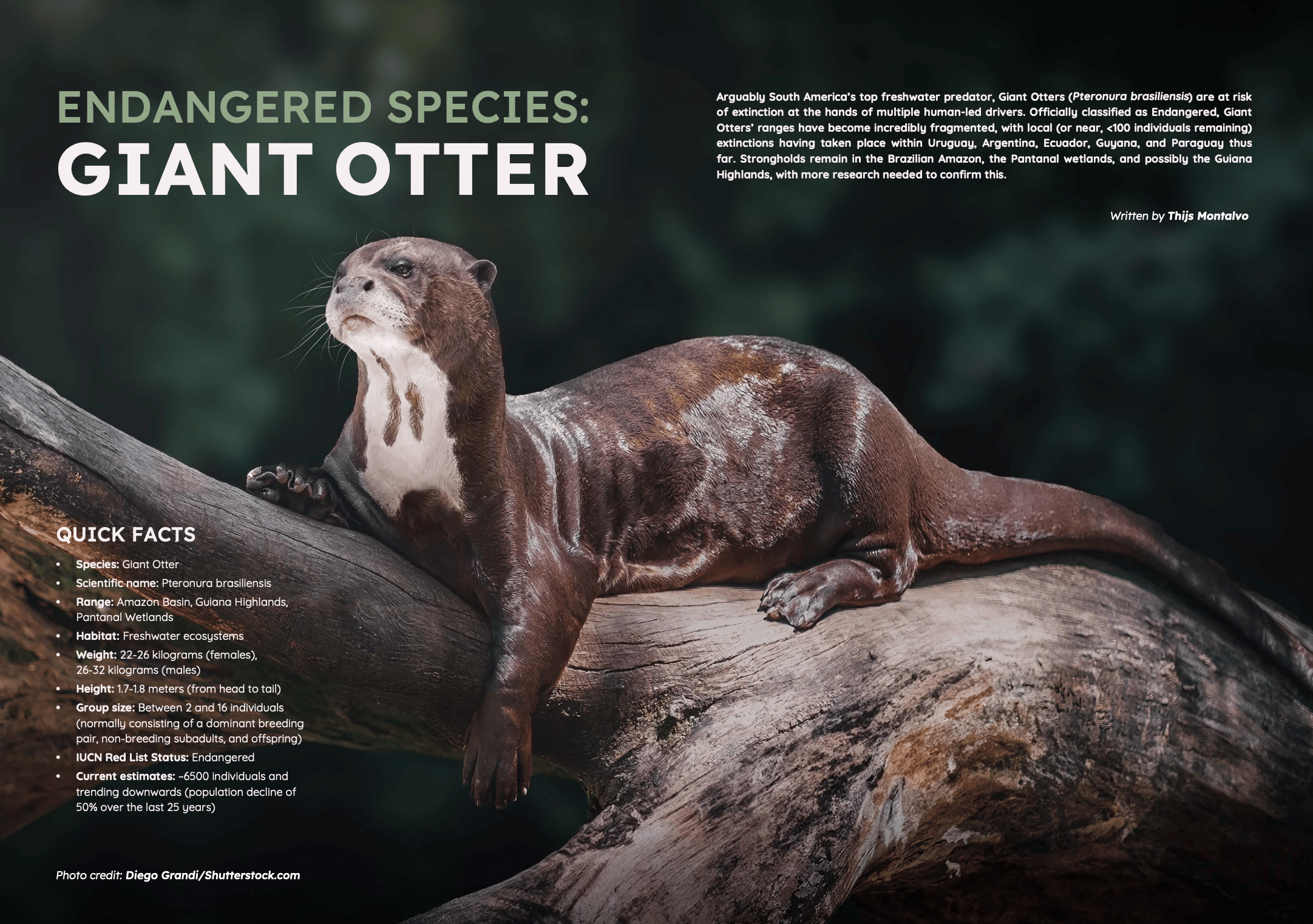
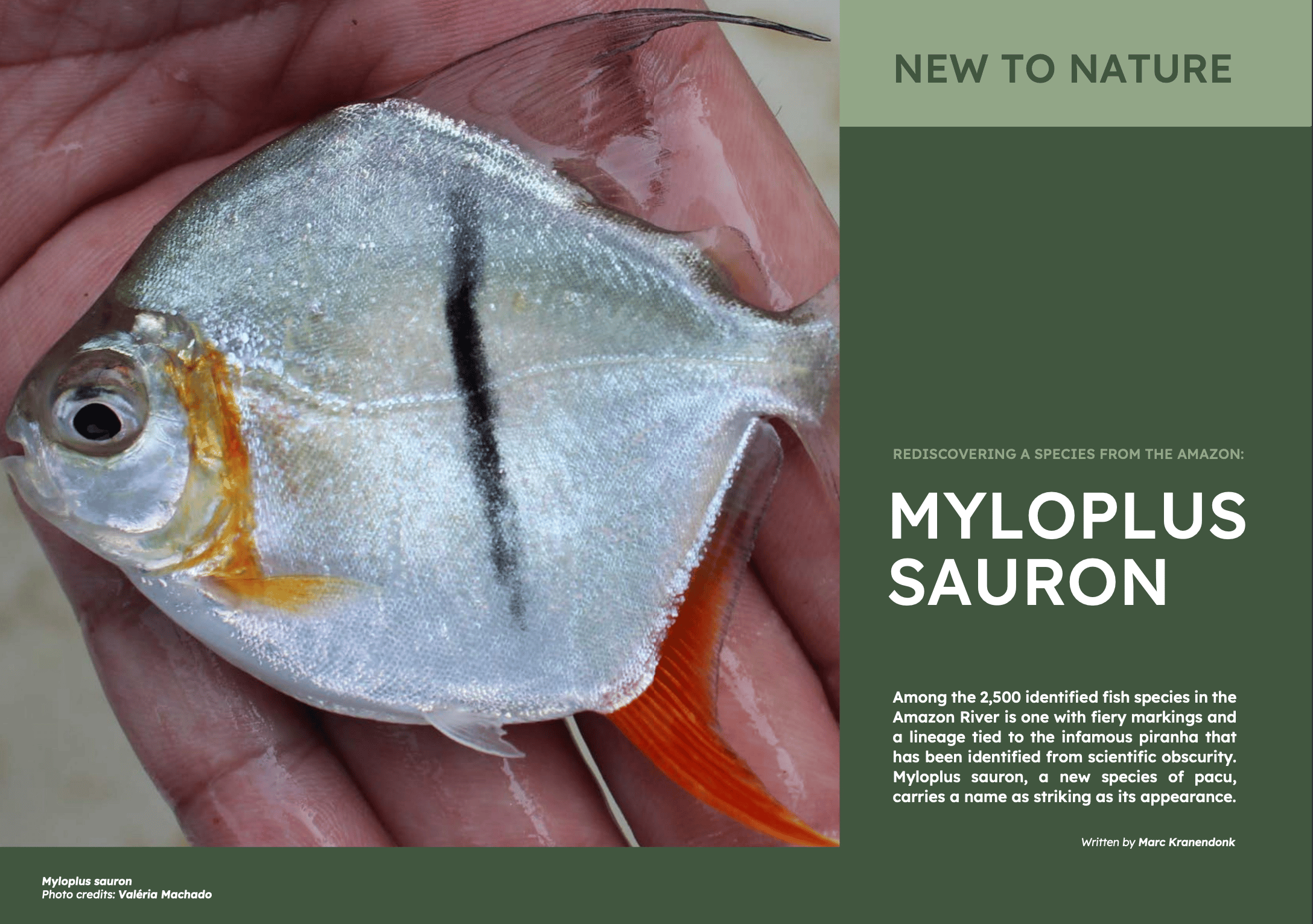
I have sometimes had doubts about the species featured in our recurring sections, such as New to Nature (about recently discovered species) or Endangered Species. But the beauty has always been in giving the team members space. Let them dive into the topics they are interested in, and wonderful things will happen. I don’t want to micromanage that; I want people to write about the things they are fascinated by, and that usually delivers the best results.
I’m also a strong advocate of locally led organisations. That’s why I sometimes look more closely at organisations working in Africa or Asia that are led by people from Europe or North America, to better understand their intentions and approach.
Flavia: What’s something readers probably don’t realize about producing a conservation magazine?
Manon: I can only speak for our magazine, of course, but it’s tough! Compared with the challenges faced by conservationists working in the field, my own challenges may seem small, so don’t get me wrong. I can work from behind my laptop, we have an incredible international team of volunteers, and we are so grateful to everyone who supports us in other ways.
But we do everything bootstrapped, and after five years of doing so, that can be hard at times. We cannot offer our team any compensation for their work, which means we experience more turnover than I would like. And I don’t blame any of them for that at all. However, managing this turnover takes time away from growing the magazine, as I have to focus more on maintaining its continuity. I would love to keep everyone with us and offer them something more tangible than endless words of gratitude in return for their time and effort.
And without only pointing fingers outward, I feel it myself, too. Having to work a day job to pay the bills while managing the magazine on the side sometimes doesn’t feel right. I am incredibly happy with the job I’m in, but if I had all the time in the world, I’m sure I could devote it to the magazine just as easily, and perhaps that would help us grow faster.
Flavia: Ubuntu is often translated as “I am because we are”. How has that philosophy influenced the way you’ve built the magazine?
Manon: That’s right, it’s a philosophy I once heard in a very unexpected place: a Netflix documentary. And when I heard it, it was all about humans, community, and how we become who we are through those around us. But when I reflected on that, I realized that I am who I am not just because of the people around me, but also because of the place where I grew up – right next to a national park. That shaped my entire childhood and, therefore, my interests. I see similar stories coming up time and time again among the conservationists we interview. It doesn’t always have to be a childhood experience, but moments of awe in nature can often lead to a wonderful conservation journey. So whenever possible, we try to explore this deeper layer of each person’s story.
Flavia: What’s one collaboration that reminded you why community matters in conservation?
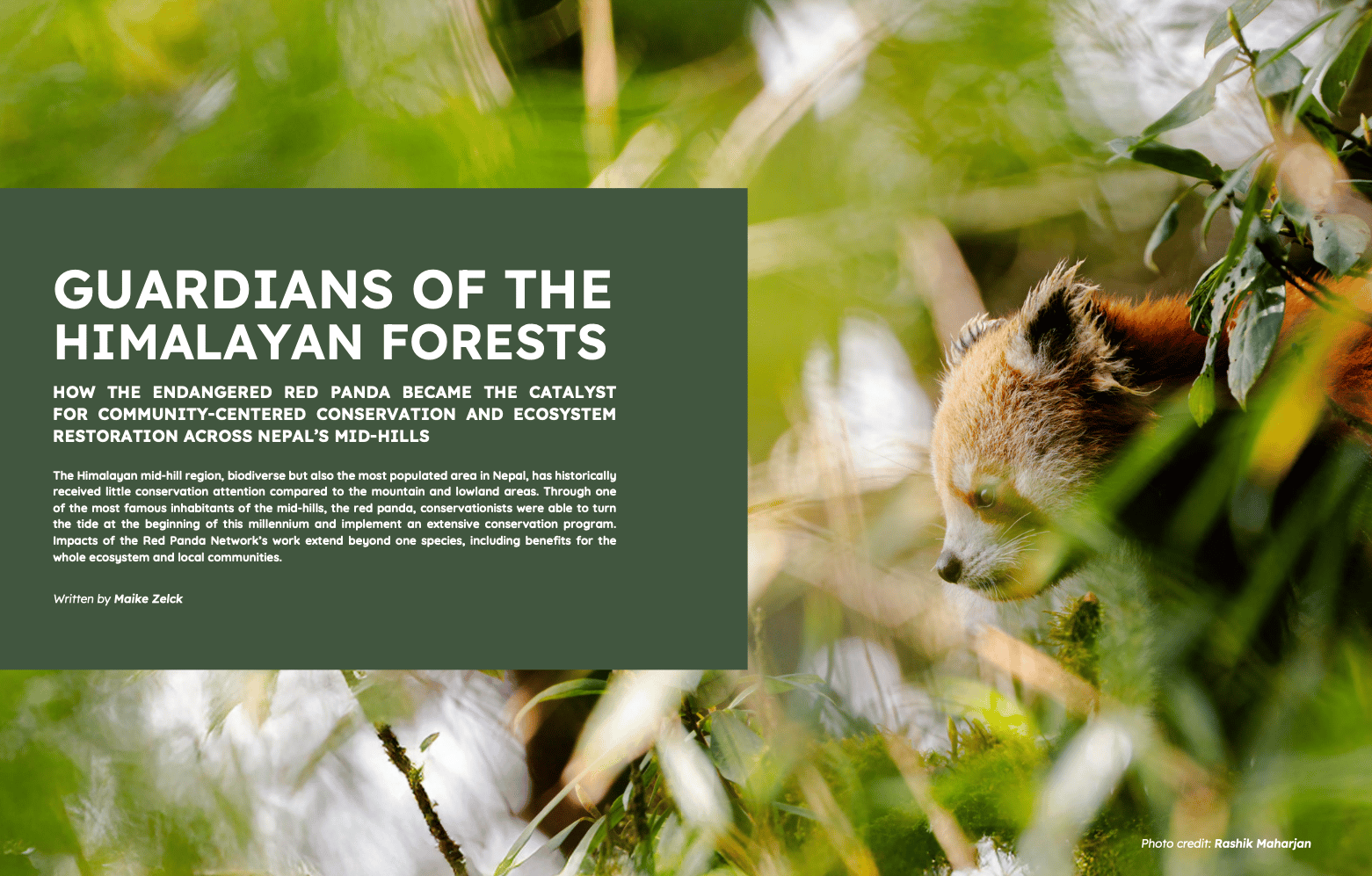
Manon: This theme comes up in many of our stories. In our most recent issue, for example, Sonam Tashi Lama from the Red Panda Network shares how local people are the real conservationists – even though he is local himself and works in conservation full-time. Local communities are the ones who ultimately have to carry on the work, so they need to understand and believe in the reasons behind it. If they don’t, all the work can be for nothing. Most conservation organisations can’t stay local forever. If things go well, as we always hope they will, they want to expand further to make a bigger impact. And then it comes down to local people to carry on the work they’ve started.
Flavia: Have you noticed a shift in the kinds of stories conservation professionals want to tell about themselves?
Manon: I wouldn’t say I’ve noticed a shift in the past five years, but there is a distinction between two types of conservationists. Of course, there are always exceptions to what I am about to say. What I've noticed is that people whose work is rooted in research, or who have been in the profession for a long time (25+ years), are less likely to delve into their personal stories. They will share about the incredible things they’ve seen, the research they’ve conducted, or the results they’ve achieved, but it’s less common for them to explore childhood memories or personal challenges in their careers. It can take time to reach that point in a conversation, if we get there at all.
Flavia: What conversation do you think conservation isn’t having enough of?
Manon: Collaboration! The wonderful thing about talking to so many people in the field is that I often see connections that aren’t there in the real world yet. For example, we’ve featured research from Botswana in which artificial pheromones were developed and used for wild dog conservation. Later, when I spoke to another organisation working with a different species in Africa but facing similar challenges, I was able to put the two organisations in touch.
It’s an idea that has been brewing in my mind for a while, but I would love to provide a bigger platform where knowledge can be shared more easily. Rather than having to read our entire magazine or endless research papers in the hope of finding something useful (because I know how busy people in the field are), I’d love to create a way for people to share practical tips quickly and easily. So, who knows what that might evolve into.
Flavia: Which emerging voices or topics are you most excited to feature in the coming years?
Manon: As my knowledge about conservation grows, so does the range of topics I want to explore. Up until now, we’ve focused on the more ‘common’ topics within land- and water-based conservation. But what about deep-sea mining of polymetallic nodules? It’s an environment we know so little about that it can be hard to imagine how conservation efforts might work there. Yet, with pressures mounting, I hope we can also share stories about these relatively undiscovered places and perhaps bring unexpected perspectives into the conversation.
That’s what we see with our New to Nature feature: there is still so much to discover, and it would be a shame to lose species before we even have the chance to learn about them.
Beyond that, it would be a dream to spend more time in the field and enrich our stories by incorporating multiple voices. Right now, each story focuses on one, or at most two, people, and the information is gathered primarily through short virtual interviews. It’s exciting to think about what we could create and publish if we could immerse ourselves in these stories even more. Our advantage of having an international team is that we have people based all over the world, so I can see this happening in the future, while still ensuring that we produce the magazine sustainably.
Flavia: If you could commission one dream feature with unlimited resources, what would the story be?
Manon: I honestly wouldn’t know which topic to choose, but I feel an urge to take a step beyond the magazine and dip our toes into documentary filmmaking one day. Documentaries feel like the perfect vessel for interviewing many more people and truly showcasing a situation or conservation project from multiple angles.
Flavia: Has running Ubuntu Magazine changed the way you experience nature yourself?
Manon: Most definitely! Especially in the Netherlands, we currently have two hot topics: beavers and wolves. As a conservation-minded person, I feel like one of the lucky ones every time I see a beaver (which isn’t that often), and I dream of seeing a wolf one day. But I also have to consider another side of the story: that of local residents whose homes may be affected, or farmers who lose livestock.
I would say I enjoy these wildlife encounters even more, knowing that they are not ordinary encounters, but I also know how fragile the future still looks for some species. The Netherlands is relatively crowded, and ‘wilderness’ is quite a foreign concept here, so I’m not sure whether I’ll still see beavers here in 15 years’ time, or whether there will be any chance of encountering a wolf.
On the other hand, I’ve also become much more interested in topics I’d never considered before, and that is also a result of my current job, which focuses mostly on Dutch nature. I find myself looking for lichens on tree trunks, wondering about creatures in the soil that I’ve never encountered, and much more. My view on local nature is expanding, and I love that. It brings about a childlike curiosity.
Flavia: If you could share one piece of wisdom with someone at the start of their conservation journey, what would it be?
Manon: Network! Whenever I lose focus on conservation because of life in general, talking to others always brings me right back to my inner fire. It doesn’t matter whether these are friends in real life whom you reach out to, or whether you start reading or watching stories online to immerse yourself in conservation again.
There are also plenty of online communities where you can connect with like-minded people. Although I wish I could devote more time to this myself, I still feel it’s one of the best ways to feel motivated again or to remain hopeful.
Network! Whenever I lose focus on conservation because of life in general, talking to others always brings me right back to my inner fire.
⚡ Quick-Fire Finale
One conservation book everyone should read?
I do read a lot of books, but shamefully, not enough conservation books, so I had to dig a little deeper for this one. Then I couldn’t choose. Two books I love are On the Trail of Wolves by Philippa Forrester and My Life with Sea Turtles by Christine Figgener.
One place in nature that inspires you?
A small lake in the forest near where I grew up. Whenever I return there, I just sit and take it all in. It’s my sacred place, even though it’s not extraordinary, biodiverse or particularly special.
One species that has captured your imagination recently?
Not one species in particular, but now that autumn has arrived in the Northern Hemisphere, I feel drawn to fungi. I know so little about the different species and would love to learn more.
One conservation myth you’d love to bust?
That you can save the natural world without considering humans.
One word that describes the future of conservation?
I hope it’s “collaboration”!
A big thank you to Manon for the interview! 💚 It has been a pleasure to learn more about the person behind Ubuntu Magazine and the ideas that drive her work. 🌿
This is my sixth interview as part of WildHub’s Conservation Catalyst programme, and I’m grateful for every conversation and the different perspectives each one brings. I hope Manon’s story inspires you to think about your own path into conservation, and the unique skills and passions you can bring to it.