World Octopus Day: What These Extraordinary Animals Teach Us About Intelligence, Sentience and Conservation
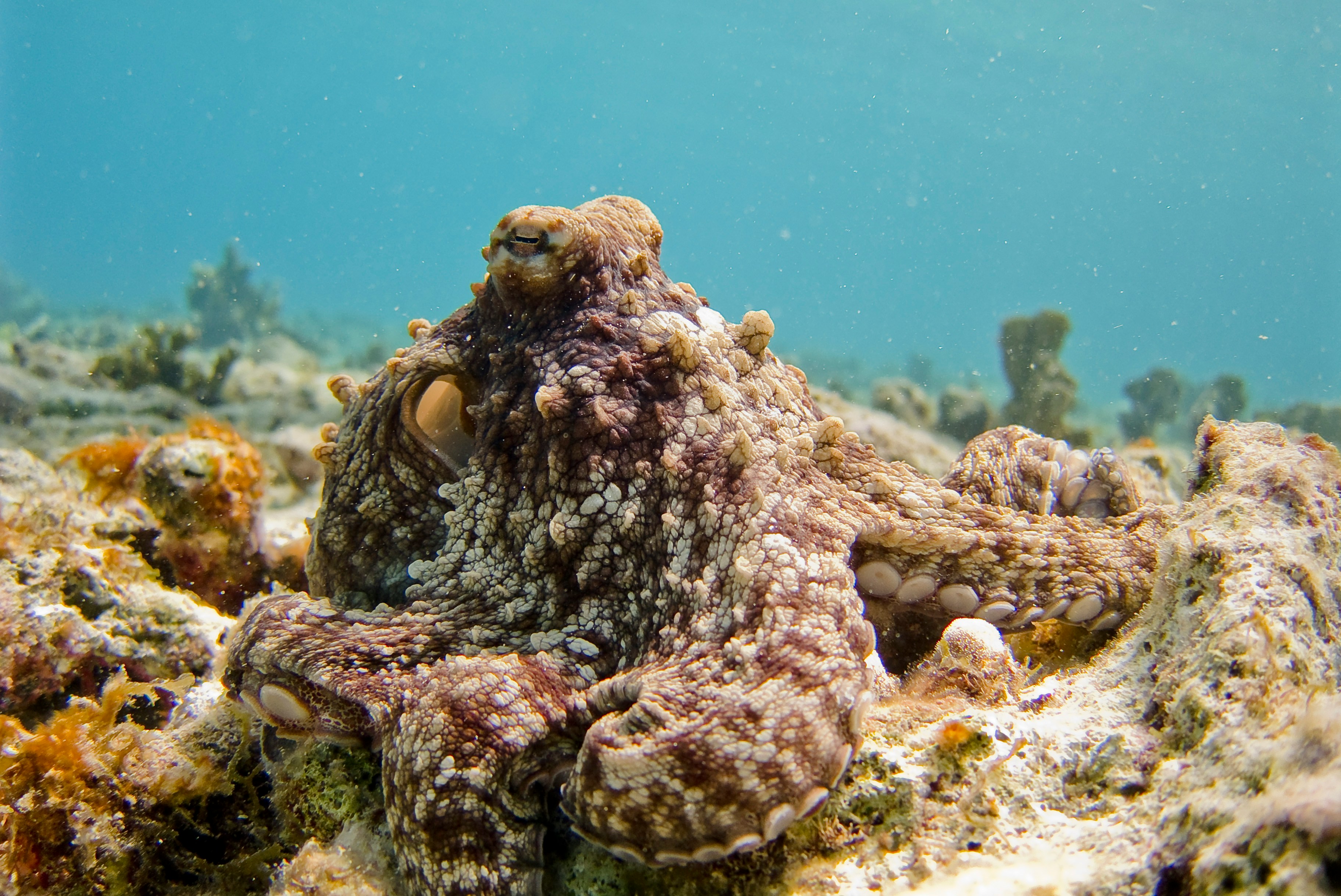
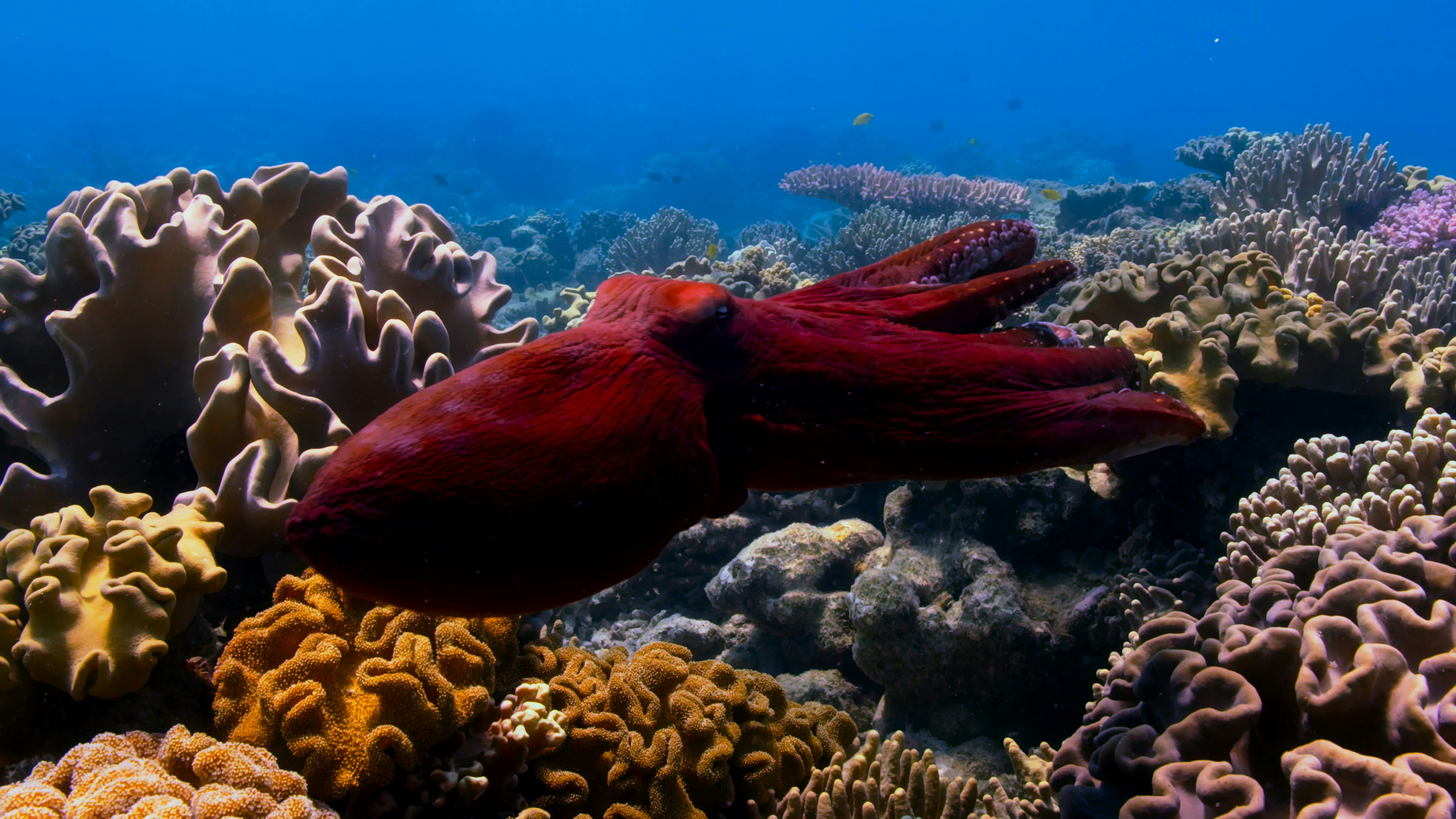
There is something disarming about watching an octopus move through the ocean. One moment they are almost invisible, blending into rock and seaweed; the next, they are moving across the seafloor with astonishing purpose, their arms exploring the world around them. Their skin can change colour and texture, their body can squeeze through tiny spaces, and their eight arms seem to have a life and intelligence of their own. For a long time, these qualities made octopuses fascinating subjects of scientific study and human curiosity. Today, they are also prompting scientists to take a closer look at a much more profound question: what is it like to experience the world as an octopus?
World Octopus Day is a chance to celebrate these remarkable animals and to look beyond their strange appearance and extraordinary abilities. Research over the past several decades has revealed sophisticated learning, memory, problem-solving and behavioural flexibility in cephalopods. At the same time, scientists have accumulated increasingly strong evidence that octopuses are sentient beings, capable of having subjective experiences, including potentially painful or distressing ones. For conservationists and those of us concerned about animal protection, this changes the conversation considerably. The octopus is not only a fascinating species to study or an important part of the marine food web; each one is an individual, sentient being with a life of their own.
A very different kind of intelligence
Perhaps the most fascinating thing about octopus intelligence is that it evolved so differently from our own. Humans and other vertebrates have a very different evolutionary history from cephalopods, yet octopuses have developed remarkably complex nervous systems and behaviours. They belong to the mollusc family, alongside animals such as snails and clams, but their cognitive abilities are extraordinarily different from what we might expect when we hear the word "mollusc."
Much of an octopus's nervous system is distributed throughout their body. Their arms contain extensive networks of neurones and sensory receptors, allowing them to gather information from the environment and perform complex movements. Researchers have therefore become increasingly interested in the possibility that an octopus's experience of the world is deeply connected to their body. Rather than having a central brain that simply controls eight passive limbs, the octopus has a highly integrated nervous system in which the arms themselves play an important role in sensing and responding to the environment.
Research into cephalopod cognition has found evidence of learning, memory and behavioural flexibility. A major review by Schnell, Amodio, Boeckle and Clayton (2021), published in Biological Reviews, brought together research on cephalopod cognition and showed just how extensive these abilities are. The authors argue that cephalopods provide an important example of complex cognition evolving independently of vertebrates, making them particularly valuable for understanding how intelligence can evolve.
One of the most famous examples comes from the veined octopus, Amphioctopus marginatus. In a 2009 study published in Current Biology, researchers observed these octopuses collecting discarded coconut shells and carrying them across the seabed. The animals would later arrange the shells around themselves as a shelter. The behaviour was described as defensive tool use, and it is particularly interesting because the shells were sometimes carried before they were immediately needed. The octopus was effectively moving through their environment with a useful object for possible future use.
There is no need to describe this behaviour as "human-like" to appreciate how remarkable it is. In fact, doing so can overshadow the distinctive features of octopus intelligence. Their minds did not evolve to imitate ours. They evolved to solve the problems of an underwater world, and they did so using a body and nervous system unlike anything we possess.
From intelligence to sentience
Intelligence is only one side of the story.
When we talk about animal protection, it can be tempting to focus on the most impressive cognitive abilities. We celebrate animals that can use tools, recognise themselves, communicate or solve puzzles. Yet this can create an uncomfortable hierarchy in which the animals we consider "smarter" receive greater moral consideration than those whose abilities are harder for us to recognise.
Animals are sentient beings, with their own subjective experiences of the world. They can experience things that are good or bad for them, including pain, distress and, potentially, positive states such as comfort or pleasure. Pain is perhaps the clearest example. An animal that can experience pain is not simply reacting mechanically to tissue damage. The injury is being experienced. There is an individual on the receiving end of what happens.
For a long time, scientists had relatively little evidence with which to address this question in invertebrates. That has changed dramatically in recent years. Birch and colleagues' influential 2021 review examined hundreds of studies concerning cephalopods and decapod crustaceans and concluded that the evidence supported treating these animals as sentient. The review subsequently became important in discussions surrounding animal-welfare legislation and the treatment of cephalopods in research.
The scientific picture has continued to develop. A major 2026 review published in Biological Reviews assessed eight different criteria relevant to sentience in cephalopod molluscs. The authors found strong evidence for sentience in octopuses and cuttlefish, with octopuses meeting six of the eight criteria with high or very high confidence (Schnell et al., 2026). The study does not claim that scientists know exactly what an octopus experiences, and it certainly does not suggest that an octopus experiences the world in the same way that a human does. But it does provide a strong scientific evidence that octopuses are capable of experiencing pain and distress.
This distinction is important. We do not need to prove that an octopus thinks like us before deciding that their suffering matters.
What happens when a sentient animal becomes food?
This is where the science inevitably becomes an ethical conversation.
Octopus is eaten in many parts of the world and has a long cultural history, particularly in Mediterranean and East Asian cuisines. There is value in acknowledging history without romanticising or dismissing it. Food is connected to culture, family, geography and tradition, and conversations about changing food systems need to recognise that complexity.
At the same time, cultural tradition does not mean we cannot reconsider our relationship with animals as new scientific evidence emerges.
This brings us to a broader ethical question: if octopuses are sentient beings, how should that knowledge influence the way we treat them? The issue is not whether octopuses are intelligent enough to deserve consideration, but whether a sentient animal capable of experiencing pain and distress should be killed for food when alternatives are available. Then eating octopus becomes more than a question of taste, it becomes a question of whether killing that individual animal is necessary. Even within a conservation context, this is worth considering alongside the more familiar questions of population health, habitat protection and ecological sustainability.
This is also why I think it is important not to make the argument about octopuses being "special." They should not have to earn our compassion by being unusually intelligent. If sentience matters, then it matters across species. The octopus simply gives us a particularly compelling opportunity to think about that principle because its cognitive abilities have become so difficult to overlook.
The documentary that changed how we see octopuses
Few popular films have brought these questions into the mainstream as effectively as My Octopus Teacher.
Released in 2020, the documentary follows filmmaker Craig Foster as he develops an extraordinary relationship with a wild female octopus in South Africa's False Bay. For many viewers, it was the first time they had watched an octopus closely enough to begin recognising their individuality. Instead of encountering "an octopus" as an abstract species, viewers were introduced to one particular animal with a particular life, environment and set of behaviours.
That emotional shift is important for conservation. Scientific papers can tell us about learning, memory and nervous systems, but documentaries can make an animal visible in a completely different way. Once we spend time observing an individual, it becomes harder to think about that animal solely as a resource.
The documentary encouraged millions of people to look at octopuses differently, and sometimes changing how we see an animal is the first step towards changing how we treat them.
The ecological role of octopuses
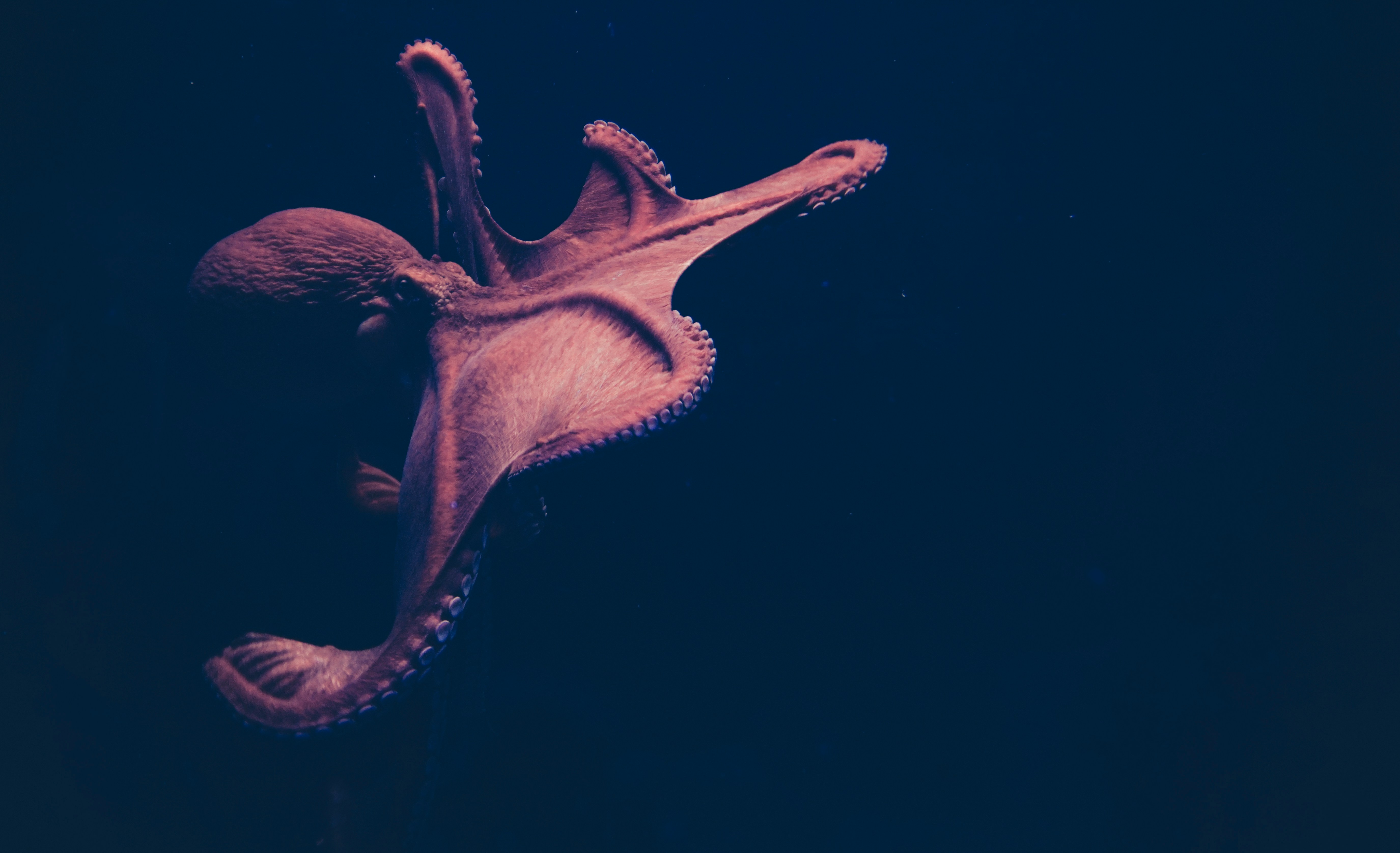
There is also a conservation argument that does not depend on intelligence or sentience at all: octopuses play important ecological roles in marine ecosystems.
They are predators, feeding on a wide variety of marine organisms, and they are also prey for larger marine animals. This puts them within the complex networks through which energy and nutrients move through marine ecosystems. Their ecological importance varies between species and habitats, so it would be an oversimplification to describe every octopus as a keystone species. Nevertheless, research increasingly emphasises the importance of understanding their role in food webs when managing fisheries and coastal ecosystems.
The common octopus, Octopus vulgaris, is a particularly important example. Researchers studying their ecology have documented complex relationships between diet, prey populations and environmental conditions. Understanding those relationships is essential if fisheries are to be managed responsibly.
This matters because conservation should not be reduced to asking how many animals humans can remove while maintaining a commercially viable population. Ecosystems are not inventories. Ecosystems are living communities, shaped by complex interactions between species and their environments. An octopus eats crabs, molluscs and other prey. Larger fish and marine predators may eat octopuses. Octopuses compete with other predators and interact with the habitats in which they live. Their presence and absence can therefore have consequences beyond the individual animal.
Protecting octopuses is not just about protecting one species. It is about protecting entire marine ecosystems and preserving the ecological balance that allows those ecosystems to thrive.
Octopus farming
This brings us to one of the most controversial developments in the modern octopus story: octopus farming.
As demand for octopus increases and some wild fisheries face pressure, commercial octopus farming has been proposed as a way of producing more animals without relying entirely on wild populations. At first glance, the argument seems reasonable. If we can farm fish, shrimp and other aquatic animals, why not octopuses?
The problem is that octopuses present a very different set of challenges. They are active, exploratory and behaviourally complex animals. Many species are solitary. They are carnivorous, meaning that farming them requires animal-derived feed. Their welfare requirements in intensive systems are not yet fully understood, and there are unresolved questions surrounding space, enrichment, stocking densities, disease, handling and slaughter.
The welfare question is particularly difficult. If we accept the growing evidence that octopuses are sentient, then creating an intensive production system for them requires us to demonstrate that their behavioural and experiential needs can actually be met. That is a much higher bar than simply demonstrating that an animal can survive in captivity.
There is genuine disagreement among scientists about what should happen next. A 2025 paper in Marine Policy, involving researchers from institutions around the world, argued for a balanced approach to octopus aquaculture and suggested that technological development could potentially address some environmental and welfare concerns. This perspective is important because the scientific debate is not unanimous.
But the opposing argument is equally important: when the welfare requirements of a sentient animal remain uncertain, and when humans do not need octopus as a food source for nutritional survival, there is a strong case for precaution.
From an ethical perspective, this raises a particularly uncomfortable question: why should we develop another intensive animal-farming industry at precisely the moment when science is giving us stronger evidence that the animals involved can experience the world and potentially suffer?
The rise of octopus-farming bans
Some governments have already decided that precaution is appropriate.
Washington State became the first U.S. state to ban octopus farming in 2024. California followed by introducing a ban on octopus farming, with its law taking effect in 2025. In 2026, New York lawmakers passed a bill to ban commercial octopus farming for human consumption, while providing exceptions for scientific and educational purposes.
The debate is also growing in Europe. In 2025, a European Parliament event brought together scientists, policymakers and animal-welfare organisations calling for an EU-wide ban on octopus farming, citing concerns about animal welfare, environmental impacts and the challenges of farming a carnivorous species. The EU has not yet introduced such a ban, but the debate reflects growing concern about allowing this industry to develop.
These developments are significant because they are largely preventive. Rather than waiting for a large industrial octopus-farming sector to become established and then attempting to regulate its environmental and welfare impacts, lawmakers are asking whether such an industry should be allowed to develop in the first place.
For octopuses, the stakes are unusually high because we are not dealing only with questions of water pollution, feed efficiency or disease management. We are also dealing with an animal whose capacity for subjective experience is increasingly supported by scientific evidence.
Rethinking the octopus
There is a tendency to celebrate octopuses because they surprise us. They are smarter than we expected, more curious than we expected, more behaviourally flexible than we expected. But perhaps we should be careful about making "surprise" the basis of compassion. An animal should not have to impress us before we care about their suffering. The octopus has simply made the problem difficult to ignore because their abilities are so obvious. They have forced us to confront the possibility that complex inner lives are not confined to mammals and birds, or even to vertebrates. The more we learn, the more the old categories begin to blur.
There are animals humans eat.
Animals humans admire.
Animals humans experiment on.
Animals humans protect.
Animals humans consider companions.
But biology does not organise life according to those human categories. The octopus does not know whether we classify them as seafood, wildlife or a fascinating subject of scientific research. They simply experience their own life.
That is perhaps the most important idea to take away from #WorldOctopusDay.
We don't need to decide that octopuses are more important than fish, birds, mammals or insects. We don't need to claim that their minds are identical to ours. We don't even need to pretend that we fully understand what an octopus experiences.
We simply need to take the evidence seriously.
And the evidence tells us that these are remarkably complex animals, key players in our marine ecosystems, and sentient beings.
If we can protect them in the wild, we should.
If we can reduce the pressure placed on their populations, we should.
If we can choose food that does not require their suffering and death, we have to.
This Octopus Day, then, perhaps the best thing we can celebrate is not simply the remarkable intelligence of the octopus. It is the possibility that our understanding of other animals is changing. The possibility that as science reveals more about the minds around us, our circle of moral consideration can expand with it. And perhaps, eventually, we will look back at the idea of farming an animal like the octopus in the same way we now look at many cruel practices we once accepted without question. Not because the octopus became more worthy. But because we became better at recognising the worth that was already there.
Further reading
For readers who want to explore the research further, these studies provide a useful starting point.
Birch, J., Burn, C., Schnell, A., Browning, H. & Crump, A. (2021) Review of the Evidence of Sentience in Cephalopod Molluscs and Decapod Crustaceans. London: London School of Economics and Political Science.
Finn, J.K., Tregenza, T. & Norman, M.D. (2009) 'Defensive tool use in a coconut-carrying octopus', Current Biology, 19(23), pp. R1069–R1070. doi:10.1016/j.cub.2009.10.052.
Schnell, A.K., Amodio, P., Boeckle, M. & Clayton, N.S. (2021) 'How intelligent is a cephalopod? Lessons from comparative cognition', Biological Reviews, 96(1), pp. 162–178. doi:10.1111/brv.12651.
Schnell, A.K., Browning, H., Crump, A., Burn, C.C. & Birch, J. (2026) 'Sentience in cephalopod molluscs: an updated assessment', Biological Reviews, 101(3), pp. 1311–1333. doi:10.1002/brv.70125.
I am a passionate communicator and researcher with an extensive background in the environmental humanities and social sciences, dedicated to exploring and fostering connections between people and nature. Based between Sweden and the UK, I work in academia as a researcher and lecturer, teaching courses in environmental law, historical ecology, and disaster risk management.
I actively contribute to non-profit organisations promoting conservation and animal welfare. I work with Faunalytics, translating complex research into accessible insights for evidence-based advocacy; write feature articles for Ubuntu Magazine spotlighting conservation initiatives; and serve as Community Advocates Coordinator at WildHub, driving strategic communications and leading initiatives that connect and empower conservation practitioners worldwide.
When I’m not working, you’ll find me hiking forest trails with my dog or enjoying a good cup of coffee.