Regulation of International Trade in CITES Appendix-I Species: A Law-Enforcement Guide
Introduction:
International trade in wildlife species listed in Appendix I of the Convention on International Trade in Endangered Species of Wild Fauna and Flora (CITES) is not ordinary wildlife trade subject merely to documentation. It is an exceptional activity subject to the Convention’s highest trade-control standard. Appendix I contains species that are threatened with extinction and are or may be affected by trade. Article II(1) requires their trade to be subject to “particularly strict regulation” and authorized only in exceptional circumstances.
For wildlife law-enforcement officers, the central operational principle is simple: an Appendix-I specimen should be presumed non-tradable for commercial purposes unless the trader establishes a clearly applicable CITES exception with valid documents and lawful source evidence.
Appendix I and its conservation purpose:
CITES regulates international trade in selected wild animals, plants and their specimens. “Trade” under CITES includes export, re-export, import and introduction from the sea. A “specimen” is wider than a live animal or plant. For Appendix-I species, it includes:
- Any live or dead animal or plant
- Any readily recognisable animal part or derivative, such as skin, horn, tusk, bone, claw, feather, meat, taxidermy, medicine or jewellery
- Any readily recognisable plant part or derivative, such as roots, timber, carvings, seeds, extracts or other processed material, unless a listing annotation limits coverage
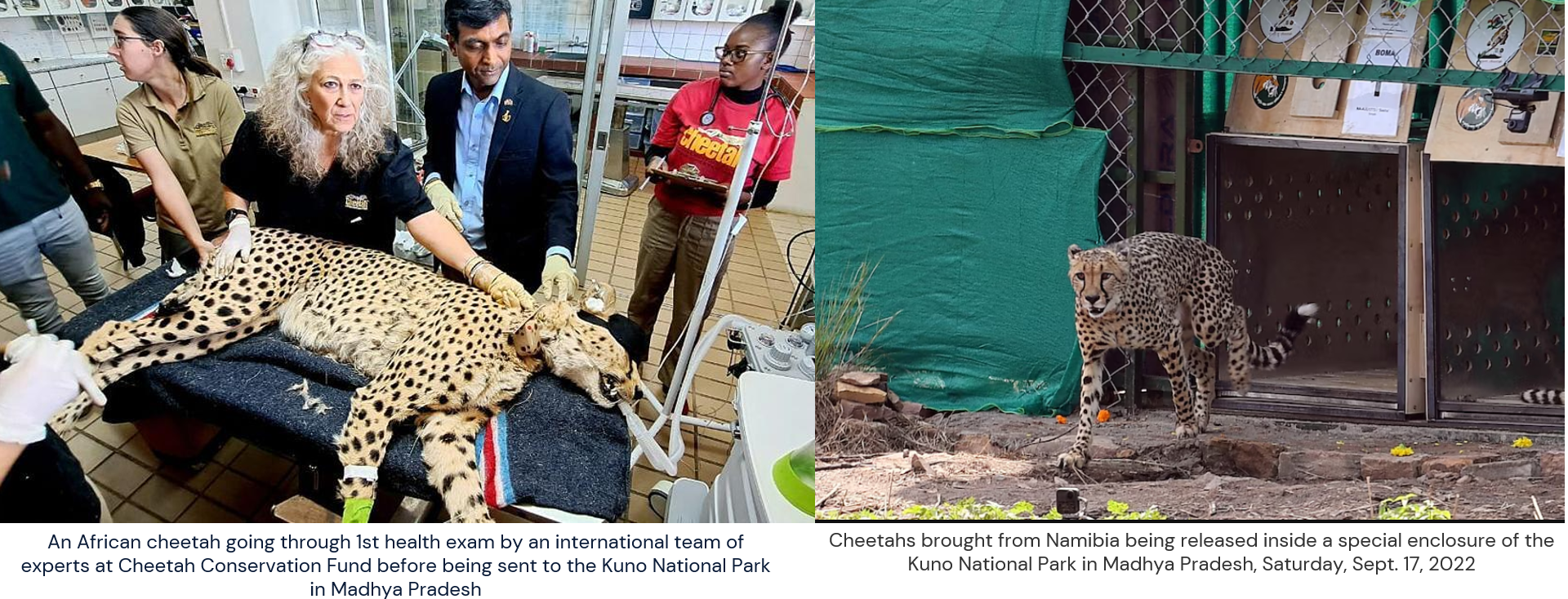
India’s import of African Cheetahs ((Acinonyx jubatus) illustrates how Appendix-I trade can be lawful when it is non-commercial, conservation-linked, scientifically assessed and supported by prior permits from both the exporting and importing States. India received eight Cheetahs from Namibia in September 2022, twelve Cheetahs from South Africa in February 2023 and Nine cheetahs from Botswana In February 2026 under Project Cheetah. The shipments were intended for reintroduction and conservation, not for commercial sale. It required inter-governmental authorization, non-commercial conservation purpose, evaluation of the recipient facility, lawful sourcing, animal-welfare arrangements for transport and the necessary CITES documentation before export.
When and For What Purpose Trade Is Allowed:
Article III allows an import only if the importing country's Management Authority is satisfied that the specimen will not be used for primarily commercial purposes. In practice, legal movements are for:
- Scientific research, including exchange of biological samples between registered institutions (Article VII(6)).
- Conservation breeding and reintroduction, which is the category of the cheetah translocation from Africa to India.
- Education and zoological exhibition by approved institutions.
- Personal and household effects in narrow circumstances (Article VII(3)). These exemptions apply mainly to pre-Convention and to captive-bred or propagated specimens, not to wild-taken Appendix-I specimens.
- Hunting Trophies where a CoP has set an export quota. These are non-commercial imports for personal use.
Quota-Based Exceptions: A few Appendix-I species carry annotations that allow limited export. The cheetah is an example. The Appendix annotation grants annual export quotas for hunting trophies and live specimens: Botswana 5, Namibia 150 and Zimbabwe 50. South Africa has no such quota, so a South African cheetah moves only on a case-by-case Appendix-I permit basis. Even within a quota, each shipment needs its own permits.
Pre-Convention Specimens: A specimen acquired before the species was listed can move on a pre-Convention certificate (Article VII(2)). Officers should check the claimed acquisition date carefully, because false pre-Convention claims are a known laundering route.
Transit: Specimens in transit under customs control are exempt (Article VII(1)), but only if the shipment is properly documented and stays under control. Transhipment points are a recurring weak spot.
Regulatory Requirements under CITES:
- Core Requirements for Export
Article III(2) requires an Appendix-I Export Permit to be granted and presented before export. The exporting State must establish all four conditions below:
|
Legal Requirement |
What the Exporting Authority must Establish |
Enforcement Relevance |
|
Non-Detriment Finding |
Its Scientific Authority has advised that export will not be detrimental to survival of the species |
Check whether the scientific basis exists, is species-specific and matches the number, source and purpose declared |
|
Legal Acquisition |
Its Management Authority is satisfied that the specimen was not obtained in violation of domestic wildlife-protection laws |
Examine capture records, breeding records, ownership history, seizure or release documents and domestic licences |
|
Humane Preparation and Shipment |
For a living specimen, transport arrangements minimize injury, health damage and cruel treatment |
Verify crates, veterinary certification, handling plan, route, transit arrangements and compliance with live-animal transport standards |
|
Prior Import Permission |
The exporting Management Authority is satisfied that an Import Permit has already been granted |
The export should not proceed merely on an import application or informal approval |
These are cumulative requirements. Failure of any one condition means the export permit should not be issued.
- Core Requirements for Import
Article III(3) requires the importing State to issue an Import Permit before import. It must be presented together with the Export Permit or, for Re-Export, the Re-Export Certificate. The importing State must establish:
|
Legal Requirement |
Authority Responsible |
Enforcement Relevance |
|
Non-Detriment of Import |
Scientific Authority of the importing State |
Ensure that the import is evaluated for its effect on the species, including its stated conservation purpose |
|
Suitable Recipient for Live Specimens |
Scientific Authority of the importing State |
Verify enclosure, quarantine, veterinary care, staffing, security, habitat, rescue capacity and long-term husbandry |
|
Not Primarily Commercial |
Management Authority of the importing State |
Examine actual use, contracts, financing, ownership, commercial benefits and onward-transfer plans |
The Import Permit must be granted before the export takes place. An import permit issued after shipment, after seizure or after arrival cannot ordinarily cure a prior breach of Article III.
- Re-Export Requirements
A Re-export Certificate for an Appendix-I Specimen may be issued only when the Re-Exporting State is satisfied that:
- The specimen was previously imported in accordance with CITES.
- A living specimen will be prepared and shipped so as to minimize injury, health damage or cruel treatment
- For a live specimen, an Import Permit has been granted by the destination State
The essential question for Re-Export is traceability: can the re-exporting State prove lawful prior import? A Certificate that does not correspond with the original Import Permit, source, quantity, marks, date or specimen identity requires close scrutiny.
Permit Controls at the Border:
Article VI contains basic documentary safeguards that are particularly important during inspections:
- An export permit may be used only for export within six months from its date of grant.
- Each permit or certificate must bear the Convention title, issuing Management Authority, identifying stamp and control number.
- A separate permit or certificate is required for each consignment.
- Copies cannot replace the original unless expressly endorsed for that purpose.
- The import authority should cancel and retain the export permit or re-export certificate and the corresponding import permit.
- Marking, microchips, rings, tags, seals, DNA profiles and other permanent identifiers may be used to improve verification.
These provisions directly address common methods of concealment: reuse of cancelled permits, photocopied permits, alteration of dates, substitution of specimens, splitting a shipment between consignments, and use of a document issued for one animal or plant to cover another.
Captive Breeding and Artificial Propagation:
CITES treats captive-bred animals and artificially propagated plants differently from wild-taken ones, because such trade need not draw down wild populations.
- Commercial Purposes: Under Article VII(4), Appendix-I animals bred in captivity for commercial purposes and Appendix-I plants artificially propagated for commercial purposes are treated as Appendix II. For animals, this applies only if the breeding operation is registered with the CITES Secretariat under Resolution Conf. 12.10 (Rev. CoP15), and the operation must be shown to maintain a self-sustaining breeding stock without wild replenishment. For plants, nurseries are registered under Resolution Conf. 9.19 (Rev. CoP13).
- Non-Commercial Purposes: Under Article VII(5), a certificate from the exporting Management Authority can replace the standard permits when it is satisfied the specimen was captive-bred or artificially propagated. The certificate must still be supported by evidence of the claim.
Why this Matters: These provisions let breeders, botanical gardens and zoos supply legitimate demand and reduce pressure on wild populations. They are also one of the most abused loopholes. Wild animals and plants are routinely declared "captive-bred" or "propagated" to avoid Appendix-I restrictions. CITES has a review process (Resolution Conf. 17.7) for trade in animals reported as produced in captivity because of persistent concerns about such declarations.
Red Flags for Enforcement Officers:
- Large volumes of a slow-breeding species from a single exporter.
- Specimens that look wild (wear, scars, mature size) but are described as captive-bred.
- Plants with no sign of nursery cultivation, such as uniform pots, labels or growth patterns.
- Breeder or nursery not on the Secretariat's register where registration is required.
- Missing or inconsistent marking, or breeding records that do not match the numbers shipped.
Where the claim cannot be verified, treat the specimen as wild-sourced and request authentication from the exporting authority. DNA parentage testing is an increasingly useful tool for testing captive-breeding claims.
Demands to Allow Trade in Wild-Sourced Specimens and Stockpiles:
Several southern African countries argue that regulated sale of stockpiled ivory and rhino horn would raise revenue for conservation and local communities, and that their stockpiles are costly to secure. These demands have been repeatedly put to the CoP.
The most recent test was CoP20. Namibia proposed allowing trade in horn from its southern white rhinos, in horn from its black rhinos, and in stockpiled elephant ivory. All were rejected for failing to achieve the two-thirds majority required, and the Parties agreed that trade in stockpiled rhino horn from government and private owners remains prohibited. CoP20 also kept Appendix-I protection for the black rhinoceros.
CITES has historically allowed ivory sales only exceptionally. Two one-off sales, in 1999 and 2008, were authorized from a few southern African countries whose elephant populations were then in Appendix II. Conservation groups argue that the 2008 decision to allow ivory stockpile sales triggered a surge in poaching as traffickers exploited the difficulty of distinguishing legal from illegal ivory. The enforcement concern is real: a legal market creates a cover under which illegal product can be mixed in.
CITES Position. The Parties may amend the Appendices only by a two-thirds majority of those present and voting. Any proposal to move a species or population from Appendix I to II must show that it meets the biological criteria in Resolution Conf. 9.24 (Rev. CoP17), which includes precautionary provisions. For confiscated specimens, Resolution Conf. 17.8 says seized Appendix-I specimens should not enter commercial trade. They may be kept for enforcement, scientific, educational or identification use, or be destroyed.
For enforcement officers , the practical message is that the legal position is unchanged: commercial trade in wild-sourced Appendix-I rhino horn and ivory is prohibited.
Making Enforcement More Effective:
- Verify, don't just inspect: Fraudulent and recycled permits are a standard tactic. Cross-check permits with the issuing authority, record the permit number, and report suspected forgeries to the CITES Secretariat and the National Management Authority. Shift to electronic permits (eCITES) where counterparts have them, because they allow real-time validation and cut forgery.
- Train on Identification: Many Appendix-I species are smuggled as parts, derivatives or processed goods (horn powder, carved ivory, skins, orchids as tissue culture or bulbs). Officers need identification guides and access to expert help. Where visual identification fails, use forensic methods: DNA analysis for species and origin, and isotope or radiocarbon analysis for age and ivory dating, through accredited laboratories.
- Risk Profiling and Intelligence: Use risk indicators such as route (including transhipment through third countries), declared goods that do not fit the consignor, undervalued or mis-described cargo, and repeat consignors. Share intelligence between customs, forest, police and wildlife crime units, and with INTERPOL and the World Customs Organization through the International Consortium on Combating Wildlife Crime (ICCWC).
- Treat Wildlife Trafficking as Organized Crime: Investigate beyond the courier: trace financing, communications, owners of front companies and the buyers. Use anti-money-laundering and organized-crime provisions alongside wildlife law where available, and follow the money.
- Secure the Online and Postal Channels: Online platforms and parcels are increasingly used, especially for live animals, plants and small parts. Monitor listings and work with platforms and courier companies on takedowns and screening.
- Handle Seizures Properly: Use Article VIII of the Convention. A confiscated live specimen may be returned to the country of export at that country's expense, or placed in a suitable rescue centre. Keep detailed records, secure the chain of custody, photograph and sample at the time of seizure, and protect stockpiles against theft and corruption. Document everything for prosecution.
- Ensure Deterrent Prosecution: Seizures without convictions do not deter. Prepare cases with the evidence needed under the national wildlife protection laws, brief prosecutors on CITES requirements, and publish outcomes where possible.
- Tackle Corruption: Permit fraud and weak border control often involve insiders. Rotate staff on sensitive posts, audit permit issuance, and protect whistle-blowers.
- Work Across Borders: Use mutual legal assistance, controlled deliveries and joint operations. Where a consignment is suspect, notify the exporting country's Management Authority quickly, because evidence can disappear.
- Monitor Live Animals After Import: For introduced species such as the Cheetah, post-import monitoring, health checks, registration and clear records of births, deaths and transfers matter. They keep legal animals from becoming a laundering channel and demonstrate the "suitably equipped" condition to other CITES Parties.
Conclusion:
Appendix I is the strictest tier of CITES. Trade is the exception, not the rule: it requires non-commercial purpose, scientific findings on survival, and two sets of permits, from the importing and exporting countries. The cheetah translocation to India shows the system functioning as intended, with scientific advice, government-to-government agreement and permits all in place. The same system is exploited by wildlife criminals who use forged permits, false captive-breeding claims, transhipment routes and online sales.
The CoP20 decisions confirm that the Parties still hold the line against commercial trade in wild-sourced ivory and rhino horn. For officers, the working principles are straightforward. Verify every document with the issuing authority. Treat unverifiable "captive-bred" or "propagated" claims with scepticism. Identify specimens scientifically. Follow the money behind each seizure. Carry cases through to prosecution.

I am an Indian Revenue Service (Customs & Indirect Taxes) officer with vast experience of law enforcement especially in tackling transnational smuggling including willdife trafficking. Also, as an expert I have been conducting sessions on various aspects of wildlife crimes and its convergence with other serious crimes, legal and enforcement framework to counter it, wildlife cyber crime, OSINT for combating wildlife crime, combating money laundering associated with wildlife crime, CITES, role of Customs in tackling the menace of wildlife crime, Digital Forensics etc. for forest, police, customs and other enforcement agencies' officials.