Shahtoosh Trafficking as Transnational Wildlife Crime: A Supply-Chain Approach to Enforcement
Introduction:
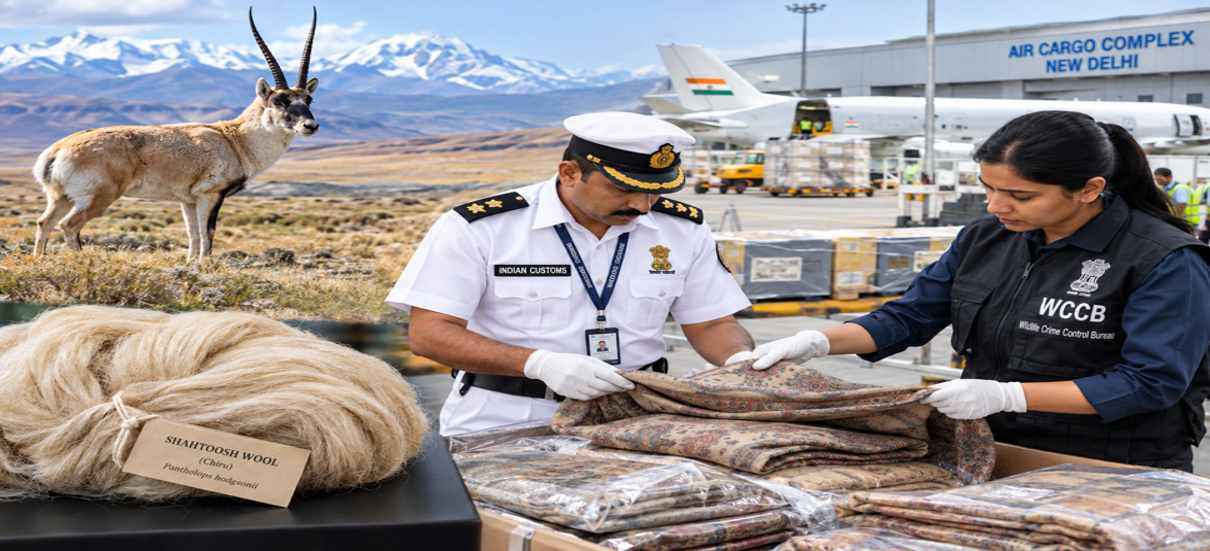
The Tibetan Antelope, or Chiru (Pantholops hodgsonii), is killed primarily for its exceptionally fine underfur, commonly known as shahtoosh. Shahtoosh - often translated as “king of wool”- is extremely fine, light and warm. A shahtoosh fibre is reported to be about 10 microns in diameter, finer than pashmina and merino wool. This physical quality, combined with its rarity and social prestige, creates the economic incentive for poaching.
Although international and domestic laws prohibit hunting and trade, the species remains exposed to a transnational criminal chain that moves raw wool from the Tibetan Plateau into Kashmir, converts it into luxury shawls, and smuggle them to wealthy markets in the Middle East, Europe North-America and East Asia.
The central law-enforcement fact is that shahtoosh cannot be sustainably harvested from wild Chiru in any practical sense. Unlike Cashmere or Pashmina goats, which are domesticated and sheared annually without harm, the Chiru is a wild, untamable species. The wool cannot be collected by shearing or combing. Consequently, commercial production has historically depended on killing Chiru and removing the underfur from their skins.
Natural Habitat & Protection Status of Tibetan Antelope:
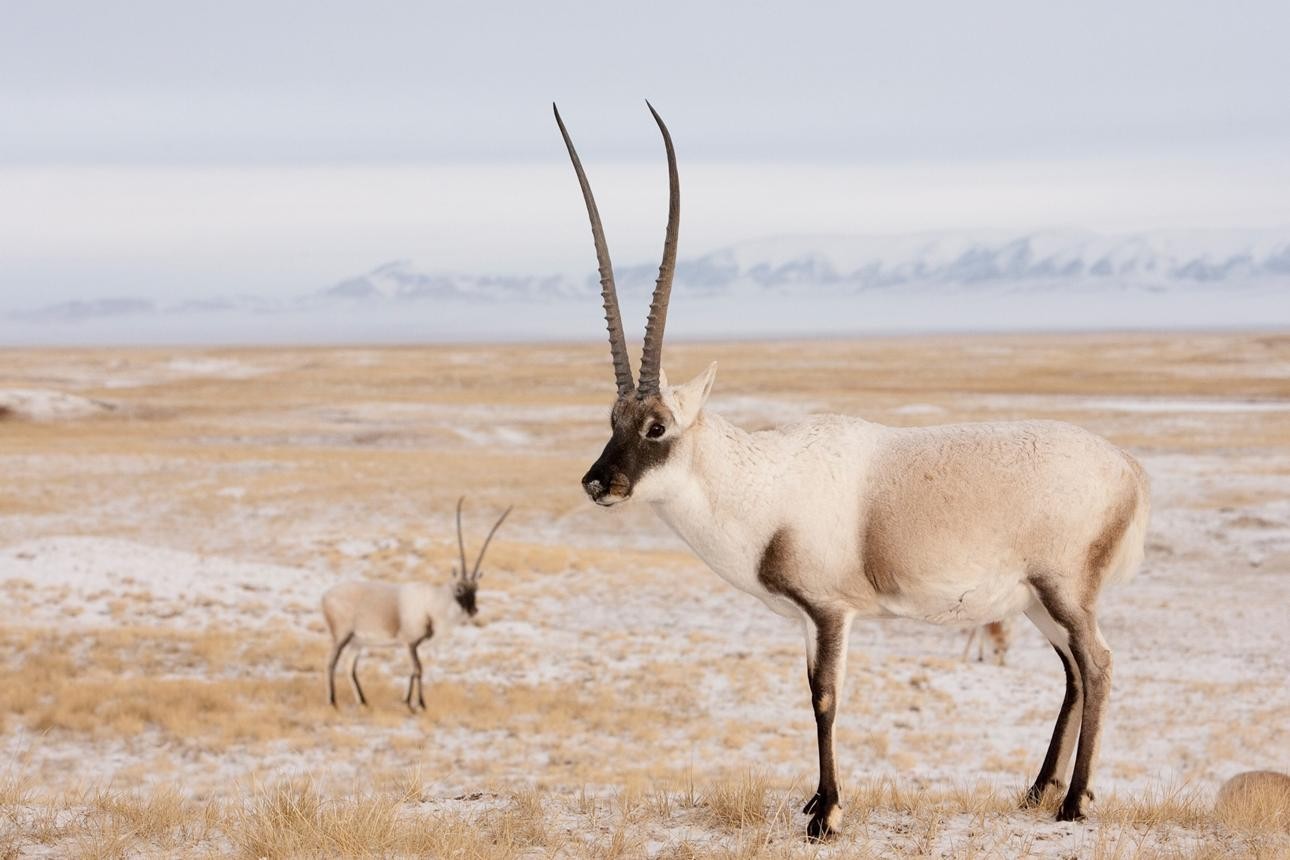
The Chiru’s principal range lies across the Tibetan Plateau, with populations in the Tibet Autonomous Region, Qinghai, Xinjiang and adjoining areas. In India, the species occurs in the high-altitude Changthang region of Ladakh, including areas around Tso Moriri and the Changthang Cold Desert landscape.
The species is partially migratory. Females of some populations travel 300–400 km each year to shared calving grounds such as Zhuonai Lake (also called the "large Delivery Room" of Tibetan Antelopes) in Hoh Xil, leaving in mid-May and returning with newborns in July and August. Poachers have historically exploited this predictable movement.
Due to catastrophic population declines caused by commercial poaching during the late 20th century—where global populations plummeted from an estimated 1 million to under 75,000—the Chiru is subjected to strict international and national legal protections:
|
Regime |
Protection Status |
|
CITES |
The Chiru is listed in Appendix I of CITES, which prohibits international commercial trade in the species and its derivatives, including wool and shawls. |
|
IUCN Red List |
Currently classified as Near Threatened (NT) following intensive conservation enforcement by China in the Chang Tang Reserve, but remains highly conservation-dependent due to persistent transnational smuggling networks. |
|
Wild Life (Protection) Act of India |
Accorded the highest level of statutory protection under Schedule I. Possession, trade, transit, or processing of Shahtoosh is a non-bailable offense carrying stringent prison terms (up to 7 years) and heavy fines. |
|
National Parks and Wildlife Conservation Act of Nepal |
Accorded full protection and heavy penalties for possession and trade. |
|
Chinese Wildlife Protection Law |
Classified as a Class I State Key Protected Species. Illegal hunting or trafficking carries severe penalties. |
Why Poaching Continues & Modus Operandi of Poaching:
The illegal trade persists because of a narrow but lucrative demand chain: poachers in Tibet and adjoining areas kill Chiru; intermediaries collect and move raw wool; Kashmiri networks weave or finish shawls; and brokers sell them to elite consumers abroad. A single shawl may require the wool of several Chiru—estimates cited by conservation organisations range from three animals for a woman’s shawl to five or six for a man’s shawl. The financial reward is disproportionate to the risk at the poaching end. a shawl sells for roughly US$5,000 to US$15,000 abroad depending upon the embroidery work.
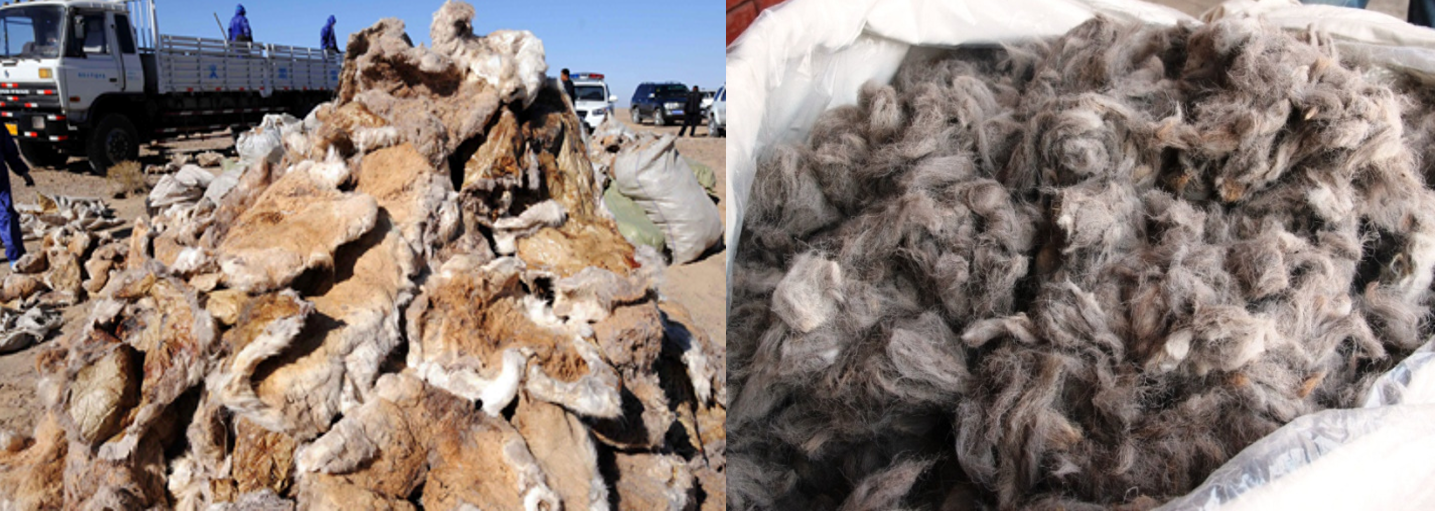
Poaching operations are executed by highly organized criminal syndicates operating in extreme, unpatrolled wilderness zones of the Tibetan Plateau, primarily within the Chang Tang National Nature Reserve (Tibet Autonomous Region), Kekexili (Hoh Xil) Nature Reserve (Qinghai), and Altun Shan (Xinjiang). Poachers exploit the annual migration patterns of female Chiru, who migrate hundreds of kilometers to high-altitude birthing grounds near seasonal lakes between May and July. Poaching teams operate in motorized convoys using off-road vehicles (4x4s, pickup trucks) and motorbikes. Syndicates utilize semi-automatic high-caliber rifles, modified hunting rifles, and high-intensity spotlights for night hunting. Entire herds are blinded at night by vehicle headlights and systematically mowed down. The animals are skinned immediately on site; carcasses are abandoned, while raw hides containing the guard hair are packed into sacks.
The raw wool is then consolidated by local collectors or dealers. It may be compressed into bags, concealed among legitimate goods, transported by truck or animal caravan, and moved toward border zones. The use of remote routes, night movement and small consignments makes detection difficult, particularly across the Tibet–Nepal frontier and the Tibet-Ladakh frontier.
For investigators, the operational challenge is that the most detectable stage—poaching—occurs far from the markets where the final product is sold. By the time a shawl is seized in Delhi, Dubai, London or Zurich, the direct link to a specific poaching event has often been broken.
Raw Shahtoosh Wool Smuggling Routes: Tibet to Nepal and India
Once harvested on the remote plateau, the raw Shahtoosh wool undergoes complex multi-leg transit toward processing hubs. Law enforcement intelligence identifies three primary transboundary corridors connecting the Tibetan Autonomous Region (TAR) to weaving centers in India:
|
Smuggling Corridor |
Geographic Waypoints |
|
Corridor 1: Nepal Overland |
Tibet → Humla / Mustang / Tatopani → Kathmandu (Nepal) → Raxaul(Bihar) /Sunauli- Gorakhpur (Uttar Pradesh)→ Jammu & Kashmir. |
|
Corridor 2: Direct Ladakh Line |
Tibet → India-China Border → Changthang (Ladakh) → Leh → Kargil → Srinagar. |
|
Corridor 3: Himachal Pradesh/ Uttarakhand |
Tibet → Shipki La Pass- Kinnaur (Himachal Pradesh)/ Lipulekh Pass (Uttarakhand)/ Dharchula (Uttarakhand) → Jammu & Kashmir. |
Weaving and Trafficking of Shahtoosh Shawls:
Kashmir, particularly Srinagar and its old city, has historically been the principal weaving centre for Shahtoosh. Skilled artisans spin and weave the wool into shawls and stoles, often using traditional Kashmiri designs that make the finished item appear to be a legitimate handicraft. A pure Shahtoosh Shawl is so light (100–150g) and supple that an entire 2-meter by 1-meter garment can easily pass through a standard finger ring—giving rise to the commercial term "Ring Shawl”.
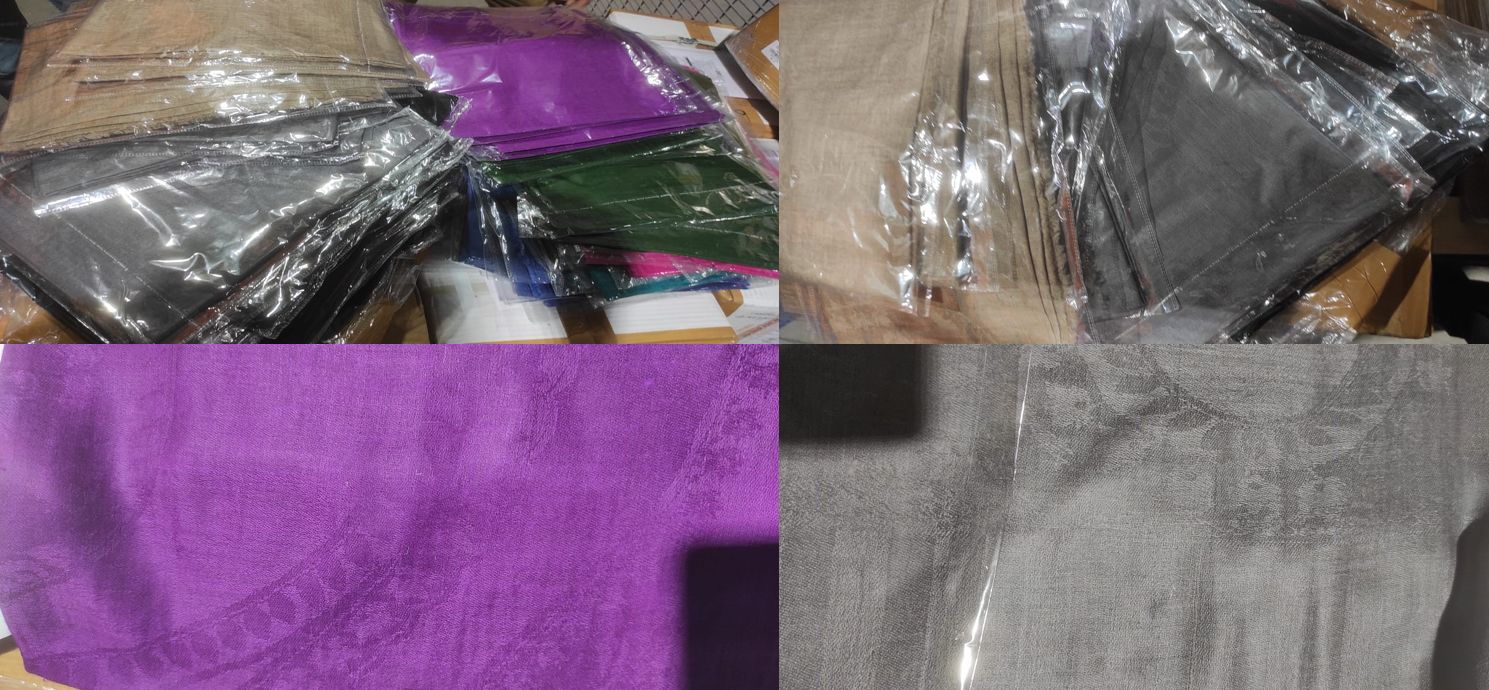
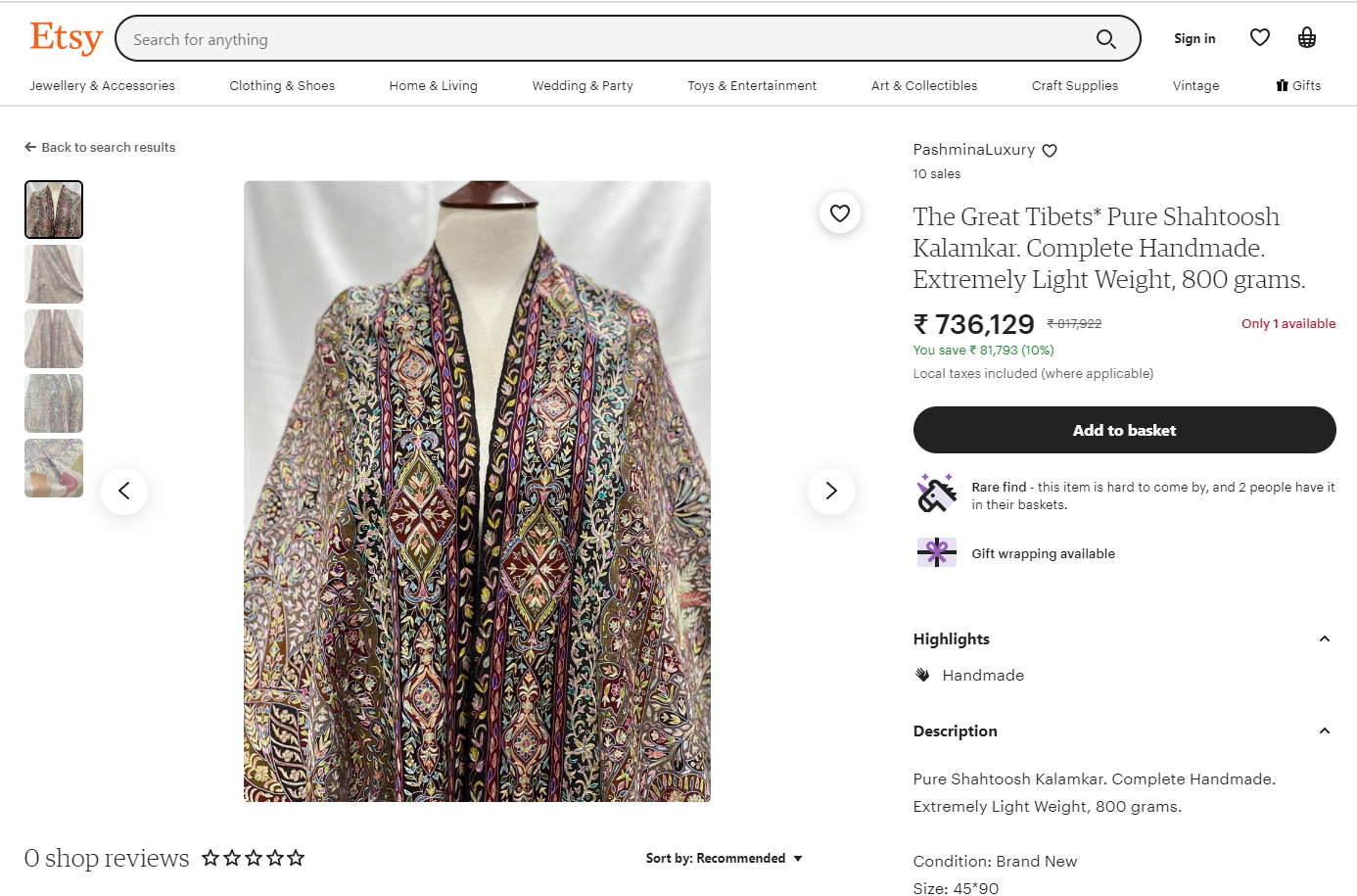
After the ban, the trade did not simply disappear; it moved underground. Finished shawls travel from Srinagar to mainly Delhi and also to other metropolitan markets, and from there to Europe, the Middle East, East Asia, North America, Africa and other destination markets, where they command the exorbitant prices. Smuggling of Shahtoosh Shawls from India have been reported through Air Cargo Complex, International Courier, Passenger Baggage and Integrated Check Post at Land Customs Border. Online e-commerce marketplace such as Etsy has also been used by traffickers to sell Shahtoosh Shawls.
Enforcement analysis found that traffickers misdeclare Shahtoosh as Pashmina, Cashmere or ordinary wool shawls. This mislabelling is central to the smuggling method because Pashmina and Cashmere Shawls are lawful products with established export channels. Mixing of Chiru wool with Pashmina or Cashmere wool to reduce the detectable proportion and complicate forensic identification has also been resorted to by the traffickers.
Prevention and Enforcement Strategy:
Combating the Shahtoosh trafficking requires a multi-pronged, integrated multi-agency, transboundary intelligence/enforcement strategy targeting all components of the illicit supply chain—from source to consumer markets:
- Anti-poaching patrols, community informer networks, aerial/drone surveillance of the migratory routes of Tibetan Antelopes, rapid-response teams and intelligence-led operations are essential in Chiru habitat. Because poachers target migration and calving areas, patrolling should be focused on those migratory routes & calving ground.
- Strengthen real-time intelligence sharing between customs and border-guarding agencies of China, Nepal and India for coordinated border interdiction of raw shatoosh wool.
- Customs and wildlife authorities should develop risk indicators for textile shipments that may conceal shahtoosh. Relevant factors include inconsistencies between the declared commodity and supporting documents, intelligence concerning the consignor or consignee, suspicious shipment patterns and links to previous seizures.
- OSINT must be harnessed by the enforcement authorities to detect illicit trade of shahtoosh shawls/wool through online platforms.
- Conducting intelligence-led audits of handicraft warehouses, e-commerce exporters, and weaving looms in Srinagar.
- Offering alternative livelihood schemes for traditional artisans will result into dismantling of economic dependency on illegal shahtoosh processing.
- Customs and wildlife authorities of reported destination markets also need to be made aware of smuggling of shahtoosh shawls, modus-operandi, identification/forensic techniques etc. to make enforcement effective on their side.
- A major hurdle in enforcement is that shahtoosh shawls are frequently mislabelled or intentionally blended with Pashmina (goat wool) or Angora (rabbit wool) to evade customs inspection and visual identification. Law enforcement agencies have to rely on specialized wildlife forensics to establish whether a shawl contains shahtoosh wool or not. Therefore, Robust forensic capabilities are central to combat this menace. Wildlife Institute of India (WII), Dehradun and the Laboratory for Conservation of Endangered Species (LaCONES)—a specialized wing of the Centre for Cellular and Molecular Biology (CCMB), Hyderabad, India are highly equipped for the forensic analysis of shahtoosh shawls.
- Enforcement action should extend beyond the individual/exporter carrying/exporting shahtoosh Investigators should seek to establish from whom these shawls were procured, who procured the fibre & arranged processing, who financed the transaction, where the shawls were warehoused before sale or export, who are the ultimate buyers/importers etc. Further, the financial investigation should examine payment records, business transactions, ownership links and evidence of proceeds derived from illegal activity. Network investigation may reveal that several separate seizures involve the same supplier, commercial intermediary or export organiser. Such connections can help enforcement agencies dismantle the entire supply chain.
Conclusion:
The survival of the Tibetan Antelope depends on making the shahtoosh trade a “High Risk & No Profit Trade". This trade is a textbook case of transnational wildlife crime: the animal is poached in one jurisdiction, its wool smuggled through another, processed in a third, and sold to affluent buyers worldwide under false labels. Poaching, trafficking, weaving and retail sale are linked stages of a single criminal supply chain, and enforcement must therefore act on all of them concurrently: protecting antelope habitat and calving grounds at source; intercepting raw wool consignments through intelligence-led operations in transit; dismantling weaving networks in Kashmir; prosecuting buyers, dealers and retailers; and building solid cases on forensic species identification that withstands judicial scrutiny. Success should be measured not by the number of seizures but by the prosecution and conviction of the financiers and organisers who run the trade.

I am an Indian Revenue Service (Customs & Indirect Taxes) officer with vast experience of law enforcement especially in tackling transnational smuggling including willdife trafficking. Also, as an expert I have been conducting sessions on various aspects of wildlife crimes and its convergence with other serious crimes, legal and enforcement framework to counter it, wildlife cyber crime, OSINT for combating wildlife crime, combating money laundering associated with wildlife crime, CITES, role of Customs in tackling the menace of wildlife crime, Digital Forensics etc. for forest, police, customs and other enforcement agencies' officials.