
Hello! I'm a Conservationist with a background in anthropology and a passion for delving into cross-cultural relationships with the environment. Right now, my main focus is my work with AimHi Earth, the education-to-action organisation on a mission to equip people and organisations with the essential understanding, skills and ideas needed to overcome the climate and nature crisis and ensure a healthier, fairer, more prosperous future.
Ricardo Nogueira Martins (Luzern 1990) is the Executive Director of the Local Protected Landscape of Sousa Superior, and a Researcher collaborator at CECS - Communication and Society Research Centre, a leading research unit of the University of Minho. He holds an MSc in Geography - Planning and Territory Management, and a PgDip in EU Policies and Territorial Cooperation from the University of Minho. During his academic career, he studied at the University of the Balearic Islands, Spain, and worked as a research fellow. He is a member of the World Commission on Protected Areas (WCPA) of the IUCN, a member of the Scientific Committee of the UNESCO Fourth Colony Geopark, and qualified in EIA – Environmental Impact Assessment as a competent expert in Territory and Soil by QPAIA. He truly believes in green diplomacy.
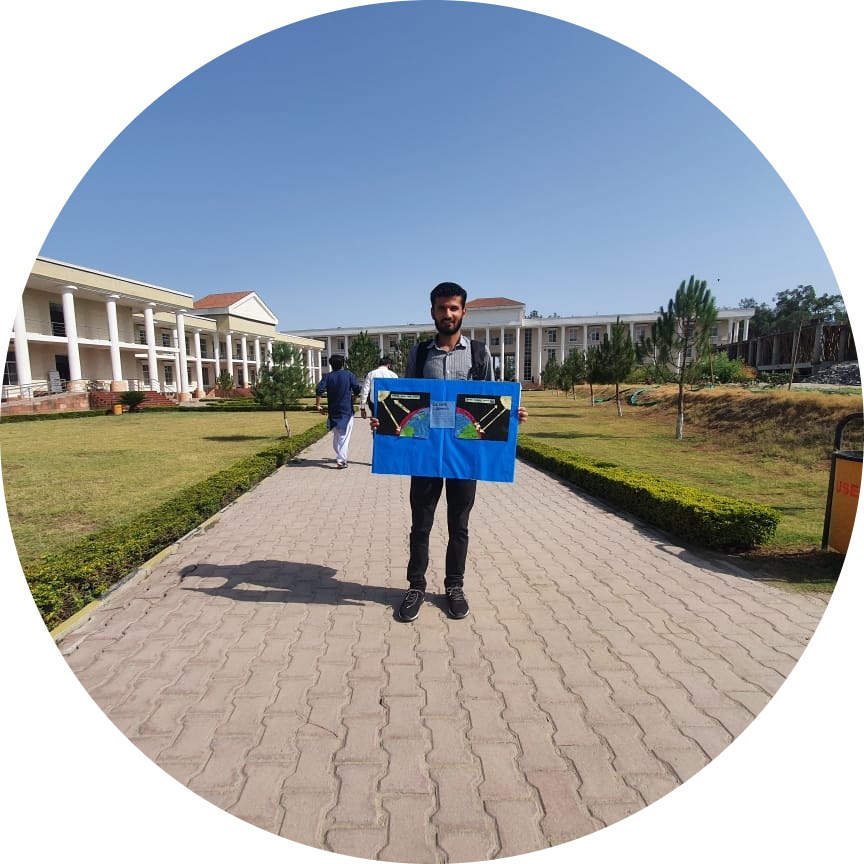
Meet Muhammad Asif Khan, a passionate forestry student. With a strong interest in conservation and sustainability, I'm dedicated to understanding the management of forests and the impact of human activity on them. In my free time, I enjoy hiking and camping in the great outdoors. I'm also active in student clubs and organizations related to forestry and environmental conservation. I wish to do my Master's in Forestry abroad.
I was born in Switzerland, but my current home is Costa Rica where I have been living with my wife and daughter for the last 25 years. Over two decades, I have developed extensive knowledge in sustainability topics along with a wide experience in designing, fundraising, and implementing conservation biology programs, biological corridors, project planning, implementation and monitoring, the leadership of inter-institutional alliances at the national, bi-national, regional and international level, as well as in the creation of protected areas. My areas of expertise include biodiversity, landscape issues, connectivity conservation, transboundary conservation, protected areas, and World Heritage Sites, sustainable development, wildlife, governance, and ecosystem conservation. I have worked for local and international NGOs and the academy, and define myself as a passionate conservation practitioner compromised with high standards of excellence, and a team player able to build strong intercultural relationships. I love trail running, photography, reading, cooking, traveling, and meeting new people from different cultural contexts. I am fluent in French, English, Spanish, Portuguese, with limited working proficiency in German and Indonesian. I am currently learning Mandarin and Arabic.
With a Master’s Degree in Environmental Conservation Management, I joined the Born Free team in 2012 working in various roles within the campaigns team before taking on the role as Head of Education in 2017. Within this role I am responsible for the strategic development, planning and delivery of Born Free’s global education programme across Born Free’s country offices (in Kenya, Ethiopia, UK and South Africa) as well as through partner organisations. This programme aims to deliver both direct conservation and animal welfare education as well as holistic community projects aimed at addressing some of the most significant environmental challenges facing both people and wildlife.
Conservation Scientist with experience in conservation conflicts management, sustainable agriculture, food security, drought management and rural development. Proven skills in project management, monitoring and evaluation, communication and community mobilization. I am a PhD Candidate at the School of Geosciences - University of Edinburgh. I have an MA in Global Studies from the University of Freiburg- Germany and FLACSO Argentina, MSc in Conservation and Rural Development from the Durrell Institute of Conservation and Ecology (DICE), University of Kent. My conservation interest is to improve local community participation and involvement in ecosystem management

I am an expert in tourism and environmental conservation, with a Masters in Wildlife Conservation. I am pursuing a Ph.D. in Environmental Management and Governance at the University of Nairobi. My current research project is on human-lion conflict. I believe that successful integration of conservation, tourism, and livestock keeping is only possible if each form of land use is given equal attention. Governance arrangements that are based on the local community are likely to be more fruitful in achieving win-win outcomes. I am a lecturer of sustainable tourism and environmental conservation at Karatina University. My greatest passion is to see sustainable development for economies that are based on natural resources. I mobilize people to invest and undertake activities that provide solutions to everyday challenges like energy-saving appliances while at the same time helping combat climate change and global warming in the long term.
I currently work in the Corporate sector but am looking to make the change and am working towards a career change, particularly focusing on wildlife conservation. Alongside my trustee role at Helping Rhinos I have recently completed a Masters in NGO Management with a specialism in Grant Making & Philanthropy. Now I'm qualified I'm looking to expand my network alongside completing some Wildlife Conservation specific training.
http://bio.sciencejon.com/

Louisa Richmond-Coggan
Founder & Conservation Consultant, LRC Wildlife Conservation Consulting
Is your organisation's technology decision-making as structured as it needs to be? Conservation organisations face real pressure to adopt technology, often without a clear process for assessing whether it fits their context, capacity, and conservation goals.
The free Conservation Technology Decision Quiz takes five minutes. It scores your approach across three areas: Decision Clarity, Fit and Feasibility, and Delivery and Performance. Results include practical recommendations matched to your score, so you can see where your decision process is strong and what to address first. Start here: Technology Decision Quiz
I work with conservation organisations and funders on structured technology decision-making, the process that determines whether adoption actually works. Twenty-five years in conservation across the Global South. Technology-agnostic, no vendor affiliations.
If your team is navigating a technology decision, evaluating a pilot, or funding organisations that are, I'd welcome a conversation.
BACKGROUND
Dr. Louisa Richmond-Coggan. My career spans field-based ecology, international NGO and policy work, academic leadership, and conservation technology decision-making.
Field career: large carnivore ecology and human-wildlife coexistence research across Eastern and Southern Africa, including as Head of Ecology at the Cheetah Conservation Fund in Namibia. I led Namibia's National Leopard Census, a multi-stakeholder project whose results fed into national and international policy. I built the Carnivore Tracker app, the first of its kind in Namibia.
Institutional career: BirdLife International, UNEP-WCMC, TRAFFIC International, Earthwatch. Academic Dean at the School of Wildlife Conservation at the African Leadership University. Technology and innovation work with IUCN Tech4Nature, including leading three Innovation Challenge Workshops and contributing to the strategic guidance framework on conservation technology adoption.
The Navigating Web 3.0 Guide: A Tool for Conservation came out of that work. It is a decision-support tool that starts with your conservation goals and operational realities, not the technology. 34 guided questions assess which emerging technologies are worth exploring across four areas: data collection and management, resource allocation and financial management, collaboration and communication, and monitoring and evaluation. Now integrated into the IUCN GSAP SKILLS platform. This guide is where the decision-support work started, and it remains the clearest entry point into conservation technology decision-making for teams new to this field.
Research at the International Conservation Technology Conference, Lima in 2026 confirmed what I had been building toward: the gap in conservation technology is not the tools. It is the structured process for deciding whether, which, and how technology fits an organisation's context.
PhD, Nottingham Trent University. MSc Conservation Biology, Durrell Institute. Fellow of the Royal Geographical Society. IUCN WCPA Task Force on Human-Wildlife Coexistence. Member of the Nature Tech Collective and Top Tier Impact.
I have launched National Bird Monitoring and National Butterfly Monitoring in Armenia. I'm publishing 8-12 scientific papers per annum in international peer-reviewed journals. I have initiated improvement of Armenian Environmental Legislation and its linkage to the International Conventions and Agreements. I am a member of IUCN SSC and a number of other professional societies. My main research interest is study of habitat preferences of rare and threatened species of birds and butterflies and development of win-win models, where human business and the wild habitats can successfully co-exist.
Have been involved in a variety of projects - Javan Silvery Gibbon, Tigers in India, and more recently water vole conservation in the UK. Currently run a landscape wide wetland restoration project in West Sussex on the south coast of the UK with water voles in mind but would love to just throw in a couple of European beavers and my job would be done!