Repatriation of Smuggled CITES-Listed Wildlife Species: International and Indian Legal Framework

Introduction:
The cross-border wildlife trafficking creates a distinctive legal and conservation problem when a live, CITES-listed species is seized outside its country of origin. Though, seizure prevents further trafficking, but it does not by itself resolve the seized specimen's legal status, welfare, conservation needs or ultimate disposition. Repatriation therefore occupies a significant position within the enforcement architecture of the Convention on International Trade in Endangered Species of Wild Fauna and Flora (CITES) and corresponding domestic legislation.
CITES Framework:
Article VIII of CITES requires Parties to take appropriate measures to enforce the Convention and prohibit trade in specimens in violation of its provisions. Article VIII(1)(b) specifically requires measures providing for the seizure/confiscation or return of trafficked specimens to the State of Export.
Under Article VIII(4), a confiscated living specimen is entrusted to the CITES Management Authority of the State of seizure/confiscation. That said authority, after consultation with the State of Export, is to return the specimen to that State at the expense of that State, or place it in a recognized rescue centre. Welfare of the seized/confiscated living specimen remains the main goal, giving priority to safe return over keeping the animal in captivity for long-term. The Management Authority may seek advice from its Scientific Authority or consult the CITES Secretariat in this regard.
Article VIII(3) requires Parties to minimize delays in formalities and to ensure that living specimens are properly cared for during transit, holding and shipment so as to minimize injury, damage to health or cruel treatment to the living specimen.
Indian Legislative Framework:
India strengthened its domestic implementation of CITES through the Wild Life (Protection) Amendment Act, 2022, which introduced Chapter V-B concerning international trade in CITES listed specimens.
Sections 49J and 49K of the Act regulate the import and re-export of specified CITES-listed specimens. In the case of living specimens. Section 49K additionally requires preparation and shipment of living specimen in a safe manner to minimize the risk of injury, damage to health or mistreatment.
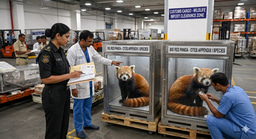
The central provision concerning repatriation is Section 49Q(2) of the Wild Life (Protection) Act, 1972. This Section mandates that when a living specimen of a species listed in Schedule IV has been seized as a consequence of an unlawful import into India, the CITES Management Authority of India, after consultation with the country of export, is required to return the specimen to that country at its expense, or ensure that it is housed and cared for by a recognized zoo or rescue centre.
IATA Live Animals Regulations:
Once repatriation is authorized, transportation becomes a critical component of the process. The IATA Live Animals Regulations (LAR) constitute the principal international standard for transporting live animals by commercial airlines. The 2026 Edition of IATA LAR addresses, among other matters, species-specific container requirements, ventilation, documentation, training and carrier responsibilities. The LAR is particularly important for CITES-listed wildlife because transportation itself can create significant welfare risks. Appropriate containers, environmental conditions, handling procedures, routing and trained personnel are necessary to ensure that the wildlife being repatriated reaches its destination in good health. IATA expressly recognizes responsibilities extending across shippers, freight forwarders, airline personnel and handlers.
India’s DGCA (The Directorate General of Civil Aviation) Framework:
India's Aviation Regulator DGCA’s Operations Circular 02 of 2025, titled "Guidelines for Deportation of Live Animals Detected as Unbeknownst Imports," issued on July 23, 2025 addresses the deportation of live wildlife species brought into India without proper declaration or clearance. The Circular applies to aircraft operators and airlines and makes the airlines responsible for transporting the undeclared wildlife species for their immediate deportation in accordance with applicable governmental instructions. It further places the associated costs, including animal handling, in-transit welfare, documentation and repatriation logistics etc. upon the airline.
The Circular also requires appropriate instructions or orders from Customs, Animal Quarantine and Certification Services and other concerned authorities before deportation, together with documentation concerning identification, veterinary clearance, welfare and IATA compliance. A post-operation report is also required to be submitted to DGCA within seven working days.
Institutional and Practical Challenges:
Repatriation involves multiple authorities whose legal mandates may intersect but are not identical. Repatriation requires close coordination among CITES authorities, wildlife-enforcement agencies, Customs, veterinary authorities and airlines, as each has distinct responsibilities. Establishing the true provenance of seized wildlife may also be difficult because traffickers often use transit countries, false documents and circuitous routes. This necessitates forensic examination, genetic testing, intelligence sharing and international cooperation. A seized wildlife is both a victim of trafficking and potential evidence in criminal proceedings. Its repatriation must therefore not prejudice the investigation or prosecution. Detailed records, photographs, biological samples, veterinary reports and proper chain-of-custody documentation should be maintained to preserve evidentiary value throughout the repatriation process.
Conclusion:
Repatriation of seized CITES-listed wildlife represents the complex convergence of international wildlife law (CITES), domestic wildlife legislation, animal welfare, veterinary and aviation laws & regulations. Article VIII of CITES establishes the fundamental principle of return of trafficked wildlife to the State of Export, while Section 49Q of India's Wild Life (Protection) Act gives that principle domestic legal effect.

I am an Indian Revenue Service (Customs & Indirect Taxes) officer with vast experience of law enforcement especially in tackling transnational smuggling including willdife trafficking. Also, as an expert I have been conducting sessions on various aspects of wildlife crimes and its convergence with other serious crimes, legal and enforcement framework to counter it, wildlife cyber crime, OSINT for combating wildlife crime, combating money laundering associated with wildlife crime, CITES, role of Customs in tackling the menace of wildlife crime, Digital Forensics etc. for forest, police, customs and other enforcement agencies' officials.