Southern Resident Killer Whale - EYE PATCH GUIDE (2025)
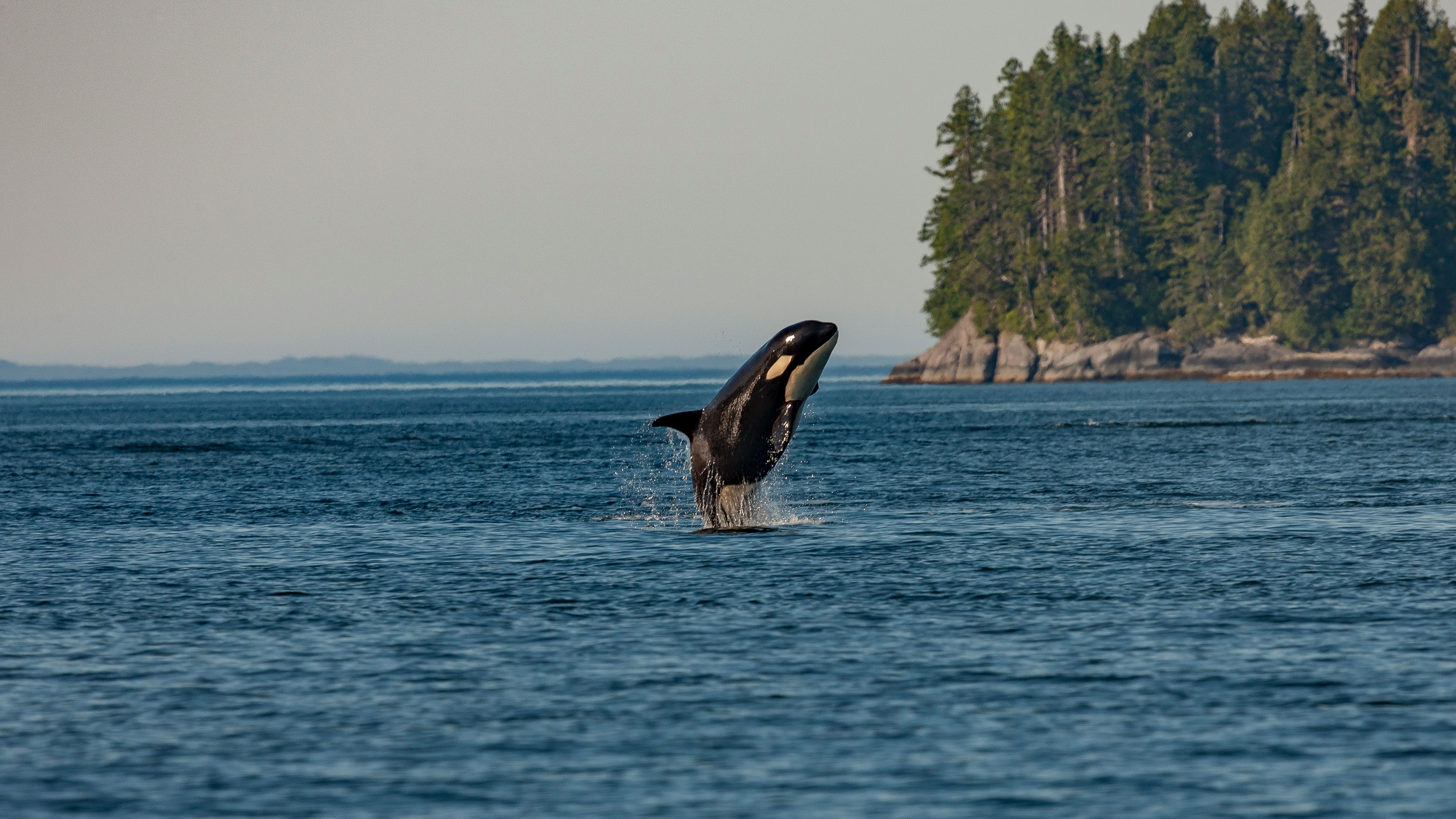

How are orcas identified?
Like many other cetacean species, orcas (or killer whales) can be identified individually by their natural markings and differences in fin shape. Eye patches are one of the methods used to identify individual killer whales. These are unique to each whale, and even vary from the left to the right sides.
Orca Conservancy has now released a guide to help identify members of the J Pod by their distinctive eye patches. Get your guide here: https://www.orcaconservancy.org/eye-patch-guide
_________________________________________________________________________
Who are the Southern Residents?
The Southern Resident killer whales are a genetically and culturally distinct population of orcas within the Pacific Northwest and consist of three separate pods: J, K, and L Pods. Like other ecotypes of orcas, the Southern Residents are matriarchal, which means females are the leaders. Within each pod, there are separate family sub-groups or matrilines that are centered around the older females (grandmothers and mothers).
Each matriline is identified by the eldest female within the group. In most cases, both males and females will spend the entirety of their lives with their mother (and maternal grandmother if she is still alive). Occasionally matrilines will separate to socialize or breed with other matrilines or pods. There have been a few instances of Southern Residents switching matrilines due to the loss of their mothers or grandmothers, and in one unique case, an orca (L87) has been observed switching pods entirely, though it is not entirely understood why.
Naming
Southern Residents are given an ID when they are born and cataloged by the Center for Whale Research. The unique ID they are given is alphanumeric and starts with the letter of the pod they are born in and followed by the number order in which they were cataloged. For example, the calf J57 was born into J Pod, and was the 57th member of J Pod to be identified, hence the ID J-57.
Many familiar with the Residents will also recognize individuals by their “nicknames”. Typically, the whale nicknames are assigned to the individual orcas by the Whale Museum and are often voted on by the public. On some occasions, the names will be in honor of prevalent researchers or conservationists within the community, while others may be named after locations, pets, fictional characters, and even snacks.
Assigning nicknames to the Southern Residents was a result of a conservation movement to block a proposed capture of L Pod within Canadian waters during the capture era in the 1970s. Conservationists believed that if local residents became familiar with the orcas by name, they would be more emotionally connected and therefore want to protect whales from capture. Each member was given a nickname outside of their alphanumeric IDs, and this strategy proved to be effective. Residents petitioned and successfully blocked the proposed capture of members of L Pod, and since that time now all Southern Residents, Northern Residents, and Transients have been assigned nicknames.
J Pod
J Pod is easily one of the most recognized of the Southern Resident pods, due in part to their range. During any given time of the year, J Pod can appear in the waters off the west side of San Juan Island, Southern Gulf Islands, central and south Puget Sound proper, and Georgia Strait. Historically J Pod would frequent Haro Strait along San Juan Island during mid-spring through the summer, and spend time in Puget Sound in the late summer, and early spring. However, there has been a shift in sightings and the timing of J Pod’s presence in the areas based on salmon returns. In the year 2021, J Pod was missing from San Juan Island for months, showing up intermittently throughout the summer, and spending late fall and early winter foraging in southern Puget Sound, which correlated with the late salmon runs. During the winter J Pod tends to stay in the coastal areas between Washington and Vancouver Island, Canada.
Total Members: 27
Matrilines:
J11s
J14s
J16s
J17s
J19s
J22s
J11s
J27 Blackberry (male, born 1991)
J31 Tsuchi (female, born 1995)
J39 Mako (male, born 2003)
J56 Tofino (female, born 2019)
J14s
J37 Hy’Shqa (female, born 2001)
J40 Suttles (female, born 2004)
J45 Se-Yi-Chn (male, born 2009)
J49 T'ilem I'nges (male, born 2012)
J59 Sxwyeqólh (female, born 2022)
J63 (sex unknown, born 2025)
J16s
J16 Slick (female, est. birth 1972)
J26 Mike (male, born 1991)
J36 Alki (female, born 1999)
J42 Echo (female, born 2007)
Did you know that this unique population is on the verge of extinction with only 75 remaining individuals? The Southern Residents face multiple threats, with the top three being lack of food, pollution, and vessel noise. Learn more here: https://www.orcaconservancy.org/learn
I am a passionate communicator and researcher with an extensive background in the environmental humanities and social sciences, dedicated to exploring and fostering connections between people and nature. Based between Sweden and the UK, I work in academia as a researcher and lecturer, teaching courses in environmental law, historical ecology, and disaster risk management.
I actively contribute to non-profit organisations promoting conservation and animal welfare. I work with Faunalytics, translating complex research into accessible insights for evidence-based advocacy; write feature articles for Ubuntu Magazine spotlighting conservation initiatives; and serve as Community Advocates Coordinator at WildHub, driving strategic communications and leading initiatives that connect and empower conservation practitioners worldwide.
When I’m not working, you’ll find me hiking forest trails with my dog or enjoying a good cup of coffee.